


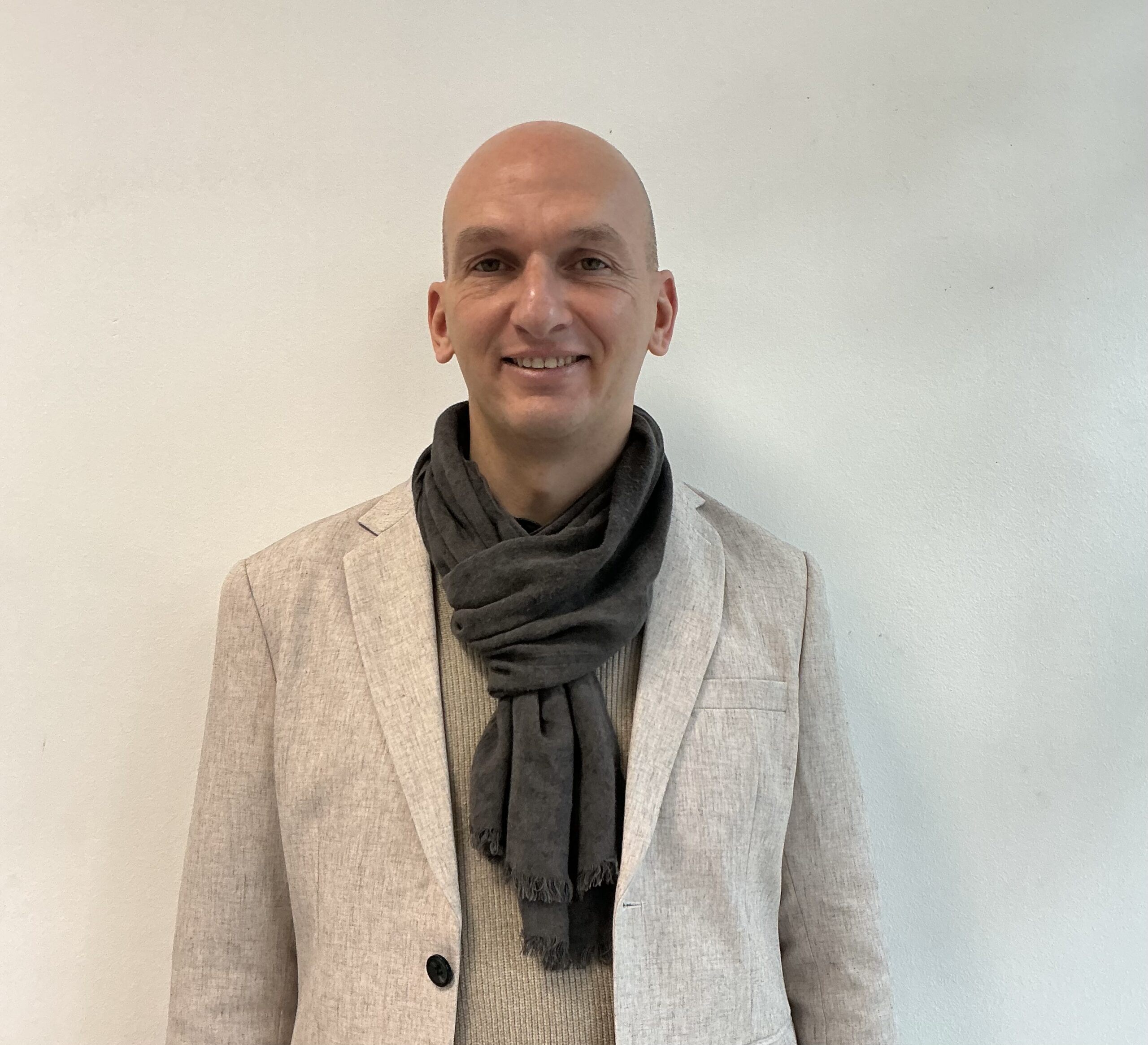
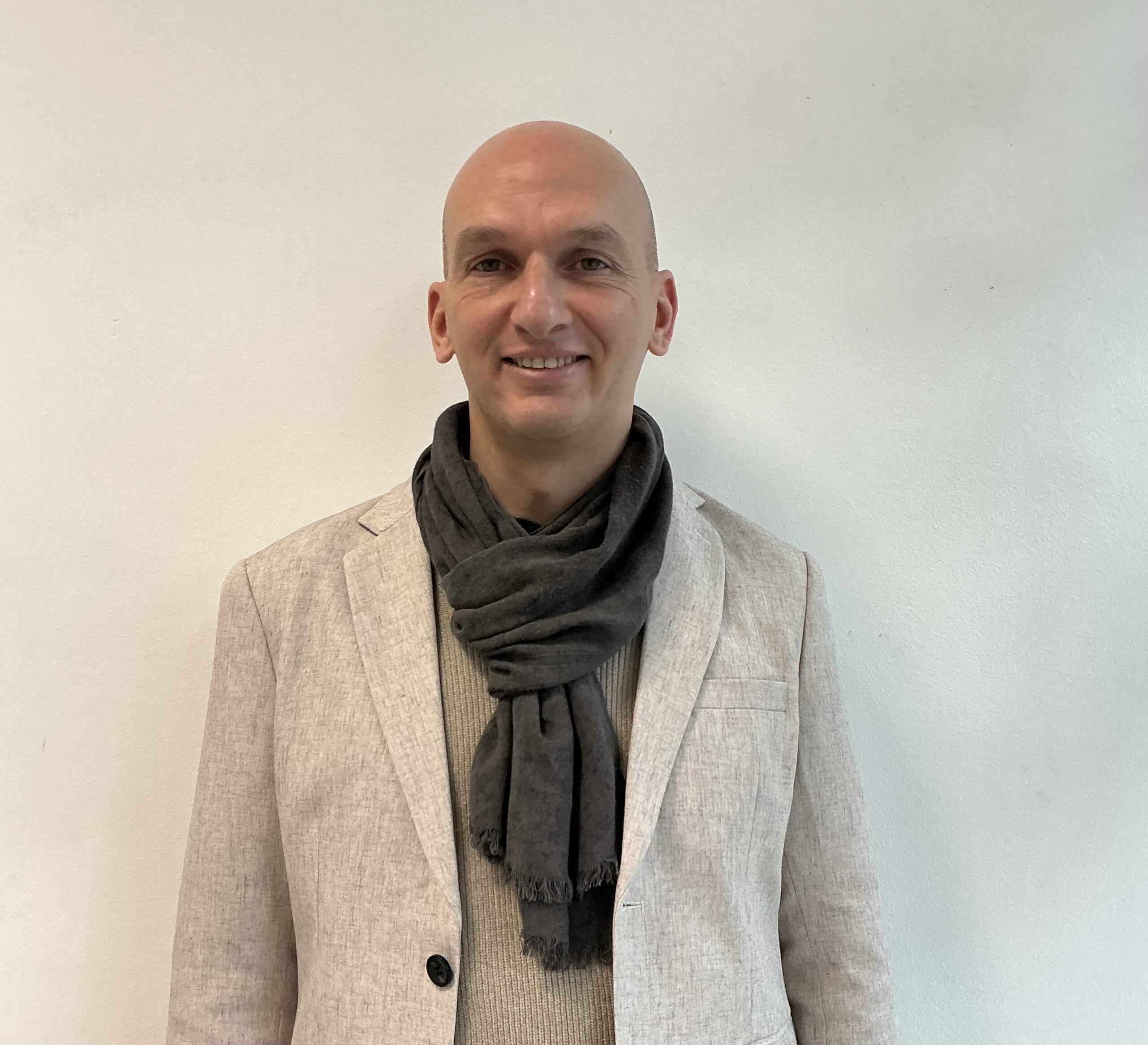
Daniel Piazza: how a Class 4 laser becomes a Class 1 machine
In high-power laser cutting, everyone talks about speed, precision, kilowatts. Far less about what makes all of that possible without putting people at risk: safety.
At Cutlite Penta, safety is not a constraint to deal with after the fact: it is part of the design from the very first stages. One of the people who guarantee it is Daniel Piazza, Process Validation & Quality Assurance Manager: a figure who works far from the spotlight, with a direct impact on what really matters.
Ignoring safety protocols is not a shortcut. It is a real risk. And in some cases it can cost human lives.
A career built in the field
Daniel's professional path did not start on the shop floor. After beginning law studies, he joined the family business in the pharmaceutical sector, working across graphics, packaging, and quality systems. That is where he first met ISO 9001, the international standard for quality management, and the world of procedures.
Then came a journey of over twenty years in packaging machinery for the pharmaceutical industry, a field where regulations are not a detail but the very condition for doing business. Daniel moved from sales to after-sales, from technical documentation to validation manuals for pharmaceutical lines, up to machinery compliance and certification audits with large international groups.
“I studied everything I could: the regulations, the harmonized standards, Italian Legislative Decree 81/08 on workplace safety, the international GMP rules on the good manufacturing of machinery and finished medicinal products. Every new standard in the sector crossed my desk.”
Complex standards, technical files, validation manuals for production lines worth tens of millions of euros: that is where the extreme sensitivity to processes, responsibility, and safety he now brings to Cutlite Penta was born.
Where safety really begins
Daniel joined Cutlite Penta two years ago, at a time when the company felt the need to structure its document and regulatory management even more rigorously. His official role covers instruction manuals, technical files, product certifications, machine safety, and procedural flows. But his work starts much earlier: at the design stage.
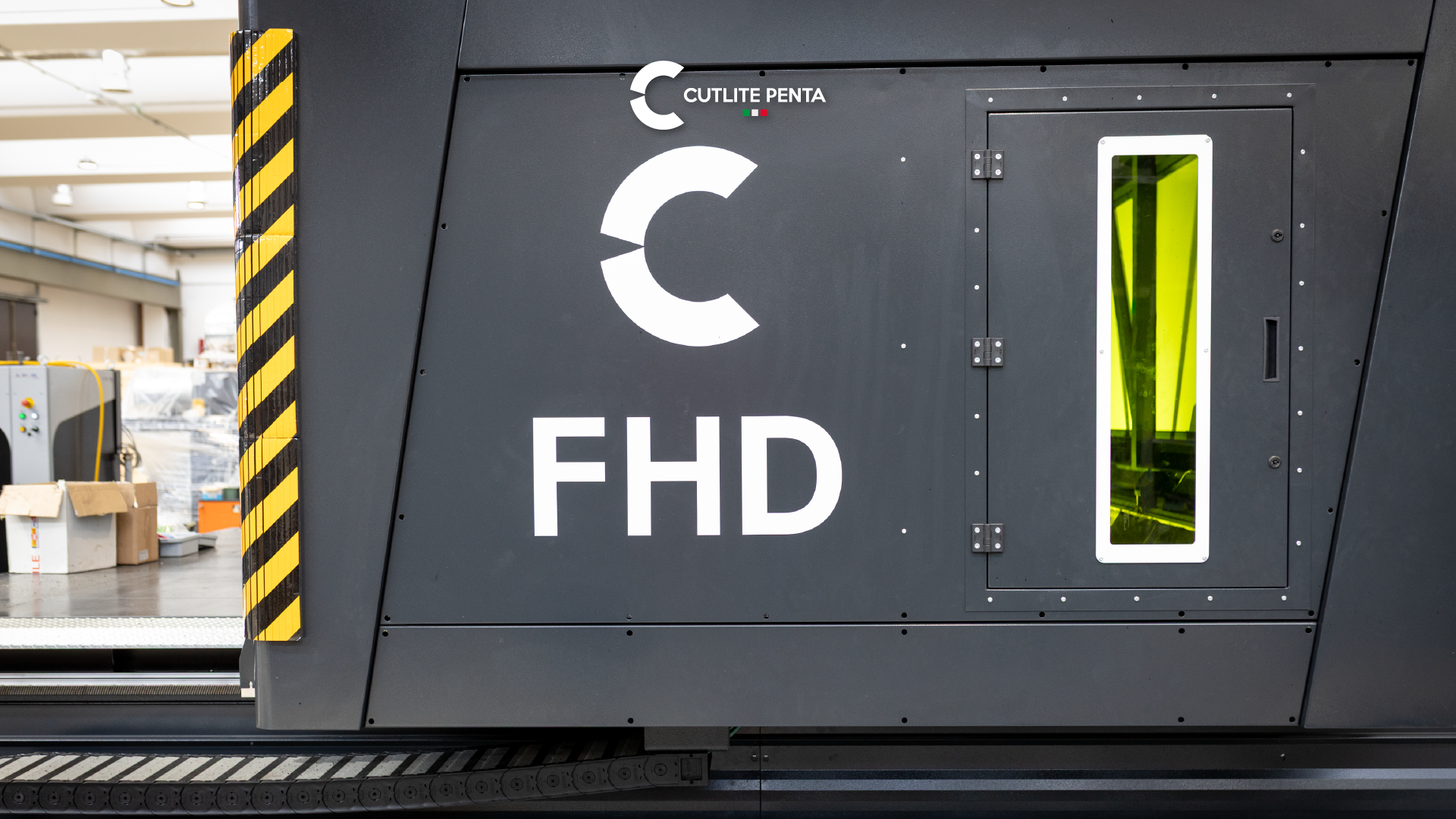
Every machine undergoes a preliminary risk analysis, in close contact with the engineering department and with Marco Mugnaioni's R&D team, to verify that what is being designed is genuinely safe, not just on paper. “We fired the laser at the protective glass to check whether it really withstood the reflections, and for how long. If it had not, we would have had to find new materials.”
Laser classes: why context makes the difference
The laser in these machines is, by definition, a Class 4 laser: the most dangerous class of all. High power, immediate risk to eyes and skin, dangerous reflections that can travel tens or even hundreds of meters, depending on the power.
That is exactly why Cutlite Penta machines are not designed as simple open systems, but as Class 1 machines from the operator's point of view. The difference is made by the enclosure: it fully contains the beam, withstands reflections, immediately interrupts the emission if the guards are opened, and prevents any accidental exposure. The laser remains Class 4; the machine, thanks to its design and safety systems, can be used as Class 1.
In practice: you can work around the machine without laser-specific personal protective equipment, because the risk is physically contained. That is the result of design done properly.
Real risks, real consequences
High-power laser machines are not machines like any other. Optical radiation, sheet handling, automatic loaders, suspended loads: the risks are high and must be managed rigorously. A design error or a bypassed safety device can have very serious consequences. Daniel puts it bluntly:
When we talk about sheet loaders and suspended loads of 1,500 kg, if something gives way and a person is underneath... people die.
That is why safety distances are non-negotiable, components must be certified, and systems must be redundant. A machine designed on the cheap may cost less to buy. But it can cost infinitely more in criminal liability and, above all, in human lives.
Standards, certifications, and false reassurances
In Europe, CE marking is a manufacturer's self-declaration. Which means something very simple: if you declare a machine compliant and it is not, you are criminally liable. The issue emerges above all after a workplace accident: that is when the control authorities, such as Italy's local health authority (ASL), check whether the declaration matches reality. And under Italian Legislative Decree 81/08, the employer also answers for obvious defects: whoever provides operators with a machine showing evident non-conformities answers for it directly.
Outside Europe the picture changes. In North America, standards such as ANSI, OSHA, and UL apply; in Canada, the SPE-1000 certification for compliance with CSA standards is mandatory: without inspection, the machine cannot even be switched on. Daniel coordinates notified bodies, tests, checks, and compliance trials. Nothing is left to chance.
And he warns against a very widespread practice: importing machines that look compliant, but are not. “Whoever imports a machine from a country outside the European Union effectively becomes its manufacturer. As if they had built it.”
In Asia especially, the approach to standards is very different: certificates are often supplied attesting compliance with some specific standards, giving the illusion of conformity. But conformity must hold for all the applicable standards, and it is a complex process. If the imported machine turns out to be non-compliant, the liability falls entirely on whoever placed it on the market.
When safety devices are ignored
“I see operators bypassing safety devices because it is faster.” Deactivated photocells, climbed-over barriers, ignored procedures. Inspections are rare and seldom go into the technical substance of the machines. Until the day an accident happens: only then is everything checked, and someone must be held responsible.
Ignoring a safety protocol is not being clever: it is knowingly putting someone in danger. And if the customer modifies a machine's safety features compared to what the manufacturer installed, they automatically become responsible for it: they can do so, but only by complying with the standards and documenting the risk analysis. Otherwise the liability is entirely theirs.
Where the manufacturer's liability ends (spoiler: it does not)
At installation, a declaration of conformity is issued, attesting compliance with the standards in force at that moment. If a new regulation comes into force later, the installation date is what counts, unless retroactive adaptation is explicitly required. The manufacturer's liability lasts for the entire life of the machine, provided it is not modified in ways that alter its safety conditions and the scheduled maintenance of the safety systems is carried out.
Training: the last barrier
Not everything can be eliminated with a guard or a barrier: in some cases residual risk remains, and that is where training comes in. At Cutlite Penta, operator training is structured, tracked, and mandatory: only trained personnel can use the machines. “If an operator is not trained and something happens, the responsibility falls on the employer.”
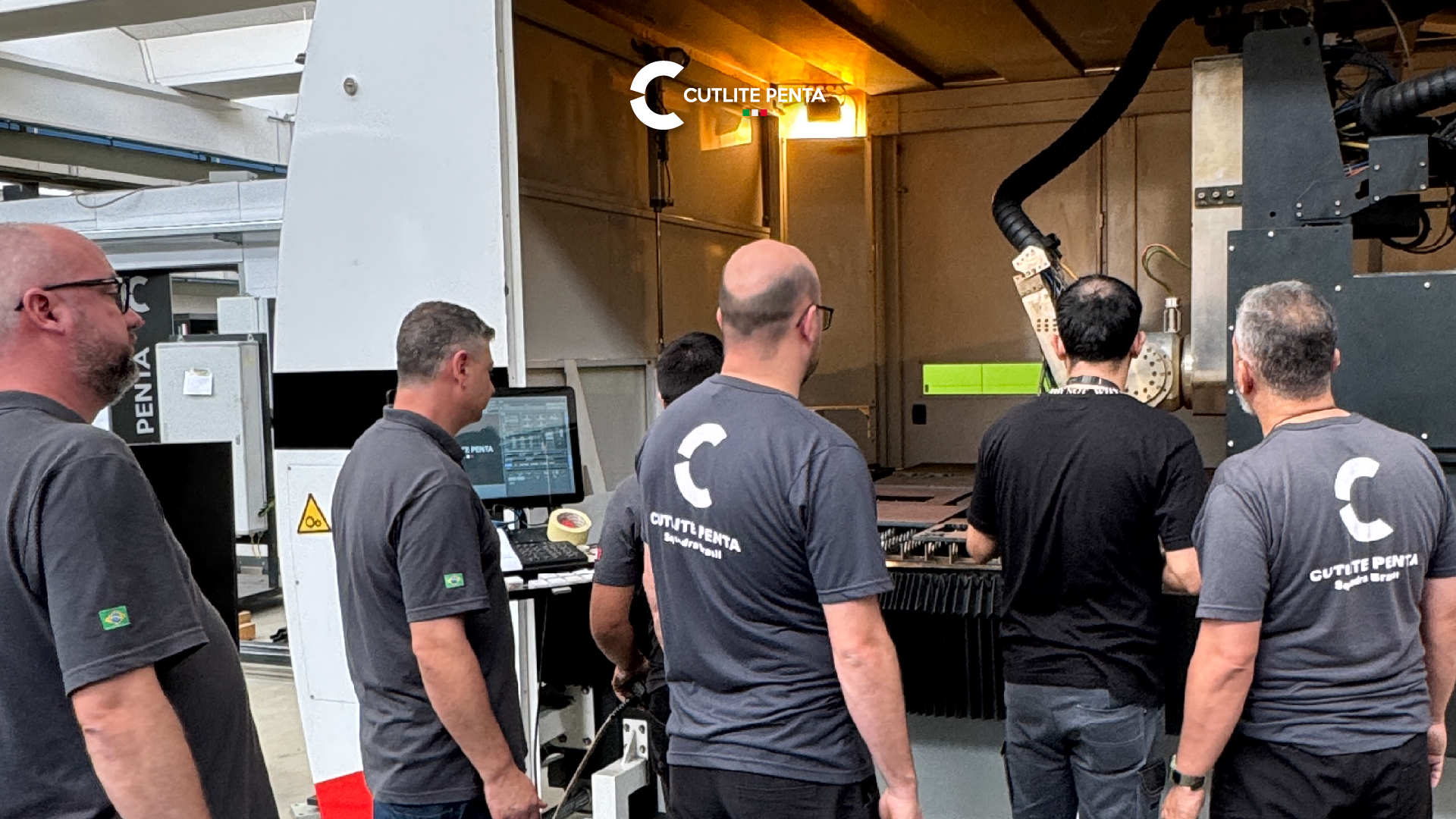
Safety is not just a technical topic. It is a cultural one.
Beyond the machines: processes, procedures, internal alignment
Beyond machine safety, Daniel builds and maintains the company's internal procedures. Cutlite Penta is a constantly growing company, with many people and several production sites: keeping a high, repeatable quality standard on every machine requires a procedural workflow and training for every department. From the dimensional layout of the machines to the correct way of mounting a cutting head, up to the testing procedures: everyone in the company works to the same criteria and the same standards.
Safety is not a cost: it is a responsibility. Without the work of Daniel Piazza and the technical department, Cutlite Penta machines could not be installed, certified, and used safely. In the industrial world, safety is often seen as a brake; here it is what makes it possible to innovate without compromise. Because when it comes to high-power lasers, breaking the rules is not a mistake. It is a choice.
Frequently asked questions
What does it mean that a machine is Class 1 if the laser is Class 4?
The laser source is Class 4, the most dangerous: immediate risk to eyes and skin and dangerous reflections even at great distance. The enclosure fully contains the beam and its reflections and interrupts the emission if the guards are opened: for the operator the system is therefore Class 1, and you can work around the machine without laser-specific personal protective equipment.
Who is liable when a laser machine is imported from outside the European Union?
The importer effectively becomes its manufacturer, as if they had built it. If the machine turns out to be non-compliant, even with partial certificates that give the illusion of conformity, the liability falls entirely on whoever placed it on the market.
What are the risks of bypassing or modifying a machine's safety devices?
Whoever modifies a machine's safety features automatically becomes responsible for it: it can be done only in compliance with the standards and by documenting the risk analysis. The employer also answers for obvious defects and for missing operator training, under Italian Legislative Decree 81/08.
What does Daniel Piazza do at Cutlite Penta?
He is the Process Validation and Quality Assurance Manager: preliminary risk analysis at the design stage, instruction manuals, technical files, product certifications in Europe and worldwide (CE, ANSI, OSHA, UL, CSA), internal procedures, and operator training.
Want to see how a safe machine is born?
Visit us in Prato: enclosure, safety systems, and live cutting in the demo area, with our technicians answering every question.
