



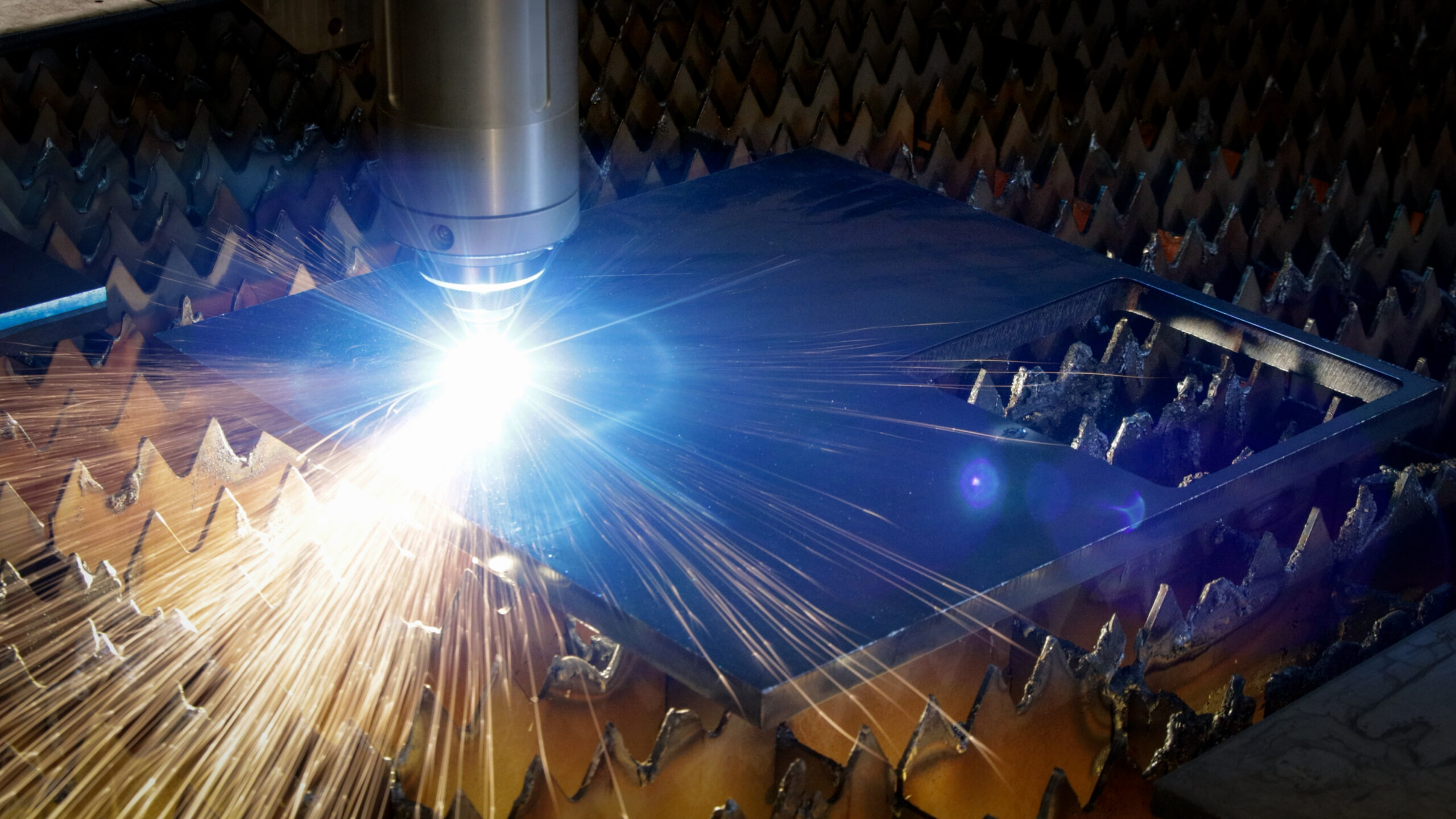
From 4 kW to 60 kW: how high-power laser cutting changed
High-power laser cutting means fiber laser cutting with sources of several tens of kilowatts, today up to 60 kW. Its job is to do on medium to heavy thicknesses what used to be possible only with plasma and oxyfuel, and to do it to laser tolerances.
In fifteen years the power available on a cutting machine went from 2-4 kW to 60 kW. This article covers how, with the dates, and what changes on the shop floor: where fiber laser genuinely replaced the other technologies, and where instead, as our customers say, it pays to keep them.
Before fiber laser: oxyfuel, CO₂ and plasma
Oxyfuel cutting is the oldest technology and remains unbeaten on extreme thicknesses: in our own case studies you find plants cutting up to 300 mm. CO₂ lasers brought precision and repeatability, at the price of high consumption and heavier maintenance: those who still have one describe it as a machine due for replacement. Plasma covered heavy thicknesses for years, at low cost and with a rough finish.
Fiber laser changed the balance, but it did not wipe out the other technologies, and it is worth saying so plainly because that is what our customers report: those working the heaviest plate keep their oxyfuel, and those doing rough work often keep a plasma, because it is simpler to run. What changed is the boundary: the thickness band in which the laser pays has moved upwards, year after year.
The power ladder, year by year
- 1990s - 2000: the CO₂ laser is the industry standard, with thickness limits and high running costs
- 2008 - 2015: the first 2-4 kW fiber lasers enter production, more efficient but limited to thin gauges
- 2016: power grows and jobs that were previously out of reach open up
- 2019: 15 kW is passed and on several jobs fiber moves ahead of plasma
- 2022: fiber systems reach 40 kW
- Today: 60 kW with an IPG Photonics source
One figure makes the jump concrete: with 60 kW you cut 50 mm Hardox at 2.5 m/min. It is a number you can verify in a trial, and ten years ago it was in nobody's catalogue.
“50 mm Hardox at 2.5 m/min: ten years ago that number was in nobody's catalogue.”
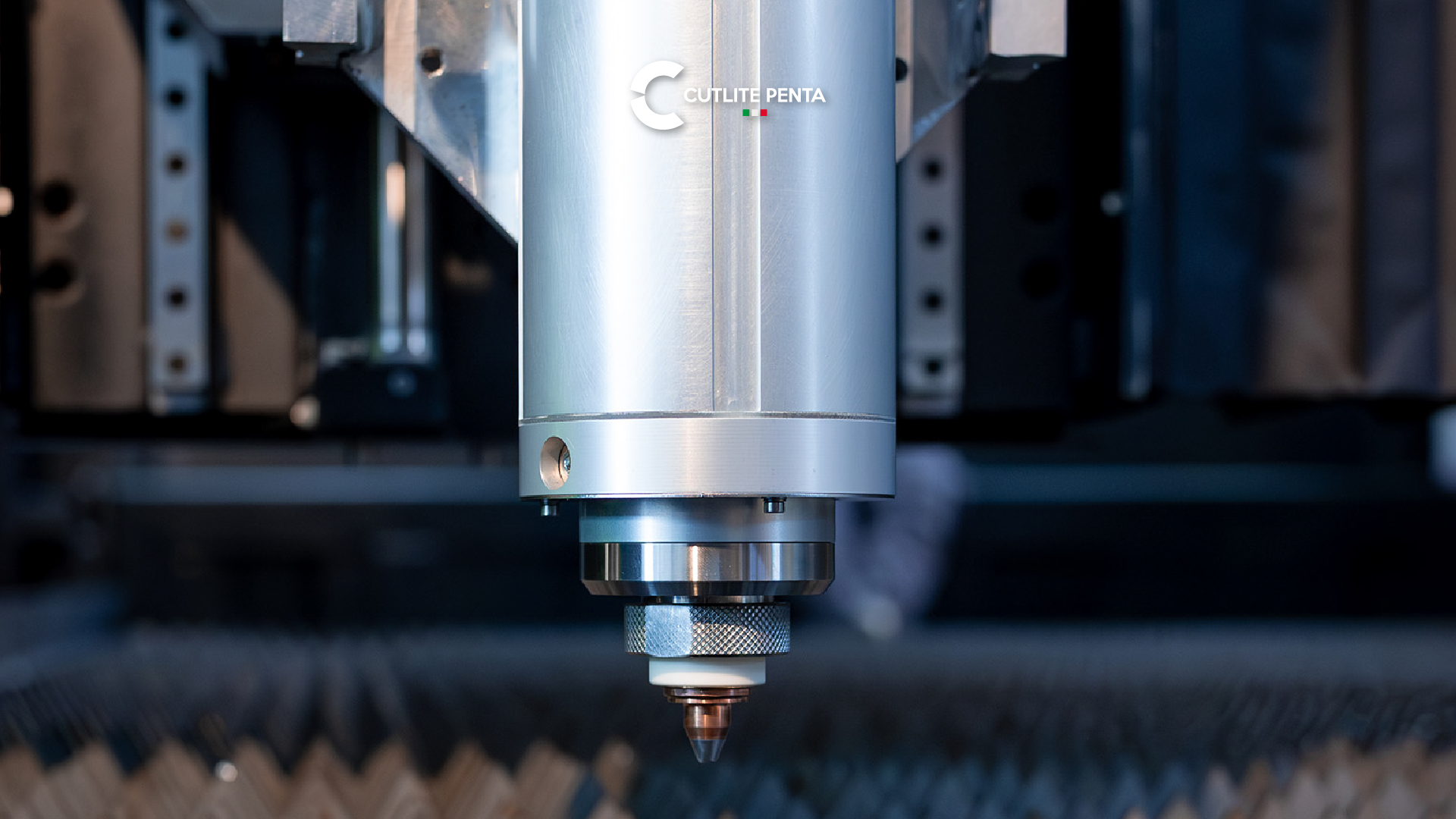
The Evo 4 cutting head
Source power on its own is not enough: it has to be managed. On our machines that is the job of the Evo 4 cutting head, designed in-house. The features that matter on the shop floor:
- Modular, compact design
- Capacitive sensor for automatic real-time calibration
- Replaceable components and simple maintenance, including the protective window drawer
- Flexibility across materials: carbon steel, stainless steel, aluminium, copper
The machines for high power
PLUS EVO: high power on linear cutting
The PLUS EVO is designed for linear cutting with consistent quality as thickness grows. Its lightweight gantry lets it handle power up to 60 kW while keeping its dynamics, and large formats without losing precision. It is the machine for long production shifts.
PLUS Bevel: high-power bevel cutting
The PLUS Bevel combines bevel cutting with high power. The bevel head, designed by us, rotates up to ±50°: parts come off the table ready for welding, with no grinding or finishing step in between. Linear motors keep the motion smooth even on complex geometries.
FHD: high power on large formats
The FHD is our system for large formats: it reaches 60 kW with working areas up to 24000 × 3000 mm. The enclosure around the cutting head allows safe working while the other table is being loaded. It is the machine for anyone cutting sheets that do not fit an ordinary table.
Automation
Above a certain power the bottleneck is no longer the cut: it is loading and unloading. That is why the machines are matched with automation designed alongside them:
- Automatic loading and unloading, with suction-cup lifters and fork unloaders
- Automatic storage towers, vertical or modular, to handle material without an operator
- Supervision software to follow stock and work flows
Frequently asked questions
What is high-power laser cutting?
It is fiber laser cutting carried out with sources of several tens of kilowatts, today up to 60 kW. Its purpose is to work medium to heavy thicknesses, which used to belong to plasma and oxyfuel, while keeping the tolerances and edge quality typical of a laser.
How many kW do you need to cut heavy plate?
It depends on material, thickness and the finish required, and there is no single figure. As a reference: with 60 kW you cut 50 mm Hardox at 2.5 m/min. Below 15 kW the comparison with plasma on heavy thicknesses is still open; above 40 kW the laser covers bands that were previously out of reach.
Does fiber laser replace plasma and oxyfuel?
Not always, and our customers put it better than we do. Several companies replaced one plasma machine with a laser and kept the other, because for less demanding work it is simpler to run. Anyone cutting beyond 100 mm carries on using oxyfuel. What moves as power increases is the boundary of what pays, not the existence of the other technologies.
Which Cutlite Penta machines reach 60 kW?
The PLUS EVO for linear cutting, the PLUS Bevel for bevel cutting up to ±50° and the FHD for large formats, with working areas up to 24000 × 3000 mm. All of them carry the Evo 4 cutting head, designed in-house.
How much power do you actually need?
Tell us the material, thickness and tolerance of your parts: the sum is done on your drawings, and the answer is not always the highest power.
