


60 kW laser source: what it is and what the machine needs to use it
The laser source is the component that generates the beam. When a cutting machine is rated at 60 kW, those 60 kW are the source's: everything else on the machine exists to get them onto the sheet without wasting them.
On a spec sheet, laser power is the first number you read, but almost no one explains where it comes from. It comes from the source: a separate cabinet, connected to the head by an optical fiber. On our high-power systems the source is made by IPG Photonics; the machine that uses it is designed by us. Two different jobs, and worth keeping apart.
What the laser source of a cutting machine actually is
The laser source is the beam generator. It does not sit in the head and it does not travel on the gantry: it is a separate cabinet standing next to the machine. From there the beam runs through an optical fiber to the cutting head, where the optics focus it into a spot a few tenths of a millimeter across.
That is why power is rated on the source. The machine does not produce the 60 kW, it receives them. What the machine does is hold that beam steady, clean and at the right distance from the sheet metal, for hours, without burning through everything around it.
Why the distinction matters when you buy
Because two machines with the same source can cut very differently. The source is a bought-in component, and several builders fit the same one. The difference comes from the cutting head, the dynamics of the gantry, the way the assist gas is managed and the process control. When you compare two quotes showing the same kW figure, that is where to look.
YLS 60000: what the marking on the panel tells you
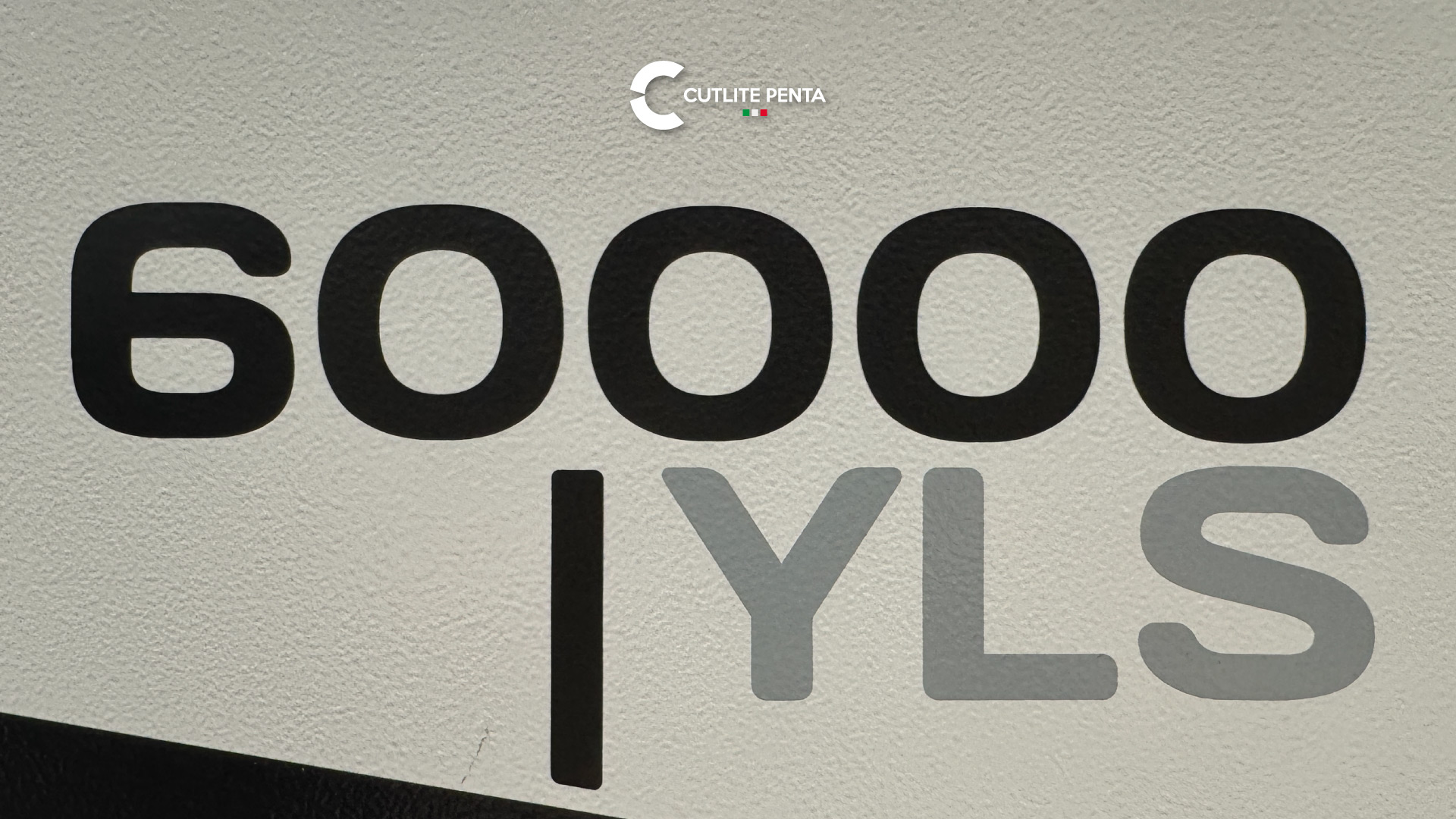
The panel of the source reads YLS 60000. It is not an internal code, it is the product designation. YLS stands for Ytterbium Laser System, IPG Photonics' fiber source series; 60000 is the wattage. Sixty thousand watts, that is 60 kW.
The series figures, as stated by the manufacturer:
- Power: 1 to over 125 kW multi-mode, up to 10 kW single-mode
- Wavelength: 1070 nm
- Power tunability: 10 to 100%
- Modulation: up to 10 kHz
- Fiber: 50, 100, 150 or 200 μm feed fiber output, process fiber up to 1000 μm
- Cooling: water or air
- Electrical efficiency: over 40%, over 50% on ECO versions
Source: IPG Photonics documentation on high-power fiber lasers.
What a machine needs in order to use 60 kW
Moving up in power is not a matter of ordering a bigger source. More power means more heat, more light reflected off the sheet and more stress on everything along the beam path. The machine has to be designed for it, otherwise those 60 kW get paid back in downtime and spare parts.
The cutting head
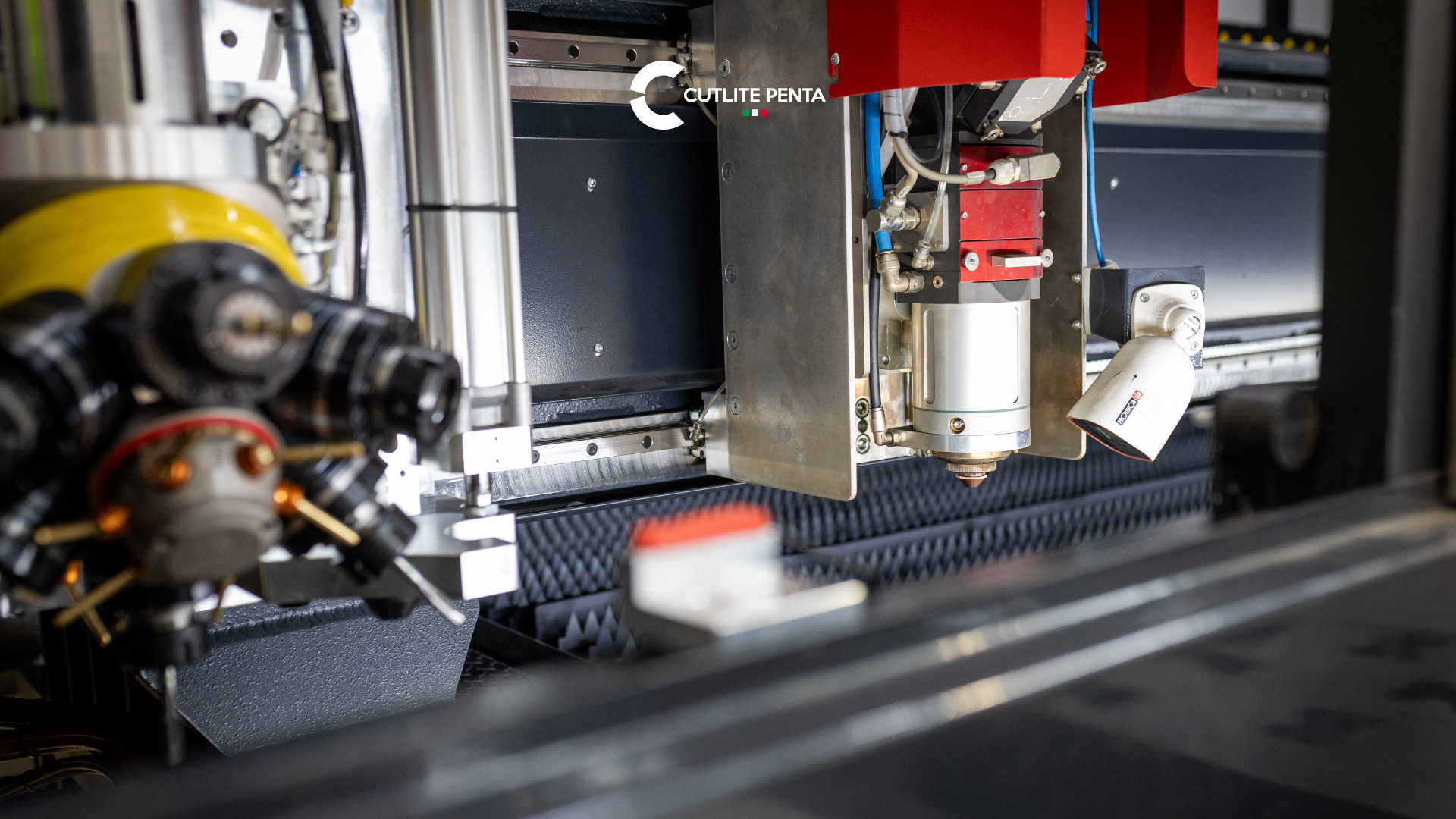
On our high-power systems the head is the Evo 4, designed in house, with autofocus and process sensors: it handles up to 60 kW and up to 25 bar of assist gas. It is the component closest to the cut, so it works in the worst conditions on the machine.
Optics and consumables
Inside the head sit the focal lens and the protective window, which is there precisely to get dirty instead of the lens. Together with the nozzle they are the machine's consumables: at high power they get checked and replaced more often, and a machine built for 60 kW makes that check fast. That is exactly what automatic nozzle change is for.
The rest of the enclosure
Then there is everything that never touches the beam but takes the cut: the support slats, which wear down on thick plate; the fume extractor, which at 60 kW has far more material to pull away; the enclosure, which has to contain a much more intense light.
Where the difference shows: thick material
It is on thick material that 60 kW change the job. The fiber laser reaches where plasma cutting or oxyfuel cutting used to be needed, and it gets there with the clean edge typical of laser: less deburring, less rework downstream. It does not mean plasma is finished, because at certain thicknesses and certain budgets it stays competitive. It means the band where laser is the better choice has got wider.
The first 60 kW IPG source put into operation in Europe was ours, on an FHD, at LAMIERA 2025.
Frequently asked questions
What is the laser source of a cutting machine?
It is the component that generates the laser beam. It sits in a separate cabinet next to the machine and sends the beam to the cutting head through an optical fiber. A machine's rated power, 60 kW for example, is the power of its source.
What does the YLS 60000 marking mean?
It is the designation of an IPG Photonics source: YLS stands for Ytterbium Laser System, the manufacturer's fiber source series, and 60000 is the power in watts, that is 60 kW.
Which Cutlite Penta machine carries the 60 kW source?
The FHD, the fiber laser cutting system for high power and large formats. The first system in Europe with a 60 kW IPG Photonics source was put into operation at LAMIERA 2025.
What changes on the machine when the source reaches 60 kW?
The cutting head changes, because it has to withstand the power and the gas pressure, as do the optics and consumables, which are checked more often, the fume extraction and the enclosure. More power means more heat and more reflected light all along the beam path.
How many kW do you actually need?
Tell us what you need to cut: we'll tell you which system and which power level make sense for your work.
