



How are metals cut? A guide to cutting systems
Metals can be cut with several technologies, from shearing to plasma to fiber laser cutting: each with different advantages, limits and fields of use.
Thinking about buying a metal cutting system for your company? Before investing, it's worth knowing all the available options, with their advantages and disadvantages. Besides traditional techniques such as shearing, wire EDM and plasma cutting, the arrival of technologies like fiber laser cutting makes the choice more complex. Here is a guide to help you find your way among cutting systems and understand the ideal one for your production.
What to consider before buying a metal cutting system
One of the most common mistakes when buying new machinery is focusing on the immediate purchase convenience instead of the long-term cost. A good cutting system has to last over time, so it is essential to assess its efficiency and its economic impact on the company. Traditional systems often have a lower purchase price, but high consumption and costs tied to labor and long production times. Let's look in detail at the features of each system.
Metal cutting with shearing
Shearing is the most traditional metal cutting system, based on shears that use a cold-cutting technique. Shearing systems are divided into circular-blade shears, which cut the sheet lengthwise, and guillotine shears, with a fixed blade under the sheet and a moving one driven by hydraulic pistons. The maximum cutting thickness is 20-30 mm. It is relatively cheap to buy, but has some drawbacks:
- Requires tools subject to mechanical wear
- Only performs very simple operations
- Requires skilled labor
- Has high maintenance costs
Sheet metal cutting with wire EDM
Wire EDM (Electrical Discharge Machining) is a metal-shaping system that erodes the metal through electrical discharges. A conductive wire acts as an electrode, while the metal part to be cut is immersed in a tank of dielectric fluid. Its advantages include high precision and flexibility, little scrap and the ability to work small metal parts. The drawbacks:
- Long machining times, which raise costs
- The part may rust if it stays too long in the water
- Requires highly skilled labor
- Causes heavy electrode wear
- Only cuts conductive materials
Plasma cutting of metals
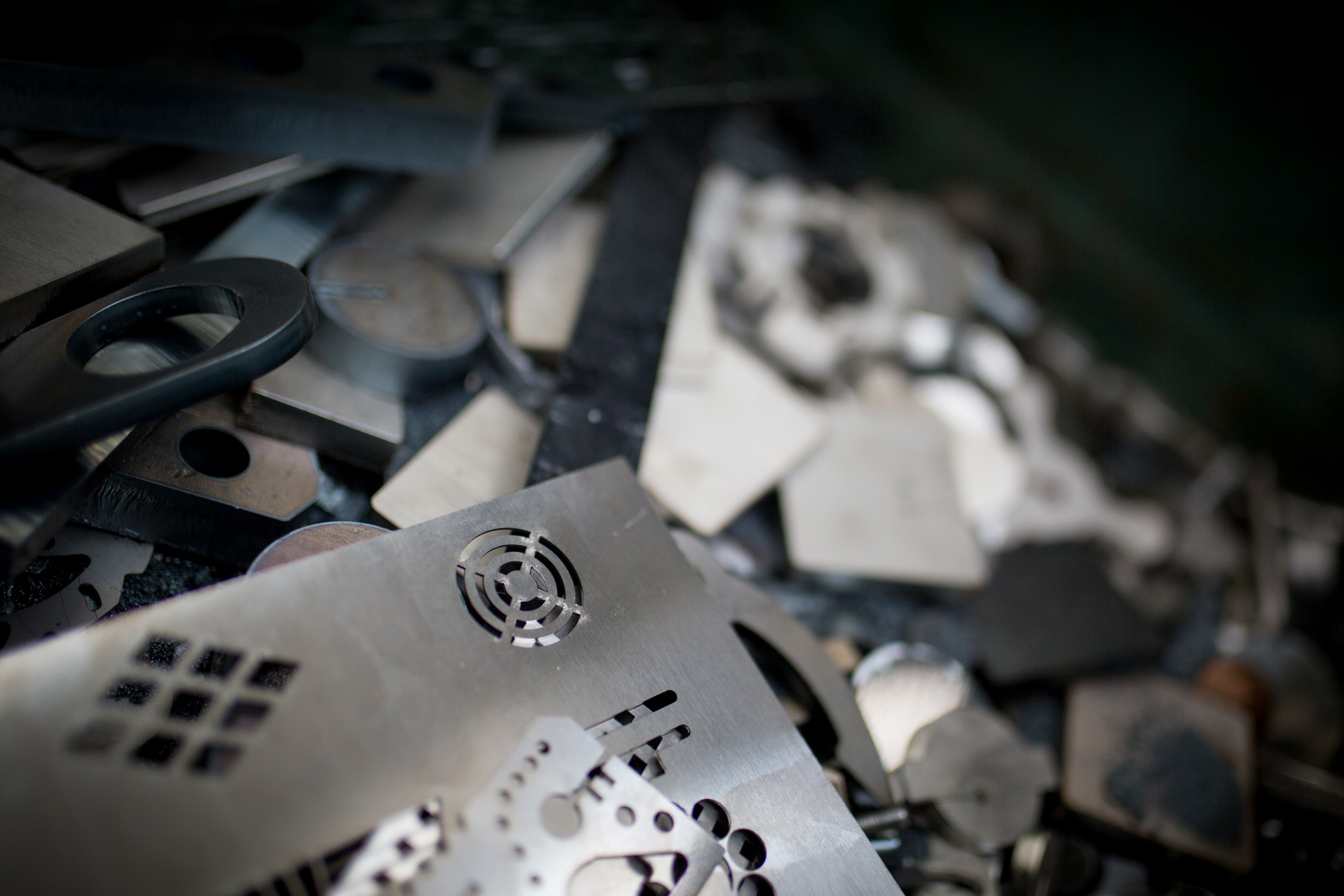
Plasma cutting is a thermal cutting technique used since the 1950s. A gas expelled at high speed through a nozzle sets up an electric arc between an electrode and the metal to be cut: the gas turns into plasma and cuts the metal at high speed. It is still widely used in updated versions, but has some limits:
- High energy consumption
- Dust generation that requires a filtration system
- Leaves a bevel of about 4-6 degrees, so it is not suited to high precision
- Only cuts conductive materials
Metal cutting with WaterJet
Waterjet cutting is a more recent cold-cutting technique that uses very high-pressure water to cut metals up to 40 mm thick. It has the advantage of not damaging the material or subjecting it to mechanical stress. Among the drawbacks:
- High noise levels
- Nozzle that clogs easily
- Not suited to complex 3D machining
- Pumps and cutting heads subject to wear
- Requires disposal of the machining sludge
Laser cutting of metals
The use of laser cutting for metal is more and more widespread thanks to the many advantages of this technology. Laser systems use the energy of the beam to obtain clean edges and avoid the material damage caused by tool contact. Compared with plasma, the laser is suited to high-precision work thanks to its high cut quality. It also allows fast machining, with contained consumption and reduced scrap.
Laser cutting systems can use fiber or CO2 laser technology. In the past, to work sheets thicker than 4-5 mm, CO2 laser was mainly used, because fiber-optic laser had some limits: cutting only on low thicknesses and reduced cutting power. Today fiber laser has evolved, with efficiency clearly higher than CO2, and it can cut higher thicknesses too. Thanks to its shorter wavelength, fiber-optic laser offers:
- High concentration and cutting power
- High precision
- Machining of many types of metal, including reflective ones such as brass and copper, as well as titanium
- Reduced machining times and lower operating costs
The advantages of Cutlite Penta cutting systems
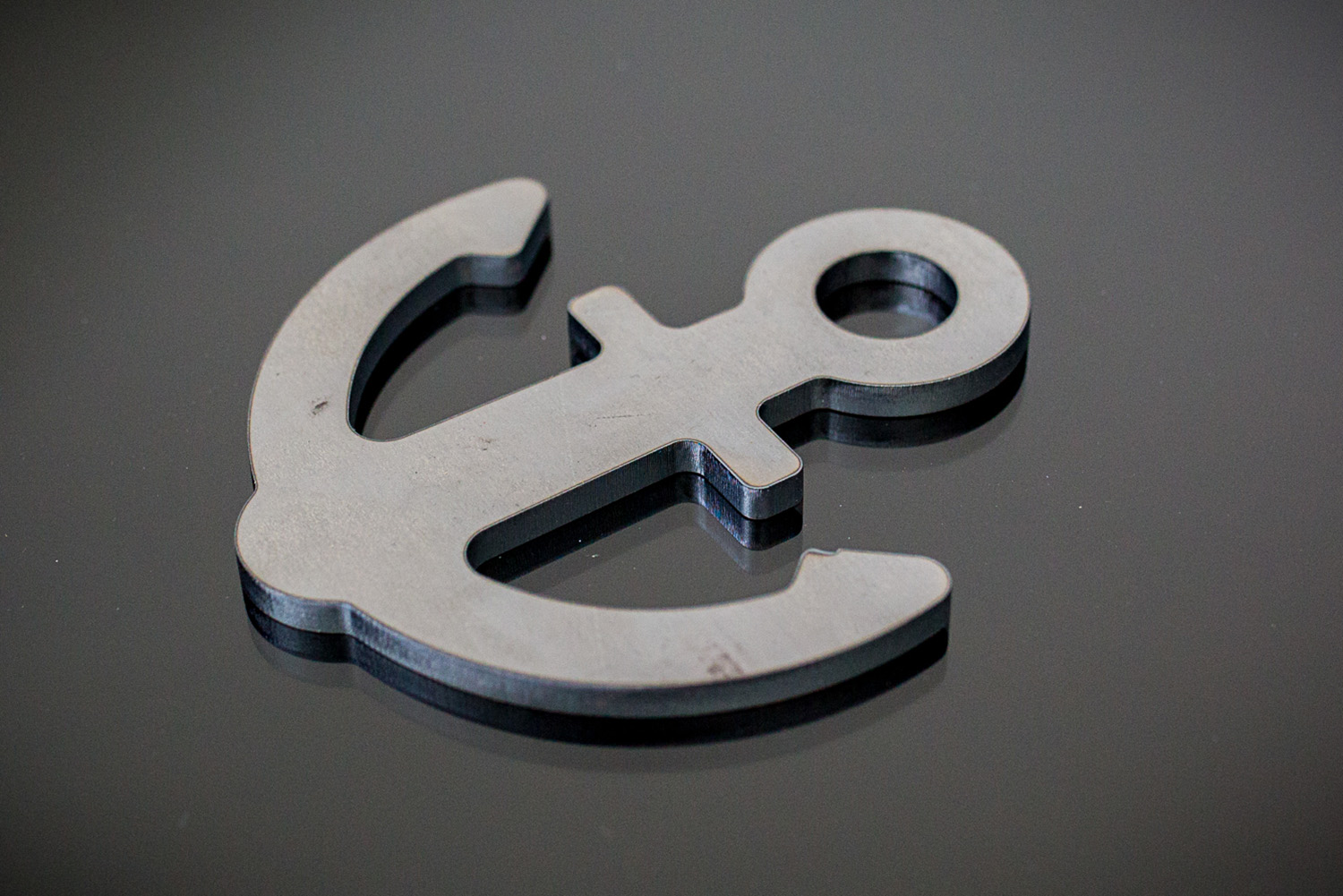
Cutlite Penta designs, builds and distributes fiber laser systems for high-precision metal cutting. Every Cutlite Penta machine comes from design and technology developed in-house and offers many production advantages:
- Cutting power up to 30 kW, cutting thicknesses up to 50 mm
- Evo 4 cutting head to support high power
- High cut quality
- High performance
- Custom configurations available
- Linear-motor systems
Frequently asked questions
What are the main systems for cutting metals?
Shearing, wire EDM, plasma cutting, waterjet cutting and laser cutting (fiber or CO2). Each has different advantages and limits.
What is the difference between fiber and CO2 laser?
Fiber laser has a shorter wavelength, with more precision and efficiency and the ability to cut higher thicknesses and reflective metals; CO2 is still used for plastics and organic materials.
Can laser cutting cut copper and brass?
Yes. Thanks to its shorter wavelength, fiber laser works reflective metals too, such as copper, brass and titanium.
How do you choose the right cutting system?
Beyond the purchase price, assess consumption, labor costs, production times, the precision required and the thicknesses to cut over the long term.
Discover Cutlite Penta cutting systems
Fiber laser systems for high-precision metal cutting. Tell us what you need to cut and we'll find the right solution for you.
