


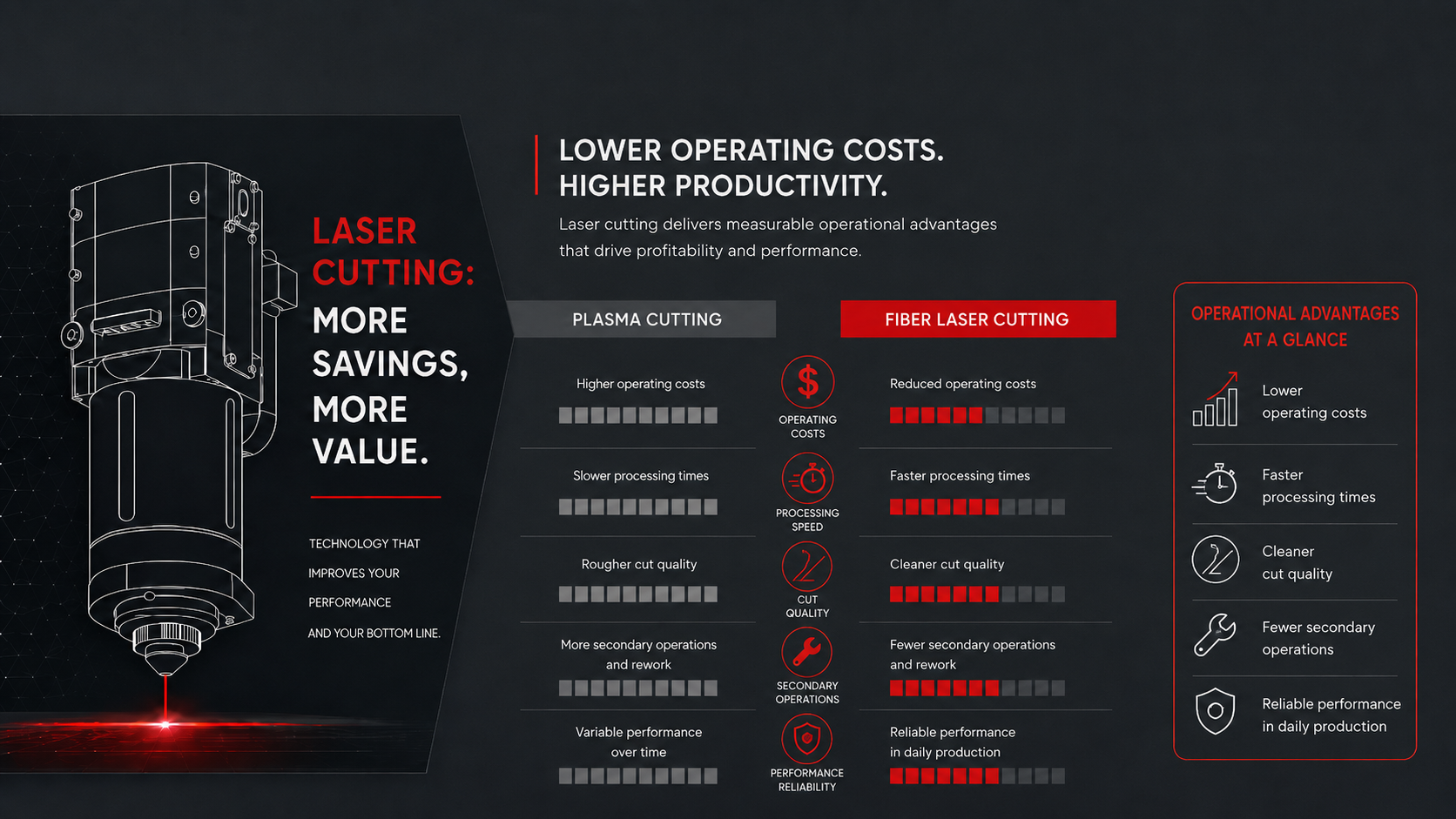
Plasma or laser? The right question to ask before choosing
You run a plasma system and wonder if it is time for the laser? You are not alone.
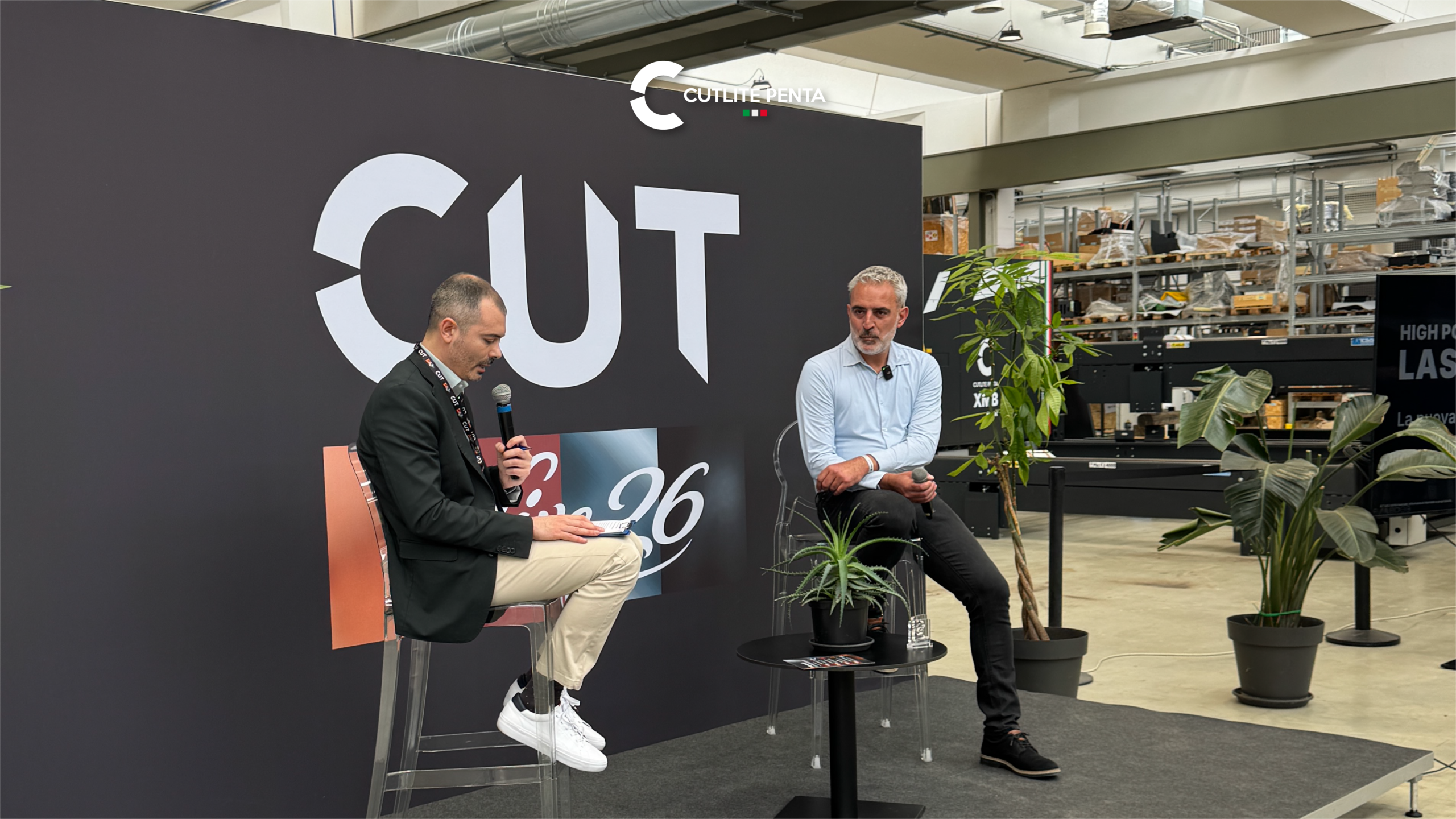
It is the question we hear most often, and at CUTLIVE26, our open house in May, Marco Colombo, Technical Customer Care at Cutlite Penta, explained what is really changing in industrial cutting.
Marco knows the subject up close: he has worked hands-on with oxyfuel cutting, plasma, and laser, on every type of material and thickness. An experience that today allows him to do the most important thing when a customer approaches the laser: recommend it the right way.
The right question comes before the technology
When a company considers moving from plasma to laser, the first thing to understand is not “which machine” but which jobs it needs to run and which result it wants to achieve. “A good salesperson”, Marco explains, “asks questions in return and goes to visit the shop floor, because only there do you really understand what the customer needs”. It is an approach we put at the center of our work.
First the need, then the solution.
What has changed in the laser in recent years
Over the last five or six years, the performance of laser systems has grown enormously: more speed, higher power, lower consumption. Thanks to Gas Mix and lighter routine maintenance, today, on the same part, the laser optimizes cycle times and finish with a result the plasma can no longer match.
Cutting speeds can be 4-5 times higher, cutting the cost per meter of cut by up to 50%.
Speed, yes, but above all quality
Subcontracting shops often chase pure performance, delivered by high power and Gas Mix cutting: more output in the same time. But the smartest customers know that speed alone is not enough. Cutting with oxygen, for example, leaves cleaner surfaces: a well-cut part means fewer downstream operations and components already ready for welding.
Focusing on speed alone risks leaving parts to rework and clean, an operation that can weigh 15-20% on costs.
Bevel changes the rules of the game
One of the most concrete turning points is Bevel cutting: K, Y, X, and V chamfers, even with 2-3 mm root faces, executed entirely on the machine. From boilermaking to shipbuilding, it means no longer reworking by hand operations that now come out finished, even on large plates like the panels of a ship.
Precision, thicknesses, and long-term savings
This is where the laser makes the difference. More precise holes, high dimensional consistency, less need for mechanical rework: the part comes out better and more repeatable. The laser is still more expensive than plasma to buy (it is fair to say so), but it is an investment that pays for itself: it eliminates downstream operations and generates real savings over the long run.
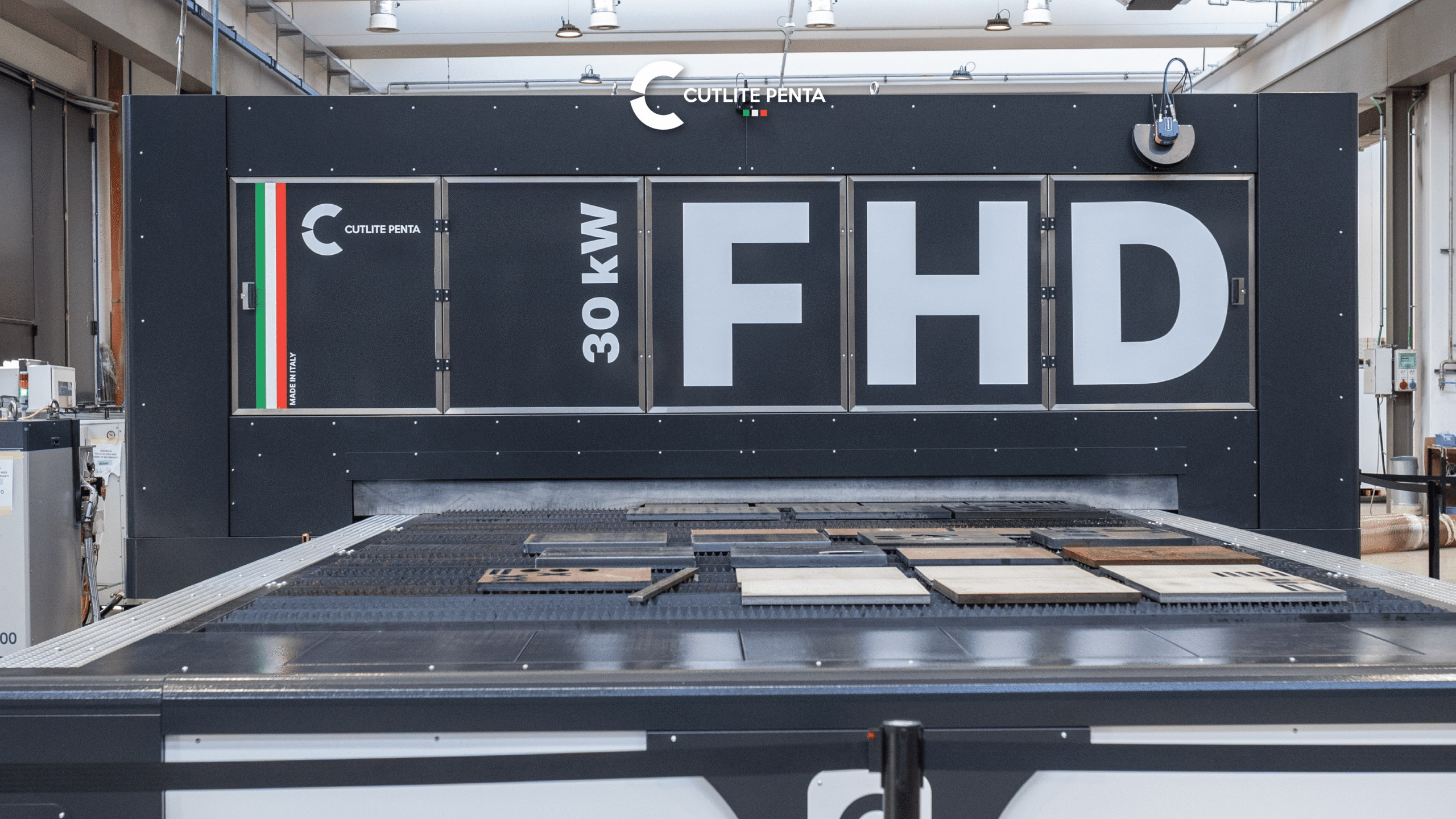
And thanks to power levels up to 60 kW, it now conquers thicknesses that until recently were simply unthinkable, opening the door to new customers precisely on heavy gauges.
More efficiency, less waste
Moving to the laser does not only affect cut quality, but also the efficiency of the shop. Cutting faster and with fewer reworks, each part requires less machine time and less energy to produce. It is a topic manufacturers feel more and more, and governments are moving on it too, with dedicated funding and incentives (in Italy, the Transizione 5.0 plan).
The real benchmark for comparison is not the machine price, but the TCO, the total cost of ownership.
Plasma pays off right away. The laser pays off over the long run.
Where plasma remains a valid choice
Let's be honest: plasma will not disappear. In 2026 it remains strong where these things count:
- contained initial investment
- ruggedness, ease of use and maintenance
- ability to process dirty, oxidized, or imperfect materials
- large formats and heavy thicknesses
- high-mix/low-volume production
- heavy and structural steel fabrication
Sectors like shipyards, large plates, agricultural machinery, or industrial repairs will keep relying on a solid, economical, and reliable technology.
Why switch to the laser (and how to overcome the doubts)
Companies still working with plasma should consider the laser when their needs grow in quality, production speed, and not having to rework parts. Even smaller shops can handle complex jobs, if the operator and the programmer are well trained. And it is a path already taken by people who knew plasma inside out: the Tecnosider story tells it, for example.
Many plasma veterans believe the laser is too delicate to manage or unable to process old, rusty sheets: there is only one best way to convince them, bring them to us for a demo, working with their very own materials and showing what the machines are capable of.
In conclusion
Plasma keeps a role, but it is a niche role. The laser, instead, keeps evolving and conquering new thicknesses, power levels, applications, and markets: from shipbuilding to rail, from earthmoving to energy. People now talk about plasma systems that can no longer keep pace with what the fiber laser brings. The difference, in the end, is all there.
Frequently asked questions
Plasma or laser: which is better?
It depends on the jobs to run and the result to achieve. The laser wins on cut quality, speed, and thicknesses, and pays for itself over the long run; plasma remains valid where contained investment, ruggedness, and imperfect materials count.
How much faster is the laser than plasma?
Cutting speeds can be 4-5 times higher, with the cost per meter of cut reduced by up to 50%. And a well-cut part eliminates rework that can weigh 15-20% on costs.
What is Bevel cutting and why does it matter?
It is angled cutting executed entirely on the machine: K, Y, X, and V chamfers, even with 2-3 mm root faces. Parts come out ready for welding, with no manual rework, from boilermaking to shipbuilding.
How is the higher cost of the laser justified?
With the TCO, the total cost of ownership: the laser costs more to buy, but it eliminates downstream operations, cuts faster, and uses less energy per part. In Italy, incentives like the Transizione 5.0 plan help support the investment.
Bring your materials to our demo area
Running tests in Prato go on all year: we cut your sheets, at your thicknesses, and you compare the result with your plasma.
