


Tecnosider: when plasma is no longer enough and the laser opens new possibilities
Some investments serve to renew a department. Others truly change a company's positioning in the market.
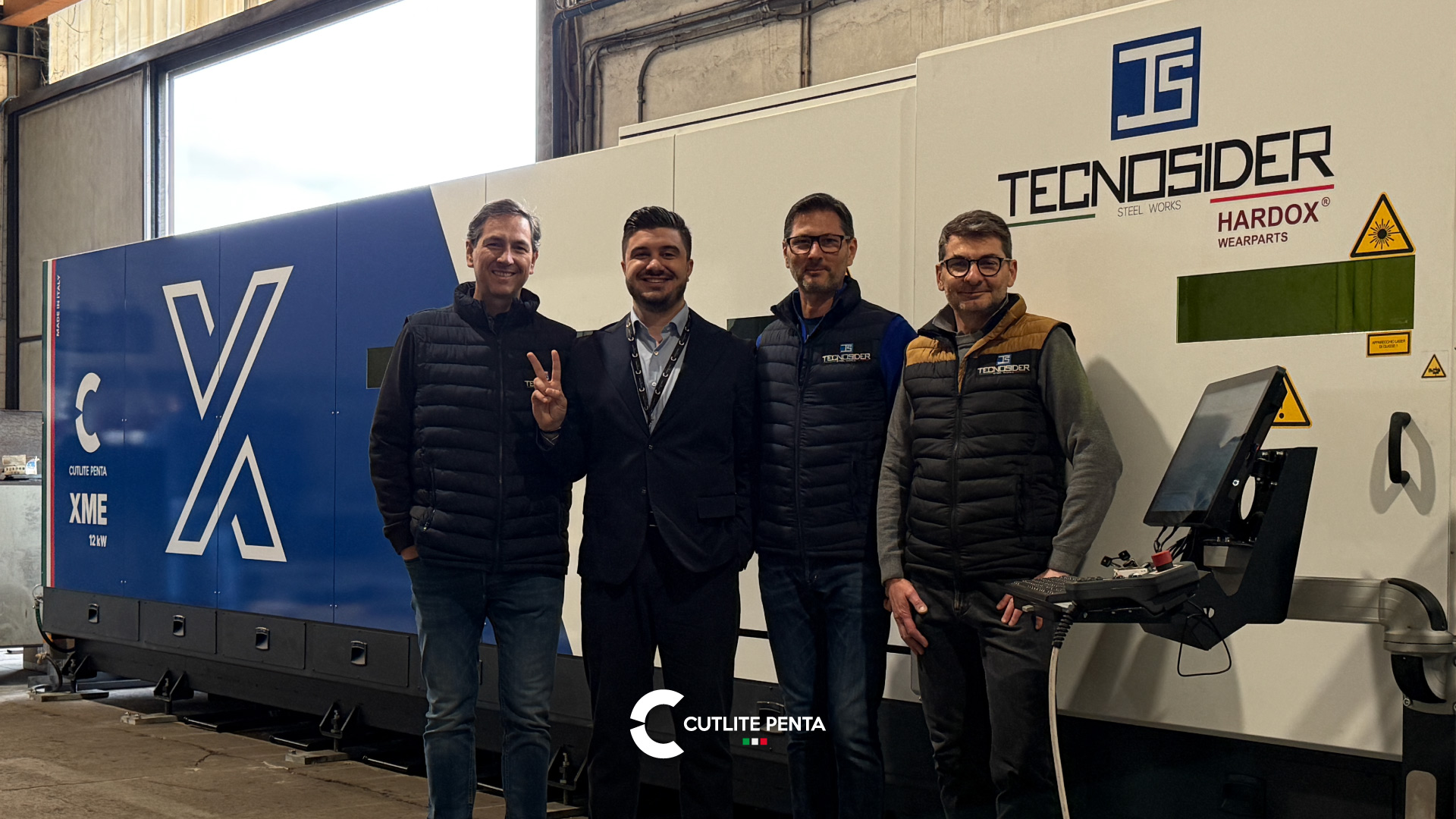
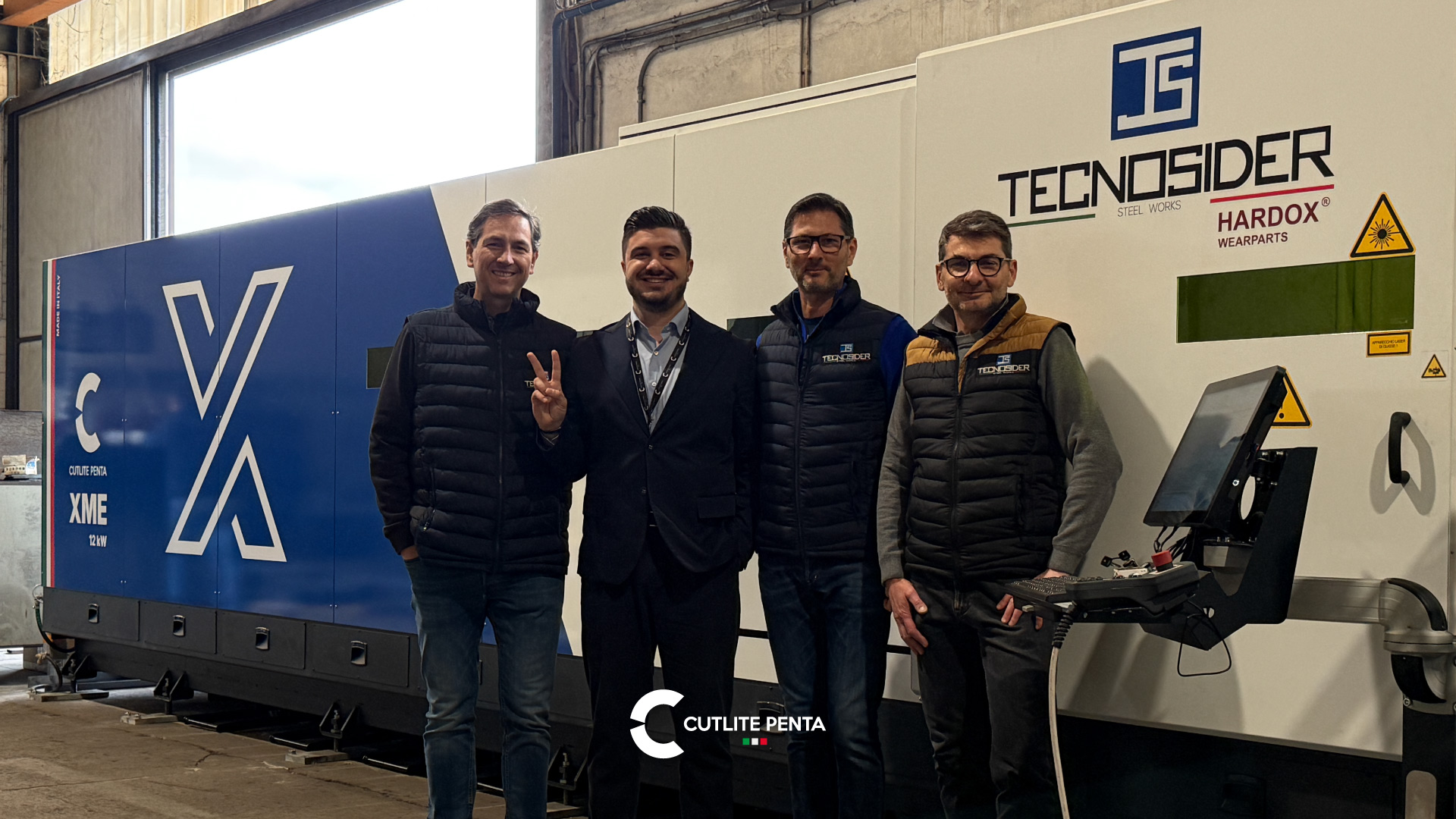
For Tecnosider Srl, based in Flero (Brescia), switching to high-power fiber laser was not a simple technological update. It was a change of pace: a choice born from the concrete need to overcome plasma's limits in certain jobs, which soon became something more. A way to widen the range of services, enter new productions, and answer ever more precise requests.
Telling the story are Alessandro and Mauro Montini, brothers and owners of Tecnosider, together with Alessio Venturini, their Cutlite Penta sales contact, who followed the company's path closely. From this dialogue one point emerges clearly: when a subcontractor decides to replace a historic technology like plasma, they are not just choosing a machine. They are choosing a production direction, a vision of the work, and the kind of expertise to rely on.
And this is where Cutlite Penta's role fits naturally: not as a generalist manufacturer, but as a company that chose to focus on the laser and develop it in depth, up to the most advanced applications and the highest powers. A precise choice, born not from wanting to do everything, but from wanting to do one thing in an ever more advanced way.
From the origins to the transformation of the business
Tecnosider was founded in 1982 by Romeo Montini, father of Alessandro and Mauro. At the beginning the business was steel fabrication, with cutting used mainly as an internal process. Then, over the years, the path changed: the company evolved, progressively specialized in cutting, and kept investing in ever more advanced technologies.
For a subcontractor, flexibility is not a theoretical value: it is a daily necessity. Every order is different, every customer brings different needs, every part demands a precise answer. It is exactly this reality that pushed Tecnosider toward systems capable of raising the quality level and reducing the limits imposed by less advanced technologies.
The moment plasma starts showing its limits
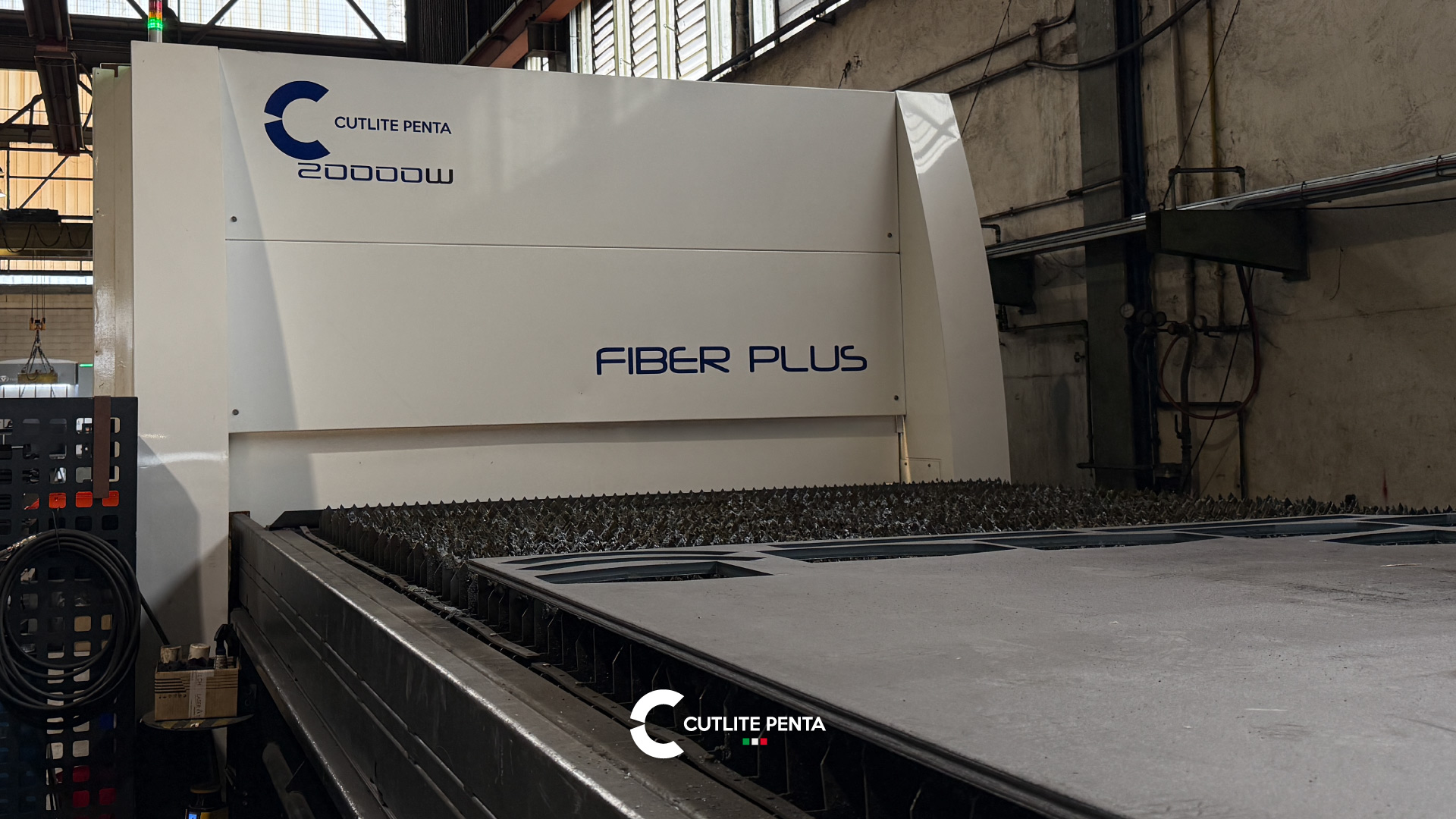
In 2024 Tecnosider decided to invest in a Cutlite Penta PLUS 6025 at 20 kW with Bevel technology. A major choice, made at a time when high power was still rare, which put the company among the first in Italy to use this kind of power.
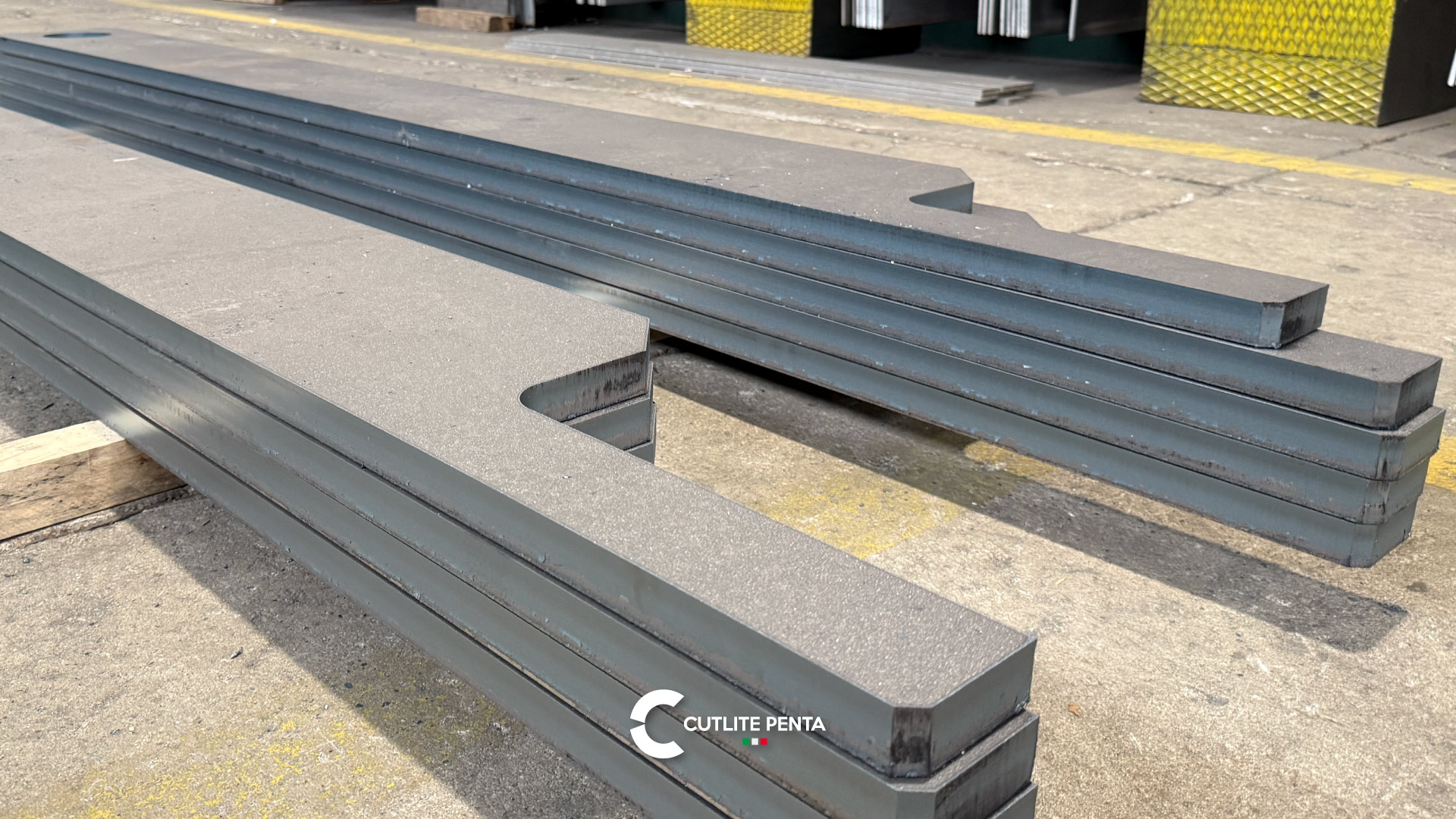
The starting point was very concrete: replacing a plasma system that had always done its job well but was starting to show clear limits in some operations. In particular on holes, finishes, and cut perpendicularity: aspects that make an enormous difference for a subcontractor.
Tecnosider already knew laser technology, since a 5 kW system was present in the company. But with the arrival of high power, the laser became something different: a concrete possibility to work on greater thicknesses, increase speed, improve quality and, with the Bevel, also widen the range of services offered to customers.
A technological choice, but also a choice of expertise
Tecnosider's transition should not be read only as a plasma-versus-laser comparison. It should also be read as the choice to rely on a partner that built its industrial identity on the laser: not someone covering many different technologies, but someone who chose to go deep into one. It is this focus that makes the offer credible on high power and on the most advanced configurations.
For Tecnosider this was not a theoretical nuance: it became a concrete part of the decision. When you replace a technology you have worked with for years, the machine matters, of course. But so does the level of experience of those who design that machine, develop it, and know how to bring it into real production contexts.
When the laser is not just faster, but more useful
On paper, in some cases, the laser can look like a less convenient choice if you only consider the cost of cutting. But in industrial practice the correct reasoning is different, and it applies to every plasma versus laser comparison:
The cost of cutting must be read within the whole process: how many operations does it eliminate afterwards?
If a part comes out with more precise holes, better quality, higher dimensional consistency, and less need for mechanical rework, the laser gains its full meaning. For Tecnosider this translated into a very concrete consequence: the system attracted new customers, above all on heavy thicknesses: not necessarily because the laser was always the cheapest choice in absolute terms, but because it became the smartest one in relation to the final result.
A production shift, not an ideological one
One aspect makes Tecnosider's story particularly credible: plasma is not described as a technology to demolish. On the contrary: Alessandro Montini clearly acknowledges that plasma still has its function and that, had there been room, it would probably have been kept in the department. But for a subcontractor, needing to optimize space, time, and flexibility, the solution had to not only replace plasma but do more.
The real question was not “what to remove,” but “what to replace it with to open new opportunities.” The laser answered exactly that need: new productions, new customers, more elasticity. Alongside the laser, the company keeps using oxyfuel cutting, which maintains a precise role on the heaviest thicknesses. It is exactly this balance between technologies that tells the maturity of the choice.
High power does not just mean running faster
In the words of Alessio Venturini, an interesting point emerges: Tecnosider was among the first companies in the Brescia area to use 20 kW not just to run faster, but to pursue cut quality and, above all, to replace plasma.
It is a decisive aspect: high power alone does not explain the value of an investment. What really matters is how it is applied, with what production goal, on which materials, and with what attention to the final result. In Tecnosider's case, the value showed above all in the quality obtained on certain surfaces and materials: where cutting is not a fast step of the process, but the step that conditions everything that comes after.
The second investment: continuity, organization, and consistency
After a few years came a second important step: replacing the first laser bought in 2015, one of the first fiber systems on the market. Once again the choice fell on Cutlite Penta, with an XME at 12 kW considered fully adequate for the company's needs. A decision that tells the Montini brothers' logic well: not chasing the highest power on principle, but building the department consistently with the real work.
The new system also introduces Gas Mix technology, particularly useful on wear-resistant materials: a central topic for Tecnosider, which is part of the Hardox by SSAB network and receives many requests exactly on these applications.
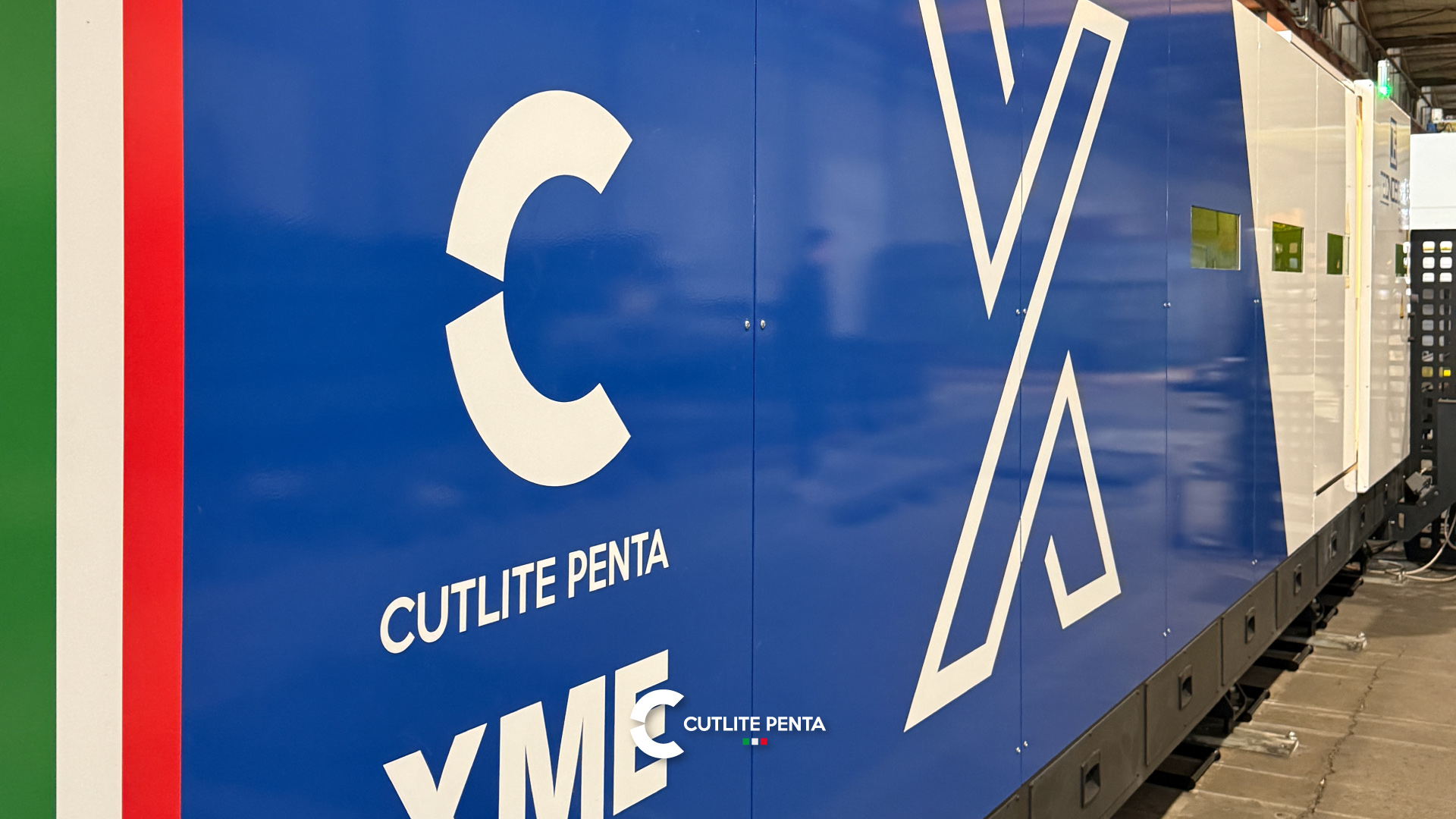
Then there is a very concrete advantage: having two machines from the same supplier means working with the same software, simplifying operator interchangeability, managing the department better, and guaranteeing more continuity to the process. Choosing Cutlite Penta again does not just confirm a positive relationship: it recognizes the value of a consistent technological line.
Holes, tolerances, wear-resistant materials: where the laser really changes the work
The first topic is holes. On certain thicknesses, obtaining more precise holes, already close to the final result, means reducing or avoiding subsequent machining: drills, rework, additional steps. For the customer this translates into less time, fewer indirect costs, and a simpler process.
The second is dimensional consistency. When parts must then be clamped, machined, or inserted into subsequent phases where repeatability is fundamental, the difference between a minimal deviation and greater variability weighs enormously. This is where laser precision becomes a tangible advantage.
Then there is the chapter of wear-resistant materials, where the laser, especially combined with Gas Mix, shows another strength: less alteration of the material compared to other thermal processes, with concrete benefits on machining quality and on the part's behavior in later phases.
High power makes sense, but inside a real factory
The last reflection is also one of the most lucid: high power has enormous value, above all on heavy thicknesses and complex materials, but “more power” is not always and in any case the right answer. The production context and available energy come into play, as do machine format, table unloading speed, the type of orders, and whether you work in series or on ever-different productions.
For a subcontractor like Tecnosider, working with different shapes and non-standard productions, chasing maximum theoretical speed is not always the most useful choice. That is also why the combination of a 20 kW and a 12 kW looks like an intelligent construction of the department: not a race to the highest number, but a reasoned answer to the real needs of production.
A story about technology, but above all about positioning
Tecnosider's story tells the moment when a subcontractor chooses to raise the level of its offer, betting on a technology capable of opening new jobs, cutting steps, and giving continuity to the process. And it tells the value of specialization: in the laser world, especially at high power, it matters to rely on those who treat this technology not as one more item, but as the center of their work.
The future of cutting is not improvised. It is built, choice after choice.
Frequently asked questions
Who is Tecnosider Srl?
A subcontracting company from Flero, in the province of Brescia, founded in 1982 by Romeo Montini and led today by his sons Alessandro and Mauro. Born as a fabrication shop, it specialized in cutting and is part of the Hardox by SSAB network for wear-resistant materials.
Which machines did Tecnosider choose?
In 2024 a PLUS 6025 at 20 kW with Bevel technology, in place of plasma: among the first companies in Italy at this power level. Then an XME at 12 kW with Gas Mix technology, replacing the first fiber laser from 2015. Alongside the laser, oxyfuel cutting remains for the heaviest thicknesses.
Why replace plasma with laser?
To overcome its limits on holes, finishes, and cut perpendicularity, and to open new possibilities: more precise parts with less mechanical rework, higher dimensional consistency, and new customers on heavy thicknesses. The cost of cutting must be read within the whole process: what counts is how many operations it eliminates afterwards.
What is Gas Mix technology for?
To improve cutting on particular materials, starting with wear-resistant ones like Hardox: less alteration of the material compared to other thermal processes, with benefits on machining quality and on the part's behavior in later phases.
Find out what the laser can open up in your department
Bring your materials and thicknesses to the demo area in Prato: holes, finishes, and perpendicularity are judged on the part, not on paper.
