



5-axis laser machine: how it works, explained by our technician Gianluca
Two more axes change the job: cutting in three dimensions on tubes, silos and curved parts, where a 2D machine cannot reach.
Among our metal cutting systems, 5-axis laser machines are the ones that handle 3D cutting. We talked about them with Gianluca Salerni, a technician specialized in 5-axis systems, with Cutlite Penta for seven years.
Gianluca, what sets 5-axis machines apart from the others?
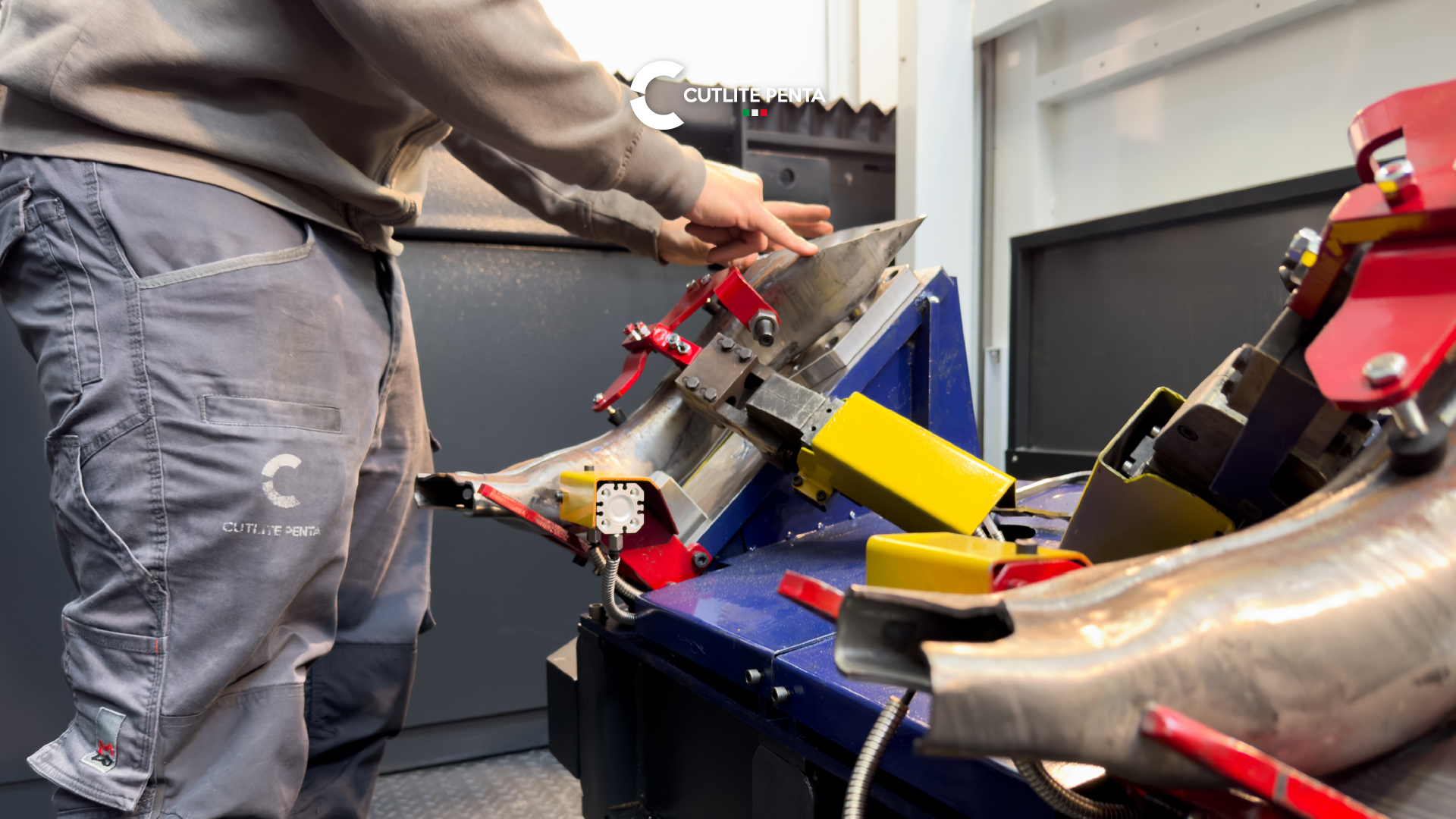
First of all they offer more freedom of movement, thanks to the two rotary axes (B and C) added to the traditional X, Y and Z. This configuration, together with two motors, allows work at 180° and complex 3D cuts on curved objects such as tubes or silos: operations a conventional 2D system simply cannot do.
They are built with a fixed or rotating table depending on the customer's needs, and can be equipped with fiber laser sources at different power levels.
In which contexts are they used most?
They are used across every industrial sector where cutting in three dimensions is needed:
- In the production of complex automotive components.
- In building the internal structures of household appliances, refrigerators for example, working thin materials such as aluminum and steel.
- In agriculture: wine tanks, components for tractors and other farm vehicles, the domed sections of silos.
- In tube cutting, for jobs that require precision and complex geometries.
What does self-learning involve? And how do you teach the system to customers?
Self-learning is there to run the machine safely and efficiently. We install an onboard computer that constantly monitors speed and handles the alarm functions: if the machine moves beyond the allowed limit distance, for example, the system goes into alarm and prevents unsafe movement.
The cutting file can be created directly on the machine, entering the starting point manually, or imported from the customer.
As for training, when the machine is delivered we handle installation and operator training ourselves, explaining how the system works and the maintenance procedures. Where initial training stops, experience gradually takes over.
“We keep learning from our customers' questions too: they often open up new ways of using the machine and suggest features to add.”
What are the safety features?
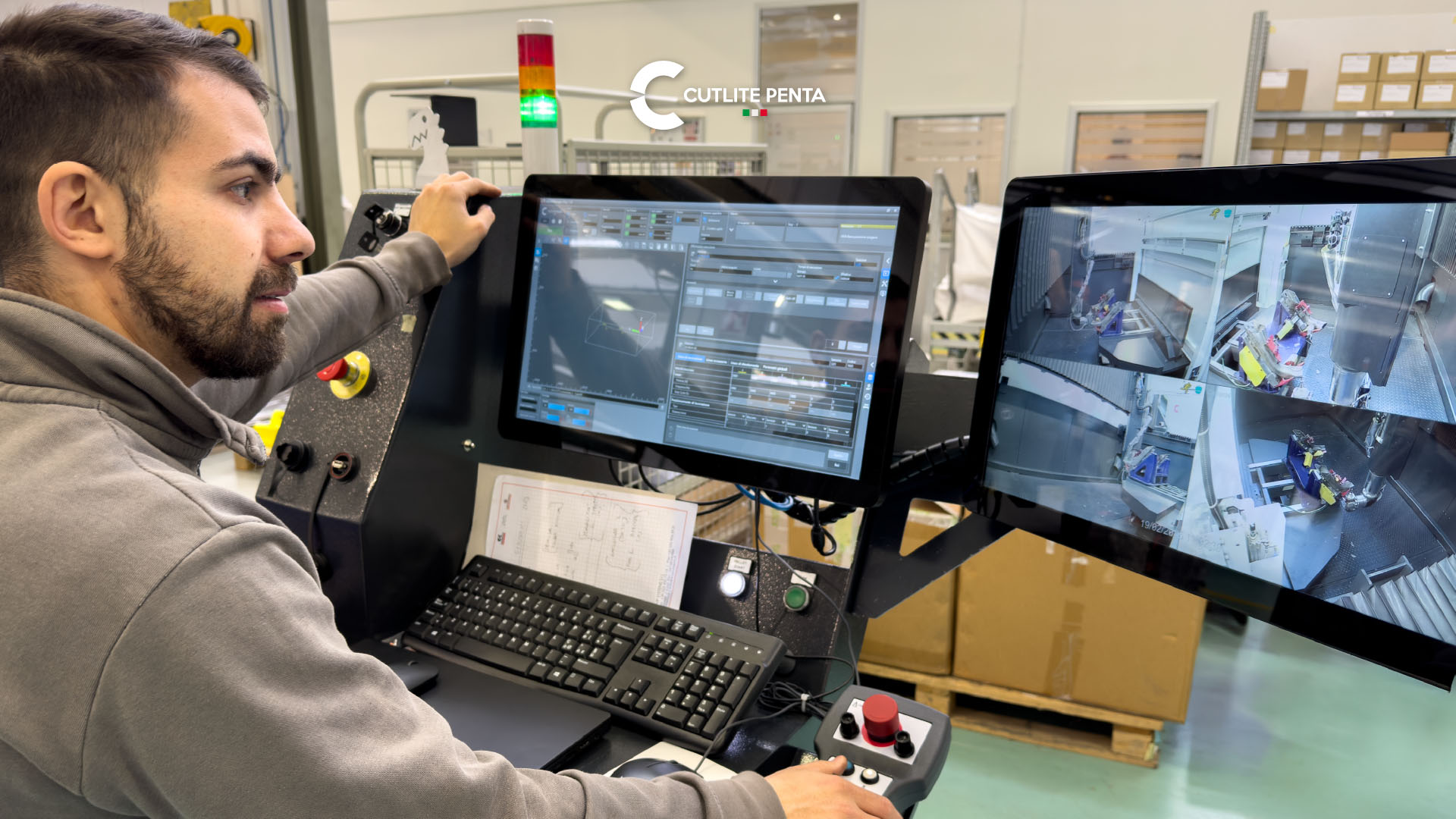
Our machines are designed to high safety standards. Since the head moves in 3D, the cutting process can carry higher risks than 2D work: that is why the structure is fully closed and has no windows. The inside can still be monitored, though, thanks to cameras that let you follow both machine operation and the cutting process in real time.
We have also implemented safety laser scanners that stop the machine immediately if abnormal movement or an obstacle is detected, preventing collisions and accidents.
Which software is used for programming?
We supply the PEPS software with the machine: it lets you draw and simulate cuts in 3D, importing drawing files in .step format or other three-dimensional formats.
The ideal solution is for the customer to provide the file ready to go: it only needs importing into the machine and optimizing in its parameters. Once the parameters are set, the machine can produce thousands of identical parts, which makes it a good fit for series production.
How do you see the company's technological evolution over these years?
In seven years I have seen major changes. I started here on CO2 machines and only later moved to the 5-axis ones. Comparing the machines of a few years ago with today's, we are evolving very fast: they are faster and more reliable, with new systems, and the development team keeps growing.
One of the company's strengths is how close the offices and production are, in the same building or in adjacent ones. That makes communication much easier: problems get solved quickly and new solutions can be tested immediately. This synergy between departments is essential.
Frequently asked questions
What is a 5-axis laser machine?
It is a machine that, on top of the three linear axes X, Y and Z, has two rotary axes (B and C). The two extra axes let the head orient itself in space and cut in three dimensions on curved parts, which a 2D system cannot do.
What parts are cut with a 5-axis laser?
Automotive components, internal structures of appliances such as refrigerators, wine tanks, components for tractors and farm vehicles, the domed sections of silos and tubes with complex geometries.
How is a 3D cut programmed?
With the PEPS software supplied with the machine: cuts are drawn and simulated in 3D by importing .step files or other three-dimensional formats. The file can also be created directly on the machine, entering the starting point manually.
How is safety ensured in 3D laser cutting?
The structure is fully closed with no windows, and the process is followed on the internal cameras. Safety laser scanners stop the machine if abnormal movement or an obstacle is detected, and the onboard computer goes into alarm if limit distances are exceeded.
Discover what a Cutlite Penta fiber laser can do for your production
Tell us about your work: we'll help you find the laser system best suited to your thicknesses, volumes and goals.
