



FG Frontalini e Gabbanelli: 55 mm of thickness with a 20 kW laser
Ten years, revenue tripled, two PLUS systems on the shop floor and the old flat plasma machine retired: in San Biagio di Osimo, medium-to-heavy steel fabrication has reorganized itself around the laser.
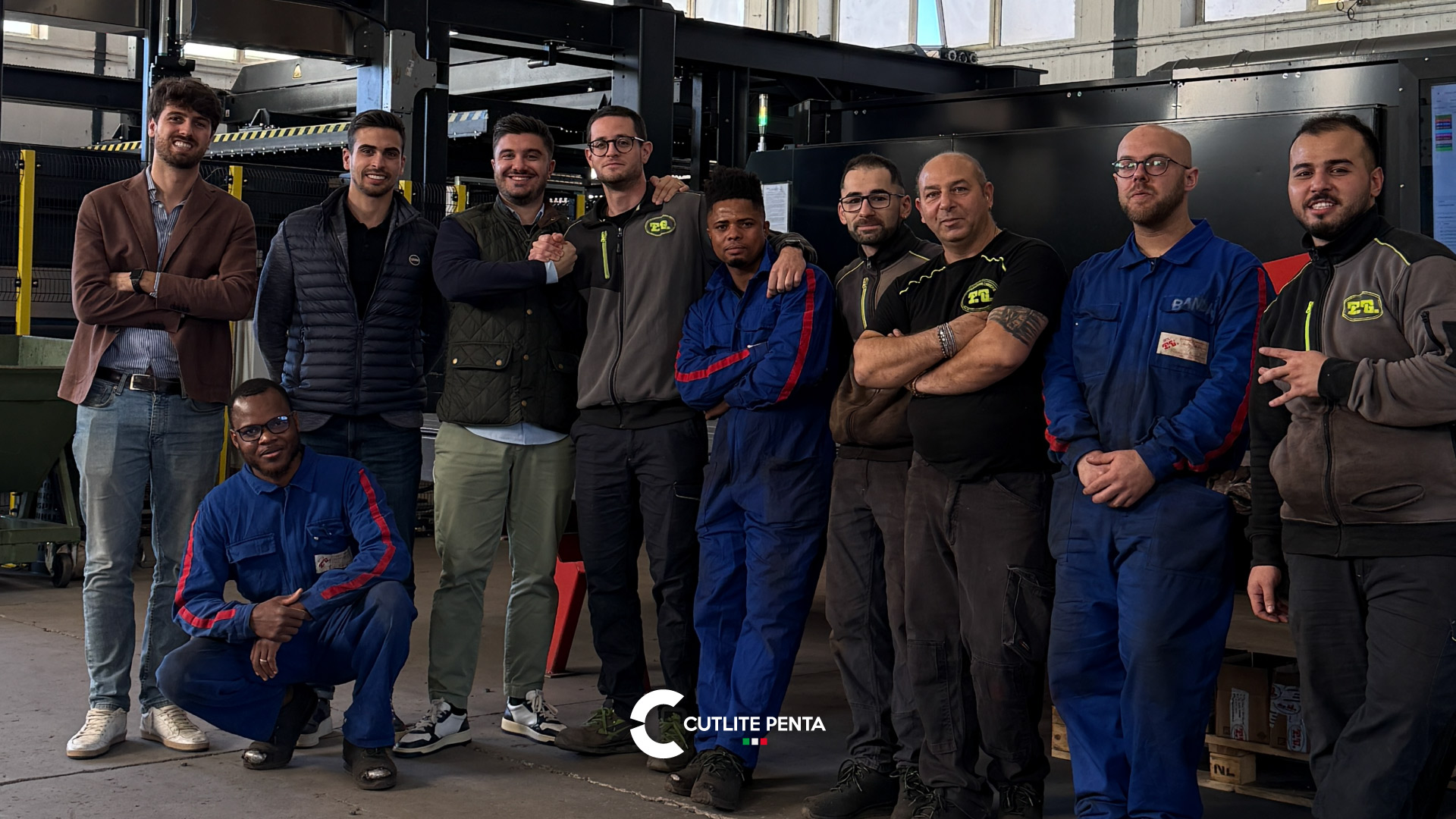
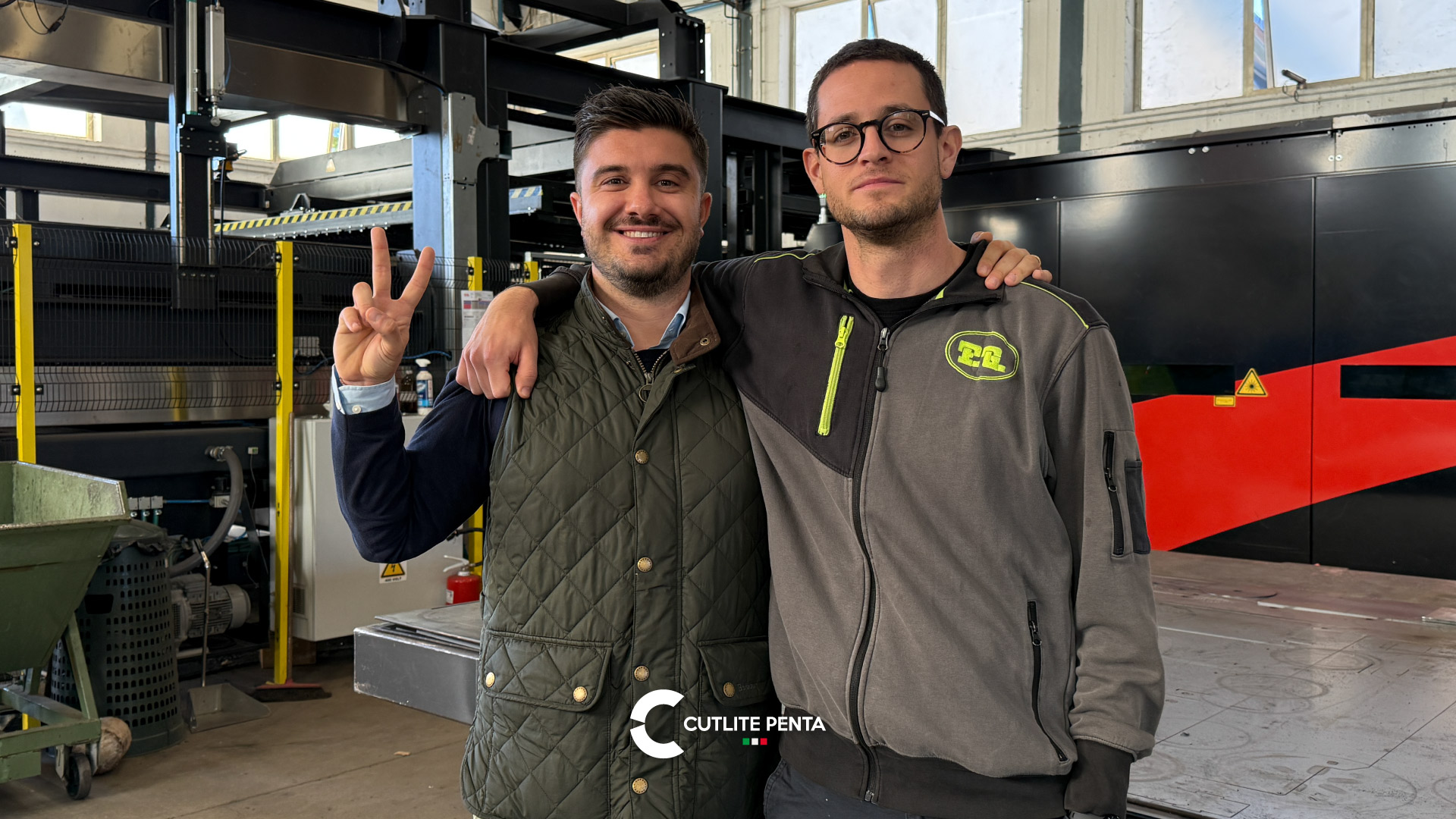
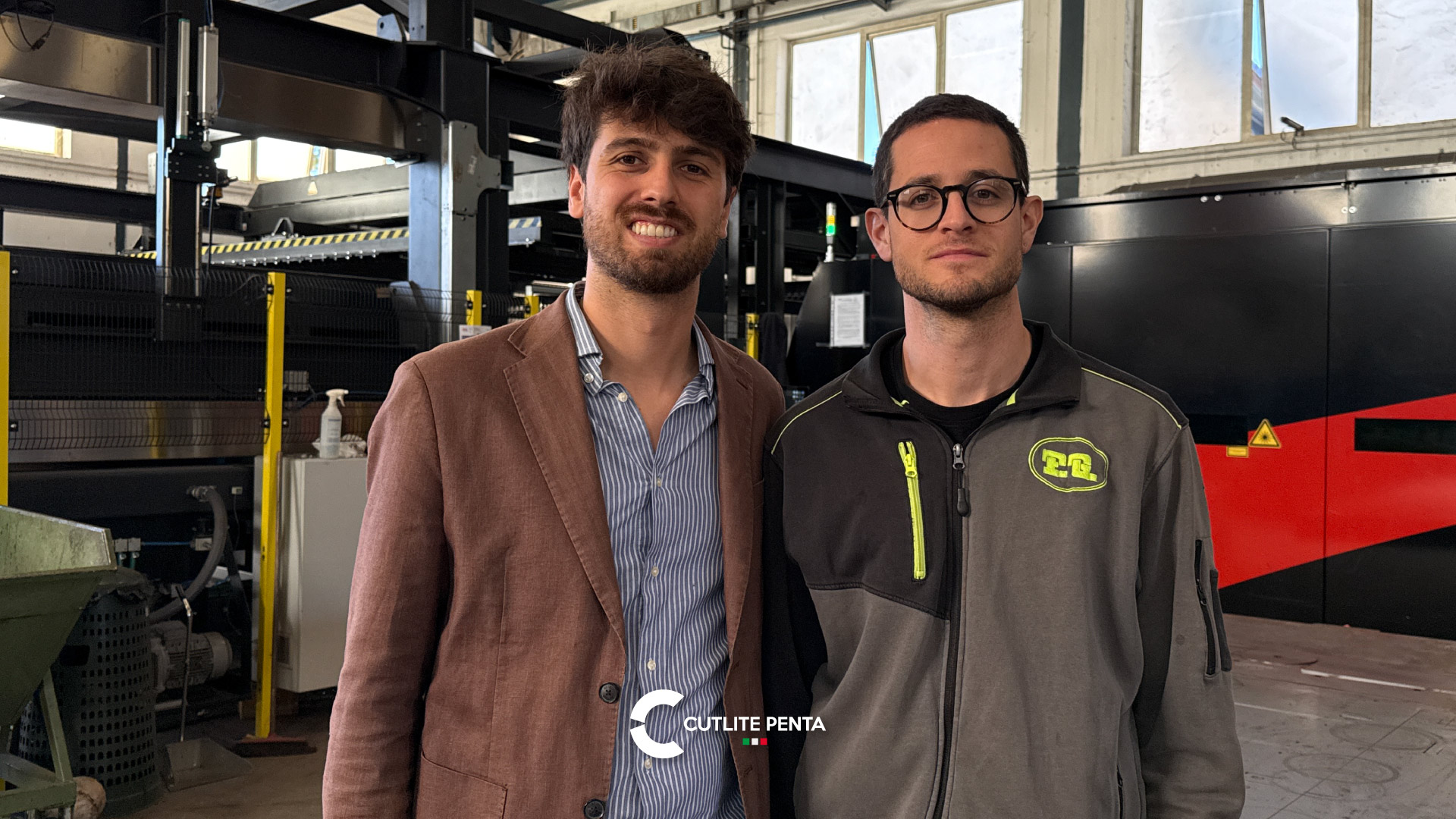
We visited FG di Frontalini e Gabbanelli together with Alessio Venturini, Cutlite Penta Area Manager, and Alberto Castagnino of Lantek. Andrea Bellucci, managing director, showed us around: he joined the company at nineteen and today, at thirty, he runs it. We asked him how you decide on an investment when your shop cuts anything from one millimeter to a hundred and fifty.
Who FG di Frontalini e Gabbanelli are
FG di Frontalini e Gabbanelli is a medium-to-heavy steel fabrication shop based in San Biagio di Osimo, in the province of Ancona, Italy, and has been in business for more than forty years. It started as a small artisan workshop making gates and railings. Today it processes sheet and plate plus certified materials for heavy fabrication work, with cutting, bending, machining and welding departments.
Over the past ten years the company has tripled its revenue, as Andrea Bellucci told us, investing in machines and in people. The cutting department is the part that changed the most.
What is on the shop floor today
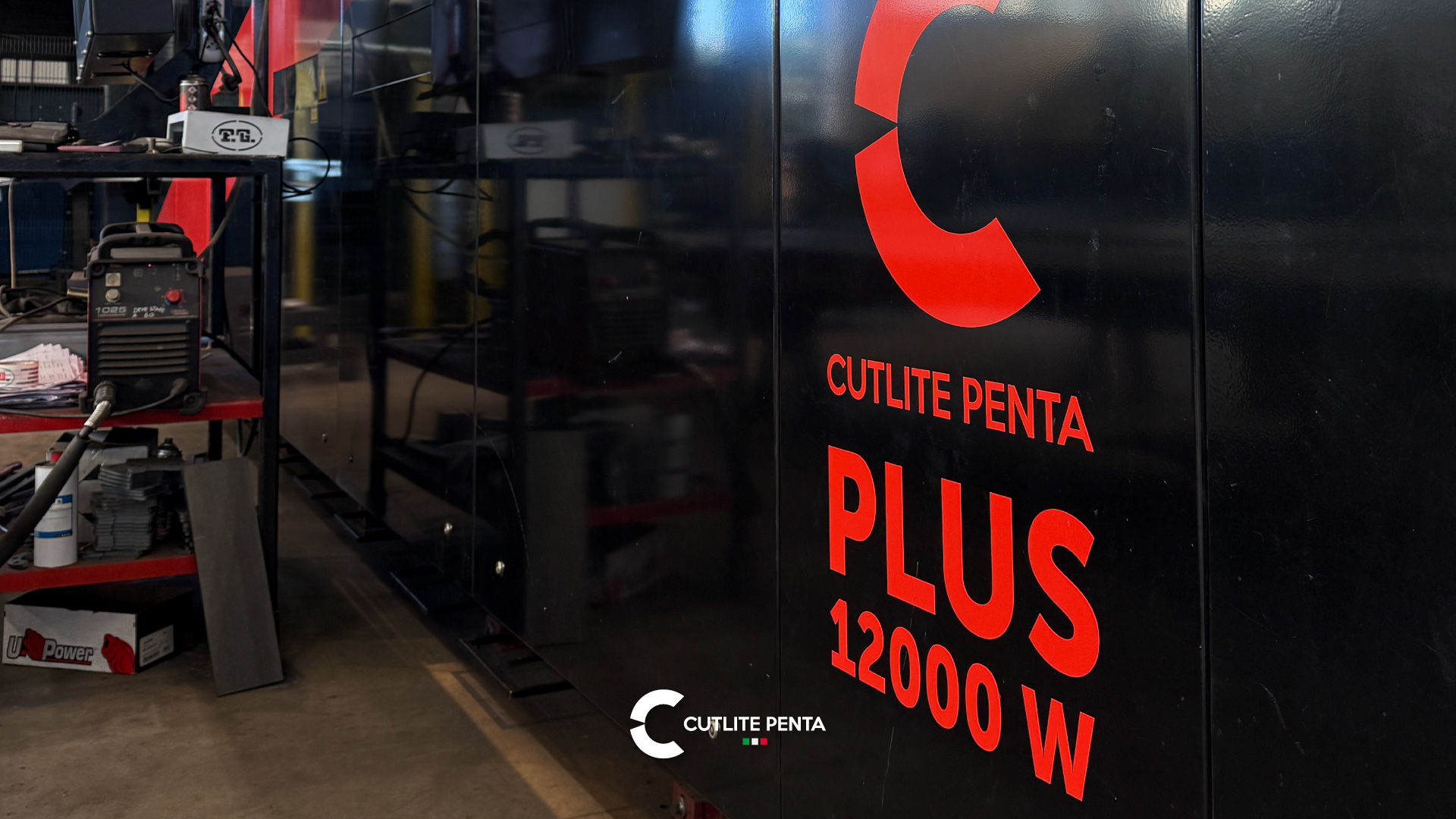
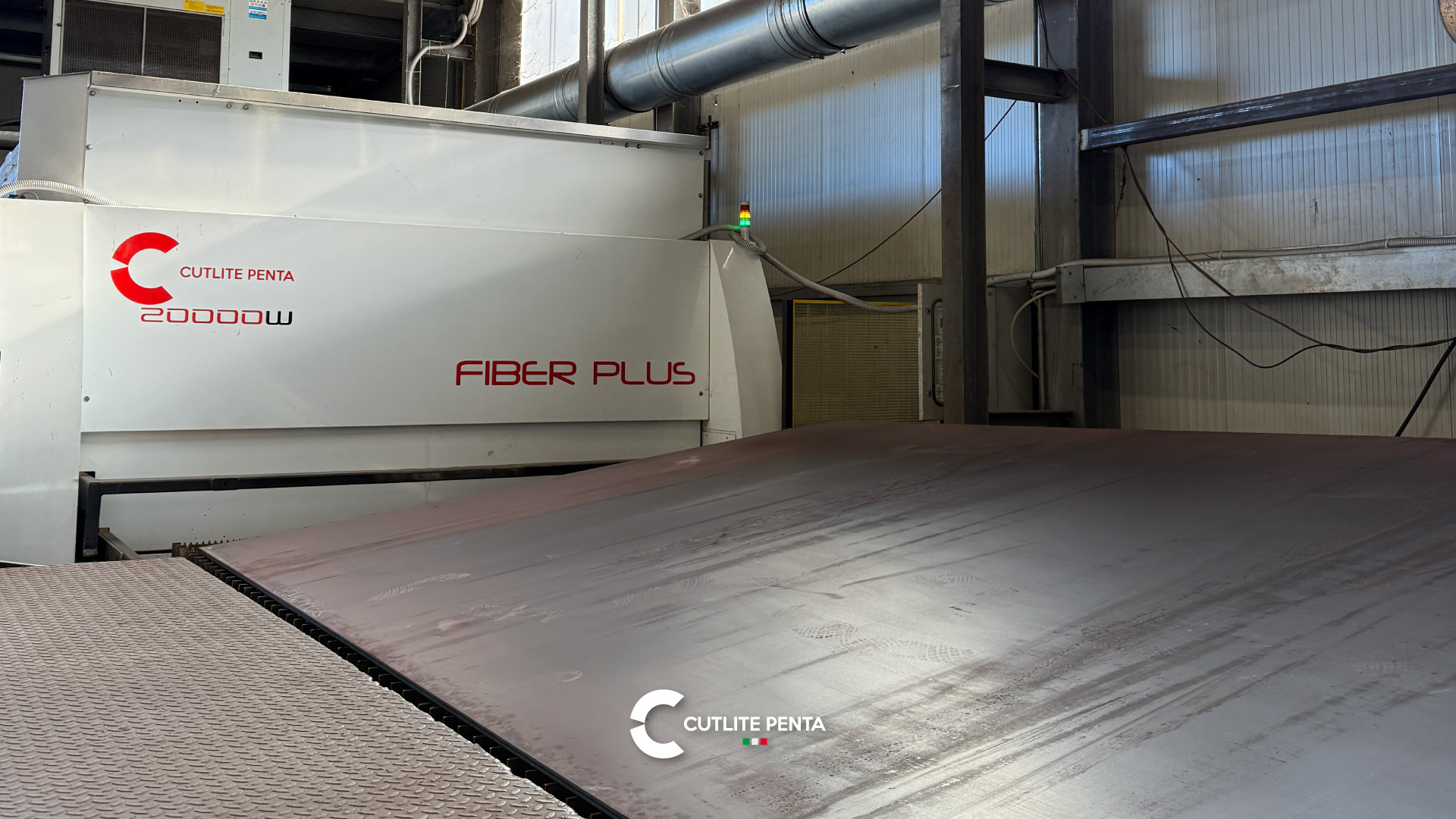
«In recent years we decided to invest in the future», Andrea Bellucci says, «by adding two Cutlite Penta cutting systems: a PLUS 12 kW 6025 with loading and unloading, and a PLUS 20 kW 6525 with pallet change. The impact was surprising, far stronger and more dynamic than we expected.»
The laser, though, is only one part of the department. The shop also runs:
- a 12 × 2.5 meter oxyfuel cutting system
- a plasma bevel cutting system for large formats
- press brakes, milling machines and lathes
- a welding department with four stations
- a new press brake that bends parts up to 9 meters long
And the next step is already on the table: «If it proves to be the right call», Andrea adds, «we are thinking of replacing one of the lasers with a 9 meter system with a bevel head.»
Why the old plasma machine went and the plasma bevel stayed
Before the 20 kW arrived, plasma at FG covered the materials the lasers of the time could not: wear-resistant and high-strength steels such as Hardox and Strenx.
«We had kept the old plasma machine to cut materials like Hardox or Strenx», Andrea explains, «but with laser cutting in Gas Mix we no longer needed it, and in the end we retired it.»
That sentence is worth reading for exactly what it says: the plasma machine that went is the flat cutting one. Plasma bevel cutting on large formats and oxyfuel cutting stayed exactly where they were, because above a certain size and thickness they still make sense. The laser has not wiped out the other technologies: what moved is the line where each one becomes the cheaper choice.
How the work with Cutlite Penta started
FG and Cutlite Penta have been working together for about six years, through Alessio Venturini, today Area Manager. The relationship, though, is older than the supply contract: «Alessio and I have known each other for almost thirteen years, and we have built a relationship of friendship, respect and mutual trust», Andrea says.
«When he proposed a new 20 kW laser technology our expectations were low, but the results beat every forecast.»
Alessio remembers that phase well: «FG had the second 20 kW installed in Italy. After the cutting tests on every material at our plant in Prato, together with Andrea and three of the four partners, Mirko, Francesco and Cristiano, we went to see the machine in production at a company in Turin, the first one with a 20 kW. Everything started there.»
Two years later the second machine arrived, the 12 kW PLUS, this time with the loading and unloading system: «It was a strategic choice», Andrea continues. «It let us optimize our times and run the machine at its full potential.»
Up to 55 mm: what actually makes the difference
The service engineers who walk in
«A large part of how satisfied we are comes down to Matteo Alfaroli, Damian Kercunga, Giuseppe Fanello and Alberto Ulivieri», Andrea points out. «They are professionals who have followed us for years, they train us, they help us push the machines further every time.»
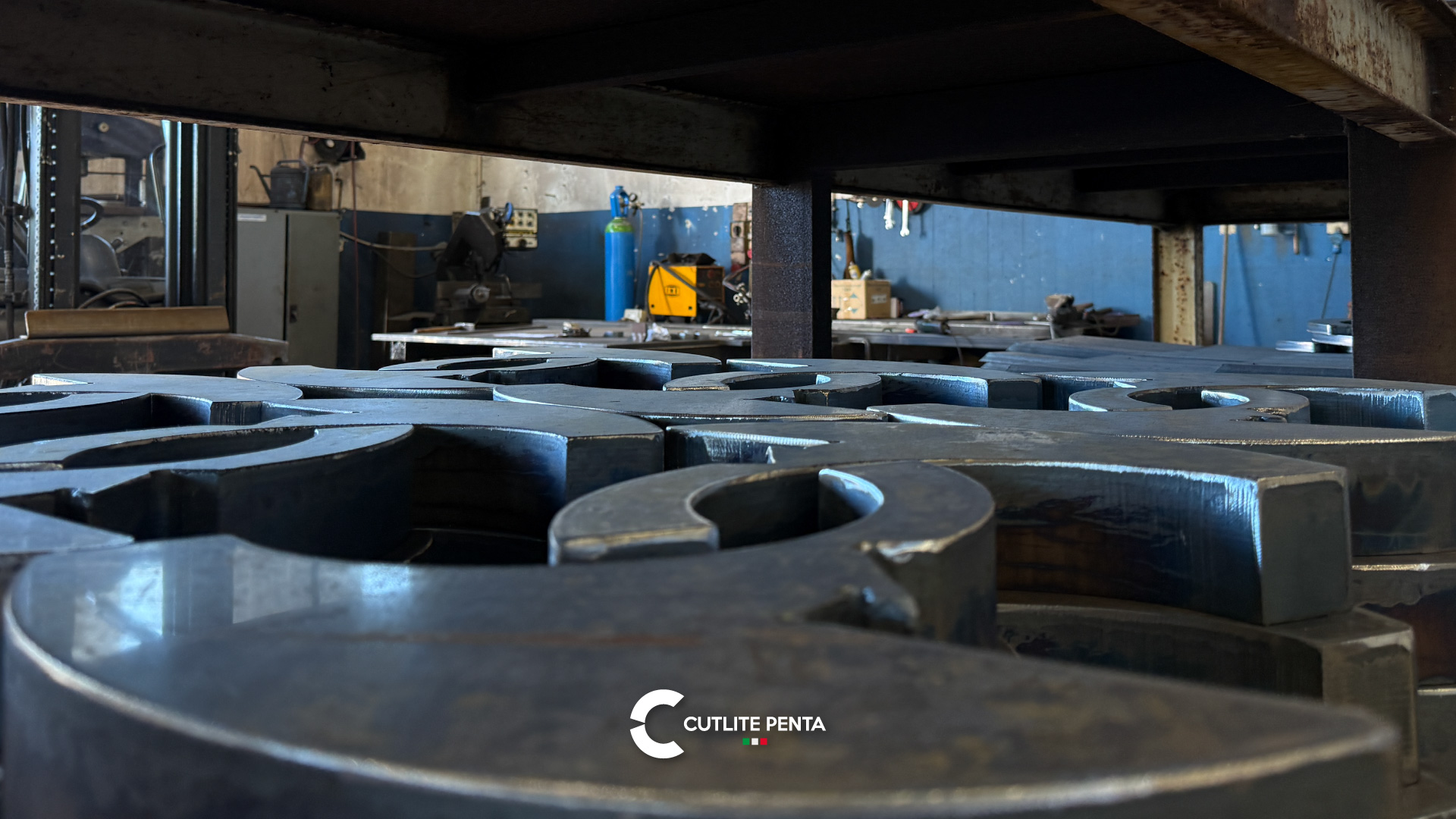
That shared work is where the hardest number of the visit comes from: with the 20 kW laser, FG cuts up to 55 mm. It is not a figure you buy along with the power. You get there by working on parameters, gas and maintenance, one machine at a time.
Service, and the point that is still open
«We have worked with them for many years and I know what their service is worth», Andrea explains. «When I have a problem I always ask for one of the guys if possible: they already know how we work and they fix it quickly.»
There is one request, though, that we would rather report exactly as it was made, because it is not only about FG but about every company that works almost every day of the year: «Service cannot stop at the weekend. I understand it takes complex organization, but a paid emergency service would help.» On everything else the verdict is clear: «Overall we are fully satisfied with the partnership and with the support we get.»
Human contact is what sets us apart. With FG it was never only about price, but about technological value and mutual trust.
How FG weighed the alternatives before deciding
«Personal relationship with Alessio aside, my duty is to act in the company's interest», Andrea says. «Every investment has to be weighed carefully: we are an unusual shop, we cut from one millimeter up to 150 millimeters of thickness, with cutting, bending and machining departments. That means spreading resources sensibly and picking the best product to keep growing.»
One millimeter and 150 millimeters, it should be said, are not the same department: the laser covers the lower and middle part of the scale, oxyfuel cutting and plasma bevel the upper part. That is why three cutting technologies live side by side at FG instead of one.
«Working with FG mattered to us», Alessio adds. «It was one of the first purely technical negotiations: not the price, not the brand, but a real assessment of what the machine does. Andrea and the partners invested time and attention, compared several alternatives, and gave us the chance to prove our technological advantage. With them the discussion was never about price: they encouraged healthy competition and pushed us to get better.»
Lantek: the software that holds engineering and production together
FG's growth also runs through software. The company works with Lantek, a firm specialized in production management software for the metalworking industry.
What the software handles today
«At Frontalini we replaced one of our competitors», explains Alberto Castagnino of Lantek. «Their system today handles 3D files, full traceability and integration with the company's ERP. It is not a simple CNC program, it is a tailored ecosystem.»
The next project is already under way: integrating the software with the new press brake. «Our goal is to put every area of the company in direct communication, from engineering to production», Andrea explains. «Thanks to Mirko, one of the partners, we handle change quickly and efficiently.»
For Alessio Venturini that is half the game: «Good software is 60% of the machine. Lantek and Cutlite Penta together work well for shops like FG.»
The challenges FG sees ahead
For Andrea Bellucci the hardest challenge is not technological: «In the Marche region, as in many parts of Italy, you have to change the mindset of companies, hard as that is, not just their numbers. You need a balance between tradition and innovation.»
Alessio widens the point with an image: «Anyone can buy the machines, but people make the difference. Technology is like a hammer and a chisel: hand them to Michelangelo and you get the Pietà; hand them to me and you get something pitiful.»
Andrea sees it the same way: «I joined the company at nineteen and today, at thirty, I am the managing director. I was given trust, and that is worth more than any technology. I found the same spirit at Cutlite Penta and in its CEO, Delio Mugnaioni: passionate, straight, forward-looking people.»
If you never step outside your own context, you never evolve.
«We grew five years before the others precisely because we had the courage to look ahead», Andrea Bellucci concludes. The next step, the 9 meter machine with a bevel head, is already under evaluation.
Frequently asked questions
Which Cutlite Penta machines does FG di Frontalini e Gabbanelli use?
Two linear cutting systems from the PLUS range: a 12 kW PLUS with a 6025 working area and a loading and unloading system, and a 20 kW PLUS with a 6525 working area and pallet change. Alongside the lasers the company runs a 12 × 2.5 meter oxyfuel cutting system and a plasma bevel cutting system for large formats.
How thick can FG cut with the 20 kW laser?
Up to 55 mm, according to what the company told us. Above that threshold, and on oversized formats, oxyfuel cutting and plasma bevel cutting stay in service: FG's overall range runs from 1 to 150 mm of thickness, split across the three technologies.
Why did FG retire its old plasma machine?
Because laser cutting with the Gas Mix module covered the materials the plasma machine had been kept for, namely wear-resistant and high-strength steels such as Hardox and Strenx. The machine that went is the flat cutting one; plasma bevel cutting on large formats is still in production.
What does the Lantek software do in the cutting department?
It handles 3D files, full part traceability and integration with the company's ERP, not just machine programming. The project under way is integration with the new press brake, so that engineering and production talk to each other without manual steps.
What thicknesses do you cut, and on which machine?
Bring us your drawings and your materials: cutting gets tested in our DEMO area in Prato, on your own parts. Including where the laser pays off and where it does not.
