


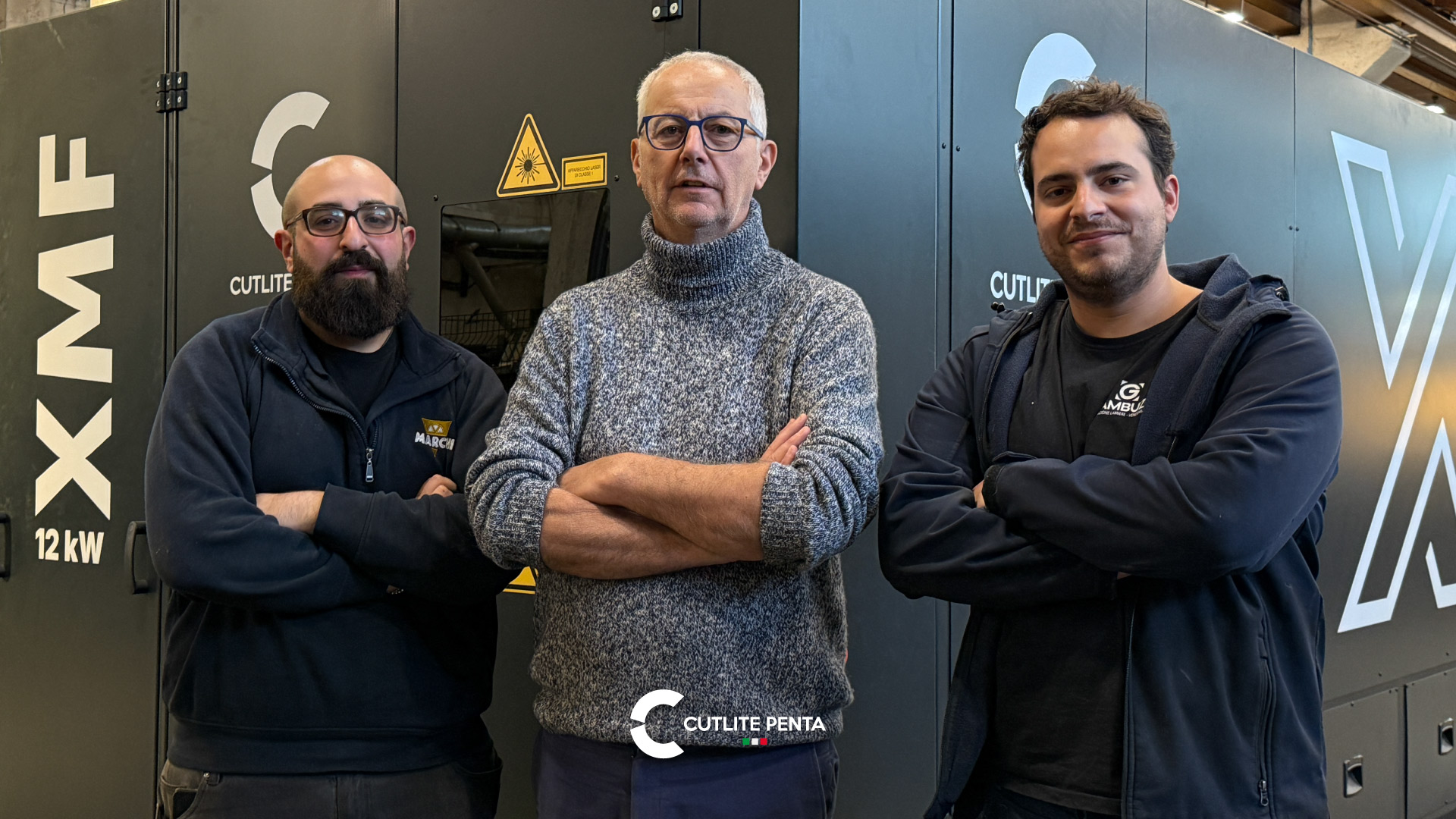
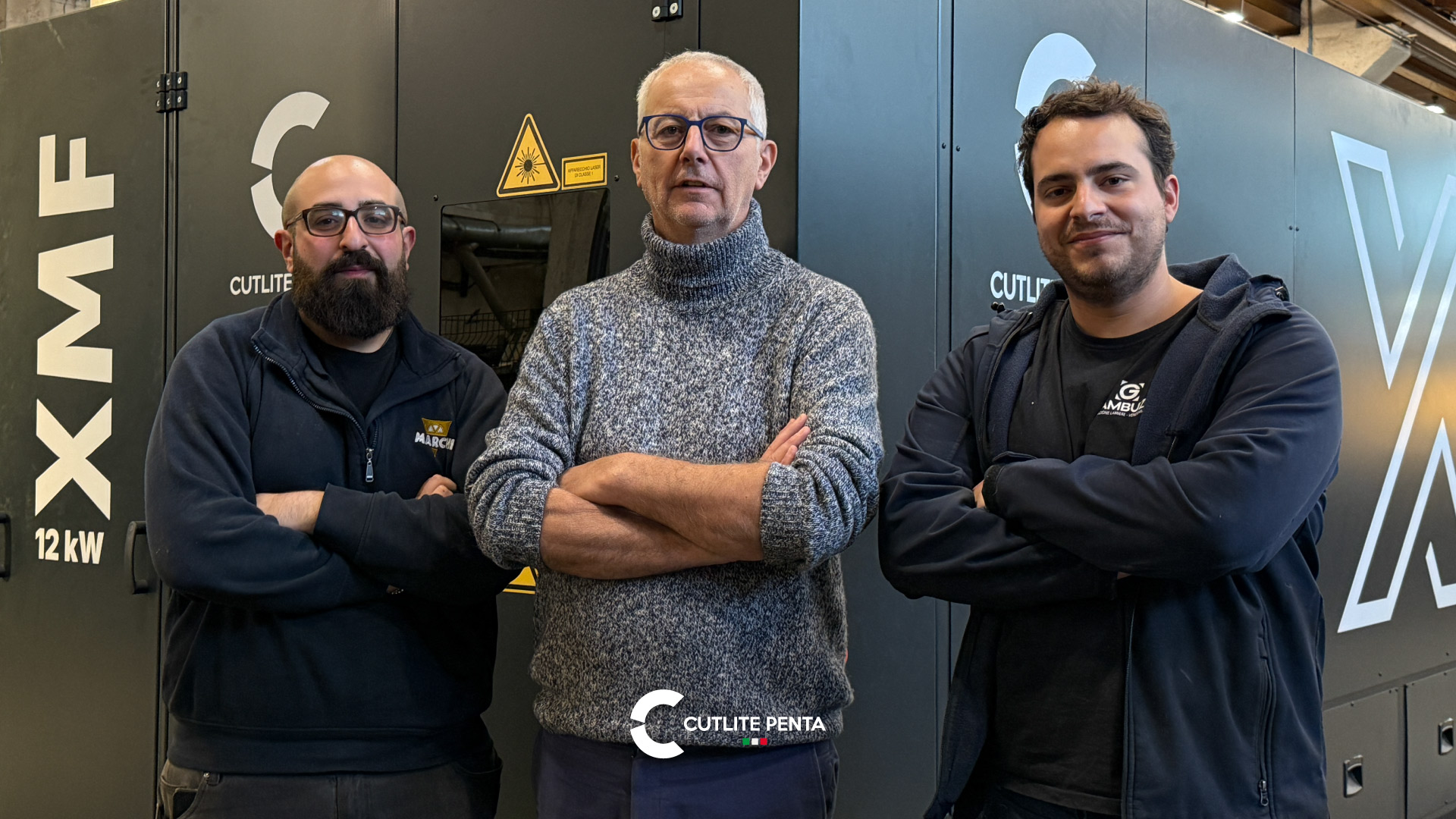
The first part paid 90 lire: today Gambuzzi cuts with a 12 kW XMF
Iames Gambuzzi went into business on May 13, 1981, the day after his military service ended. Forty-four years and a full machine fleet later, the latest decision was to retire the CO2 laser for a 12 kW XMF.
Gambuzzi Srl works in the Emilian heartland, in the province of Modena: for forty years it has built harvesting machinery and cut for third parties, half and half. Three voices speak in this story: Iames, the founder; Alessandro, the second generation; and Daniele, the operator who runs the machine every day. None of the three pulls punches, which is exactly why they are worth reading.
1981: the army, the business and the first part
“On May 13, 1981 my military career ended and I went into business. In the province of Modena there has never been any trouble finding work.” The start is unromantic: manual labor, thin margins, and a figure Iames remembers with absolute precision:
The first part? 90 lire. Not cents. Lire.
The first insight came while bending parts by hand: “I realized that by buying a press with a die I could make two bends at the same time. The pay was the same, but the time was halved.” That logic never changed again: you buy a machine when it halves a time, not when it is fashionable.
Forty years of investments, one recurring doubt
From there, mechanization proceeded one purchase at a time: press, shear, welder, and on for more than forty years. Today's fleet: 2 lasers, 2 press brakes, 6 presses, 1 punching machine, 1 lathe, 1 milling machine, 1 machining center and 1 shear.
And the doubt that came with every investment, Iames still quotes: “someone told me: don't spend on machinery, they're like mobile phones, in two years you throw them away.” From that very doubt, in the end, came the laser decision: the answer was not to avoid buying, but to buy the right machine.
Half own product, half subcontracting, all in Emilia
“We have been building harvesting machinery for forty years. We also work as subcontractors, for example floor saws,” Alessandro explains. Iames completes the picture: “we are roughly 50-50: our own product and work for local customers. No foreign customers, for now. We work in the Emilian area. It will be up to my son to tackle new markets.”
That sentence is the heart of the story: solid roots, and the awareness that without up-to-date technology no new road opens. The new laser is not there to change the company's identity: it is there to give the next generation a starting point.
“Another dead end”: choosing without illusions
Iames is blunt: “when the Cutlite Penta salesman showed up offering me a laser I thought: this will be yet another dead end. I had looked at very expensive machines, then came the low-cost offers, mainly from Asia. And there you understand one thing: a subcontractor has no specific machine. Take it too small and you can't do the big jobs; take it too big and it's oversized for the small parts. There is no rule.”
Alessandro brings the second generation's point: to keep a shop going you need up-to-date equipment, and a twenty-year-old CO2 laser does not let you quote competitive prices. “Incentives played a part too, but the choice was above all industrial: we needed a real technological leap.”
The road to us was as Emilian as it gets: word of mouth, then a visit to our booth at LAMIERA, in Milan. “Plenty of shops around here own machines of this brand, and thanks to the advice and the state incentives we took the leap too.”
Why a 12 kW XMF
The market comparison was concrete. The low-cost offers left serious doubts about service and long-term reliability. The “superfast” competitors had impressive numbers, but costs inconsistent with the company's production model: “we don't run a mass production, we don't need night shifts or a storage system feeding the machine, for now.”
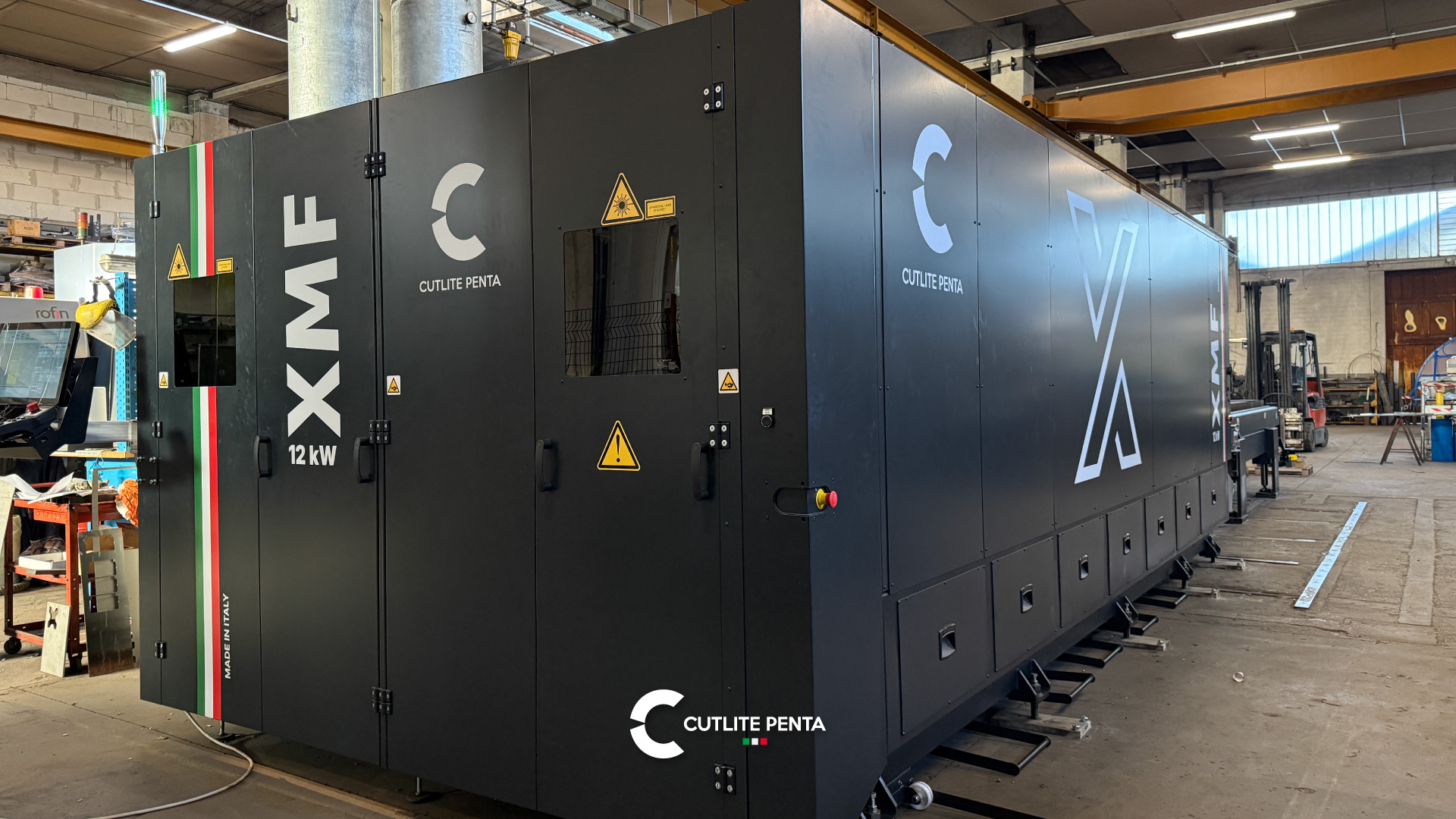
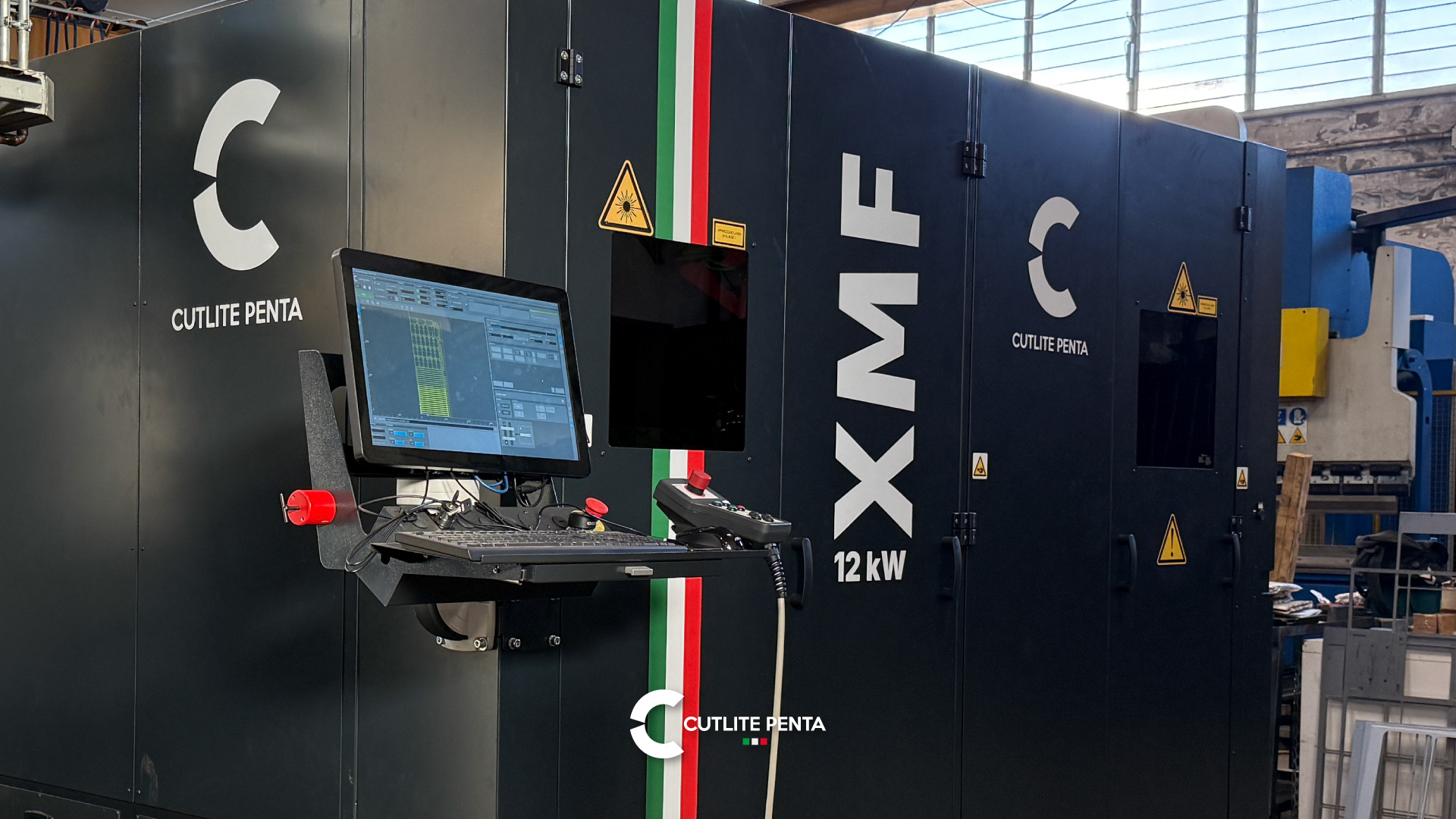
The 12 kW XMF is that reasoning made machine: true fiber power in a compact format, sized on the work that exists rather than the work one dreams of. It is the same criterion running through this whole interview series: the right machine is the one that fits your mix.
From CO2 to fiber: the operator's word
The technological leap is told by the man who works it daily. Daniele: “the difference from CO2 is enormous. The laser is far more intuitive. Lower consumption, more speed. Even the oxygen and nitrogen tanks last much longer: within a month you notice it.”
That is the most credible metric there is: not promises, but immediate perception on the floor. We lined up the full comparison between the two technologies on our fiber laser or CO2 laser page; here, the summary is in the gas tanks emptying more slowly.
Thicknesses: from a poor 15 mm to 30 mm in trials
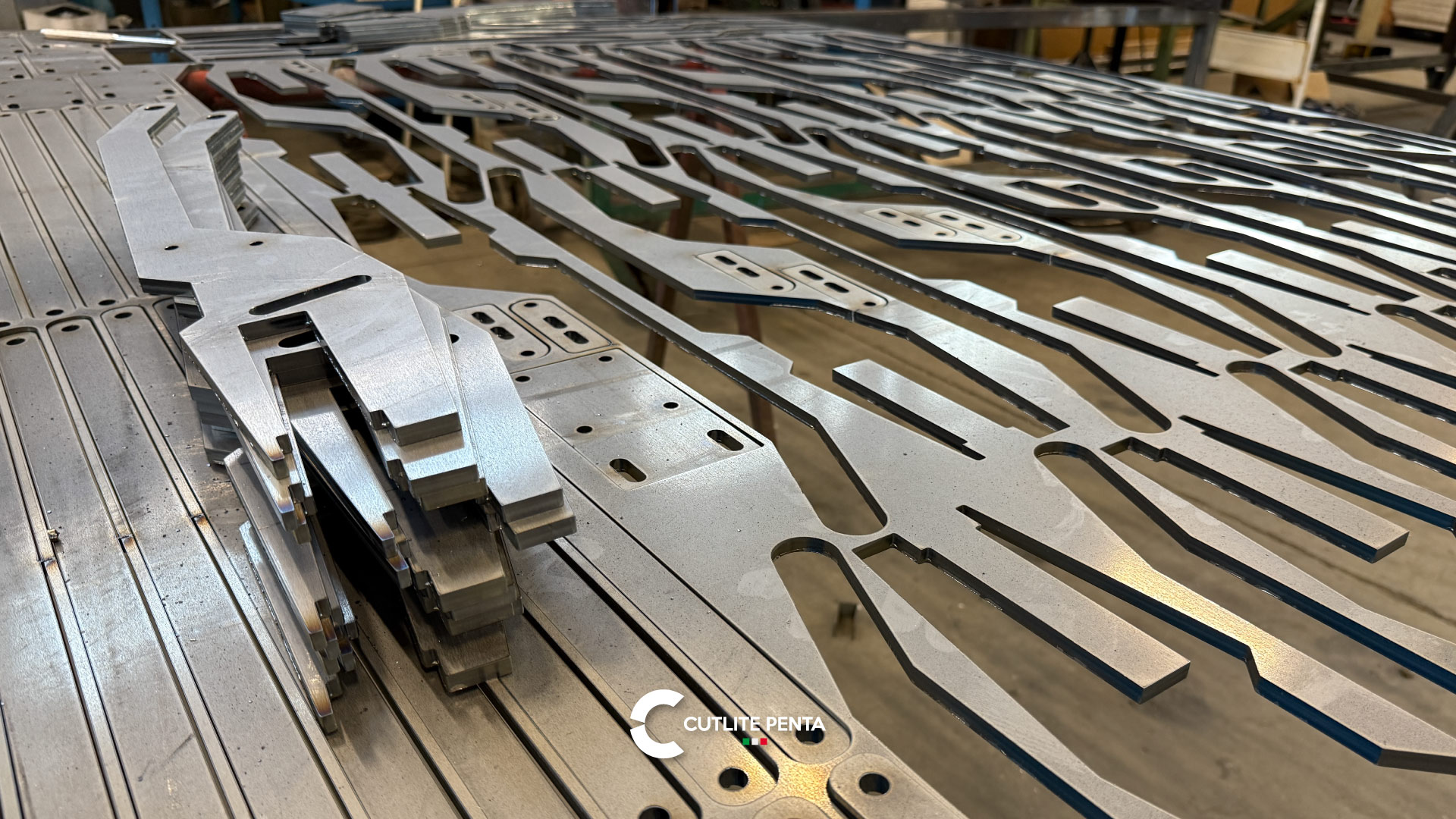
Production today concentrates on mild steel and stainless steel. Daniele gives the numbers: “with the CO2 we reached 15 mm, with stainless cut badly. With the new machine I am cutting 8 mm of mild steel every day. We ran trials and we comfortably cut 30 mm.” The point is not cutting the maximum: it is cutting what your market needs, without straining the numbers.
Start-up, training, service: unfiltered
Daniele is candid about the start-up too: “everything was very fast. I had it easy because I had experience. Three days of training is not much for someone starting from zero. But the technicians will come back in five or six months to go deeper into programs and materials.” We report this too: it is useful guidance for anyone planning a first laser with rookie operators.
Service, in the first month: “once. The pallet reading had shifted, probably a screw wasn't tightened properly. They assisted us by video call and I was very happy with it.”
The numbers: from 500 to 120 euros an hour
The economic benefits are still being measured, but the direction is clear. Alessandro: “if we are faster we save oxygen and nitrogen, so the price is lower. And yes, we can take jobs we couldn't take before.”
We used to ask up to 500 euros an hour. Now we can sit around 120, like anyone with a fiber laser.
Iames focuses on what it means: “until now many customers came to us for emergencies: delivery the next day. We were not competitive on price, but we were on availability. Today we keep both speed and prices.” Before, urgency was the only argument; now it is one argument more.
And when we ask whether they would do it again, the answer deserves a frame: “yes. For now we are optimistic. The first month went well. A few loose bolts... but bolts can be retightened.”
Frequently asked questions
Who is Gambuzzi Srl?
A metalworking company in the province of Modena founded by Iames Gambuzzi in 1981. For forty years it has built harvesting machinery and worked as a subcontractor, roughly half and half, for customers in the Emilian area. The second generation, with Alessandro Gambuzzi, now works in the company.
Which machine did Gambuzzi choose and why?
A 12 kW Cutlite Penta XMF, replacing a twenty-year-old CO2 laser. The choice came from a real comparison: low-cost offers left doubts about service and reliability, and the fastest machines cost too much for a shop with no night shifts. The XMF is sized on the actual workload.
What changes in practice between CO2 and fiber laser?
In the experience of Gambuzzi's operator: more intuitive use, lower consumption, more speed, and oxygen and nitrogen tanks visibly lasting longer from the first month. On thickness: from the CO2's 15 mm limit, with stainless cut poorly, to trials up to 30 mm with the new machine.
What effect did the machine have on prices?
The hourly rate quoted to customers went from around 500 euros an hour, justified only by emergencies, to around 120 euros an hour, in line with fiber laser shops. The company now offers both fast delivery and competitive prices, and can accept jobs previously out of reach.
Has your CO2 laser done its twenty years too?
Bring us your materials and thicknesses: cutting gets tested in our DEMO area in Prato. And as Iames Gambuzzi teaches, you buy a machine when it halves a time, not when it is fashionable.
