


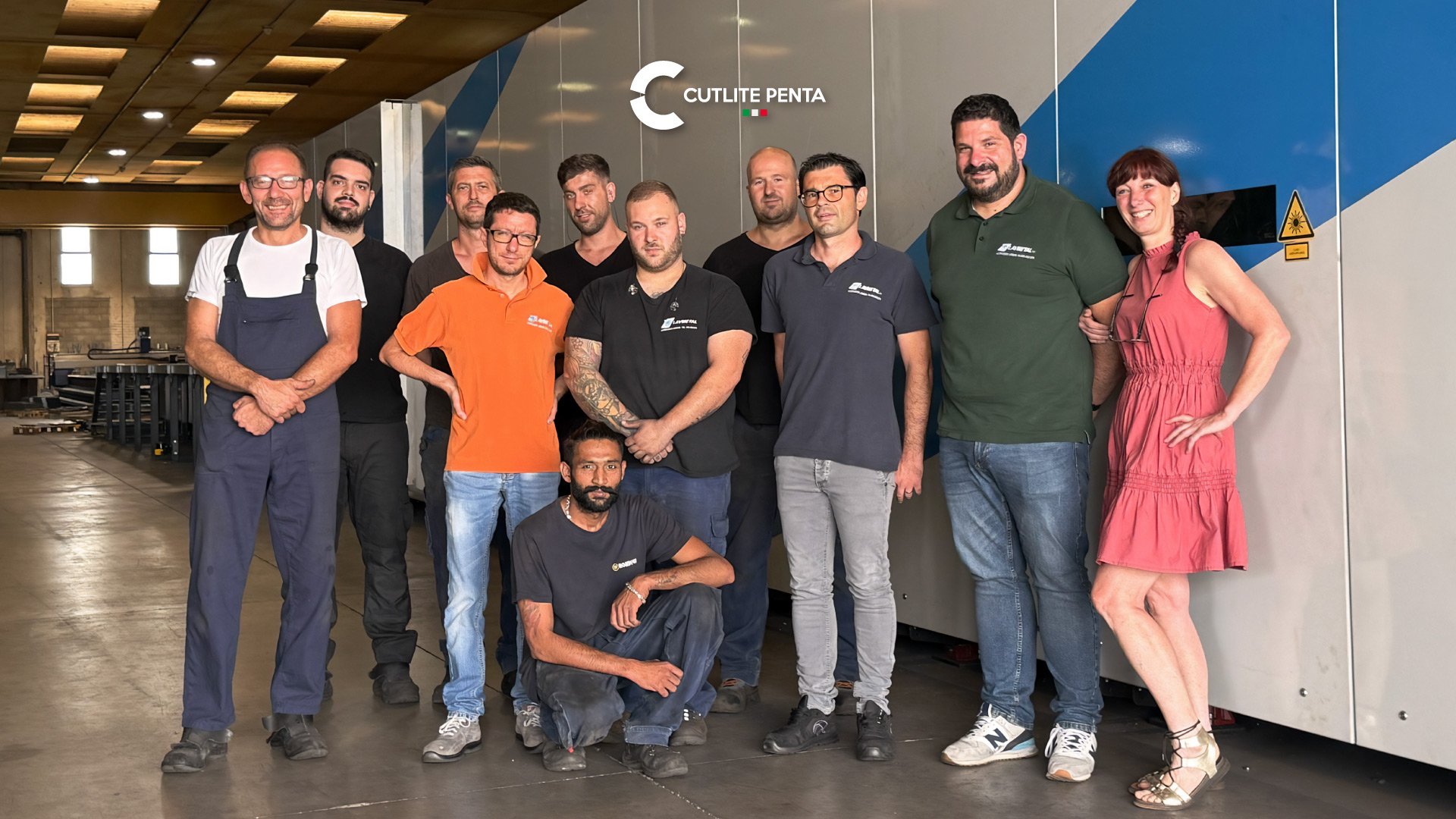
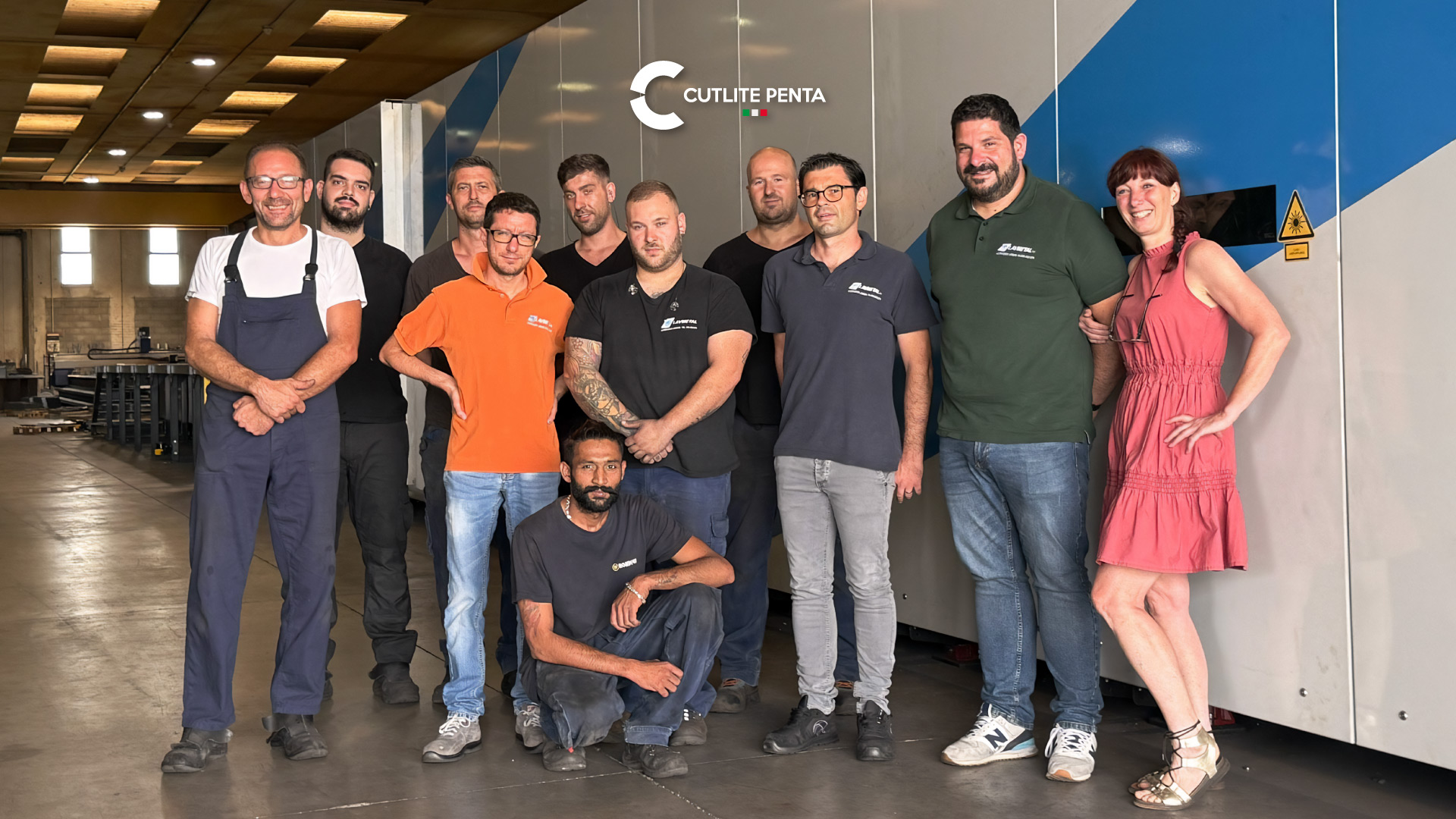
Two days of plasma work in half a day: LavMetal and its 30 kW laser
LavMetal Srl cuts sheet metal in Albano Sant'Alessandro, near Bergamo, from a 3,000 m² plant. It was founded in 2006 and works almost entirely in northern Italy: around 90% of its customers are in Lombardy.
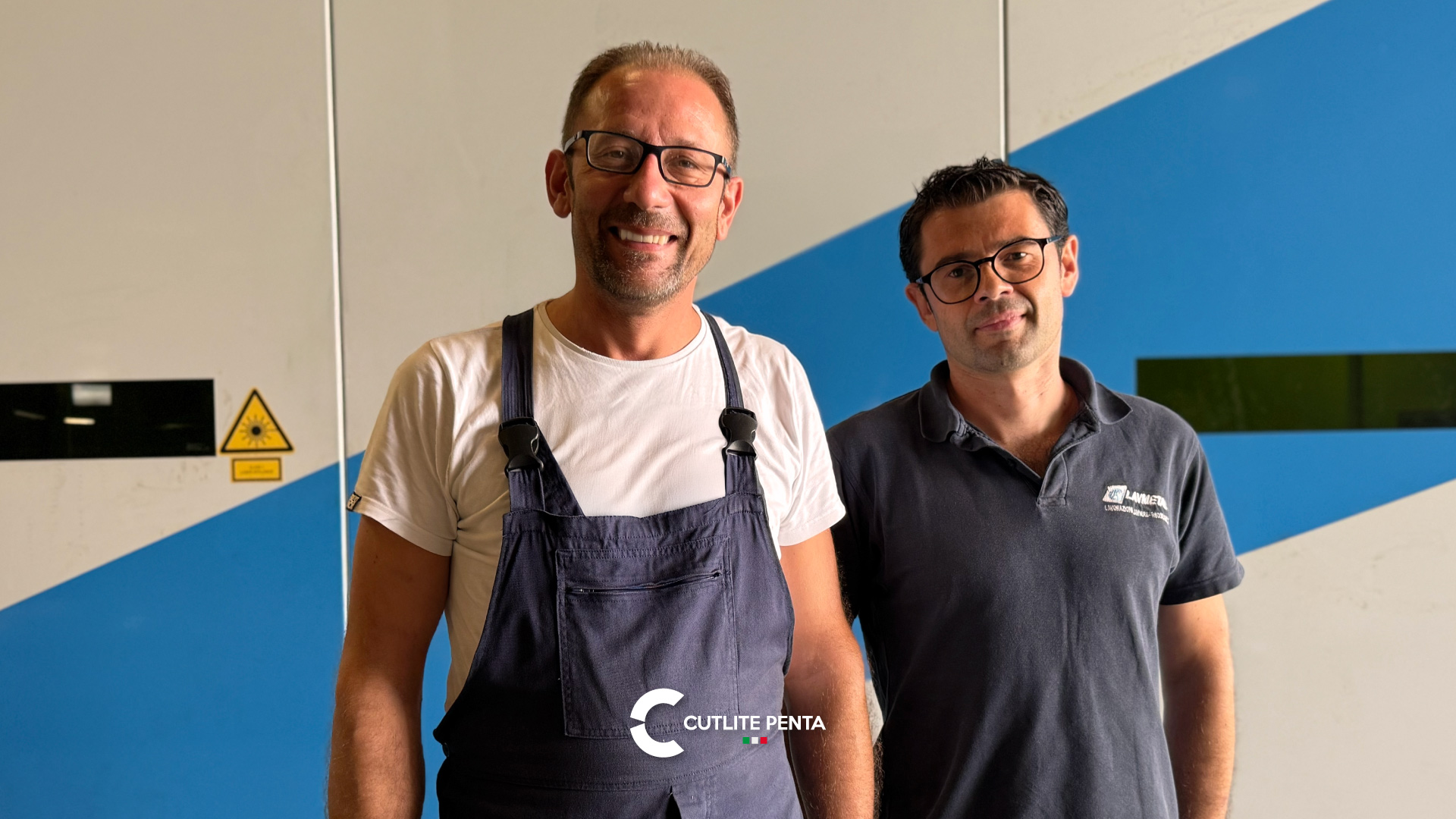
Three cutting technologies share the shop floor: two oxyfuel machines, one high-definition plasma and, since the start of 2025, a Cutlite Penta FXP laser rated 30 kW with a 13 × 3 metre table. We talked it through with Claudio Gritti, one of the founding partners alongside Manuel Bassis and Stefano Acquaroli. The interesting part is not that the laser replaced the plasma: it replaced one of the two, and the other stayed exactly where it was.
Who LavMetal are
How it started, in 2006
“LavMetal was born in 2006, when I and some colleagues, former employees of a local company, decided with the help of Stefano Acquaroli, owner of Carpenteria Metallica Acquaroli, to take the business over after it closed”, Claudio recalls. “We started again from scratch, in a new plant not far away, with a lot of drive and the wish to build something of our own.”
What they do, and for whom
“We are dedicated to sheet metal cutting. Our main market is northern Italy, heavily concentrated in Lombardy, where around 90% of our customers are.” It is the classic profile of a local subcontractor: the competitive edge is not only the machine, it is the distance from the customer.

Three technologies on the floor, each with its own thickness range
“We started with two oxyfuel machines and one plasma. Today we keep the two oxyfuel machines, identical, running on a 40 metre rail. We have one high-definition plasma machine and, since the start of 2025, we have added a Cutlite Penta FXP laser rated 30 kW with a 13 × 3 metre table.”
- Two identical oxyfuel machines on a 40 metre rail: from 30 to 210 mm
- One high-definition plasma machine: from 2-3 to 30 mm
- One FXP laser rated 30 kW, 13 × 3 metre table: from 2-3 to 30 mm
Which machine takes which thickness
“With oxyfuel we handle thicknesses from 30 mm up to 210 mm. Plasma and laser let us work from 2-3 mm up to 30 mm.” The ranges overlap at exactly one point, and that is where the daily decision is made about which machine takes the job.
Two days with plasma, half a day with the laser
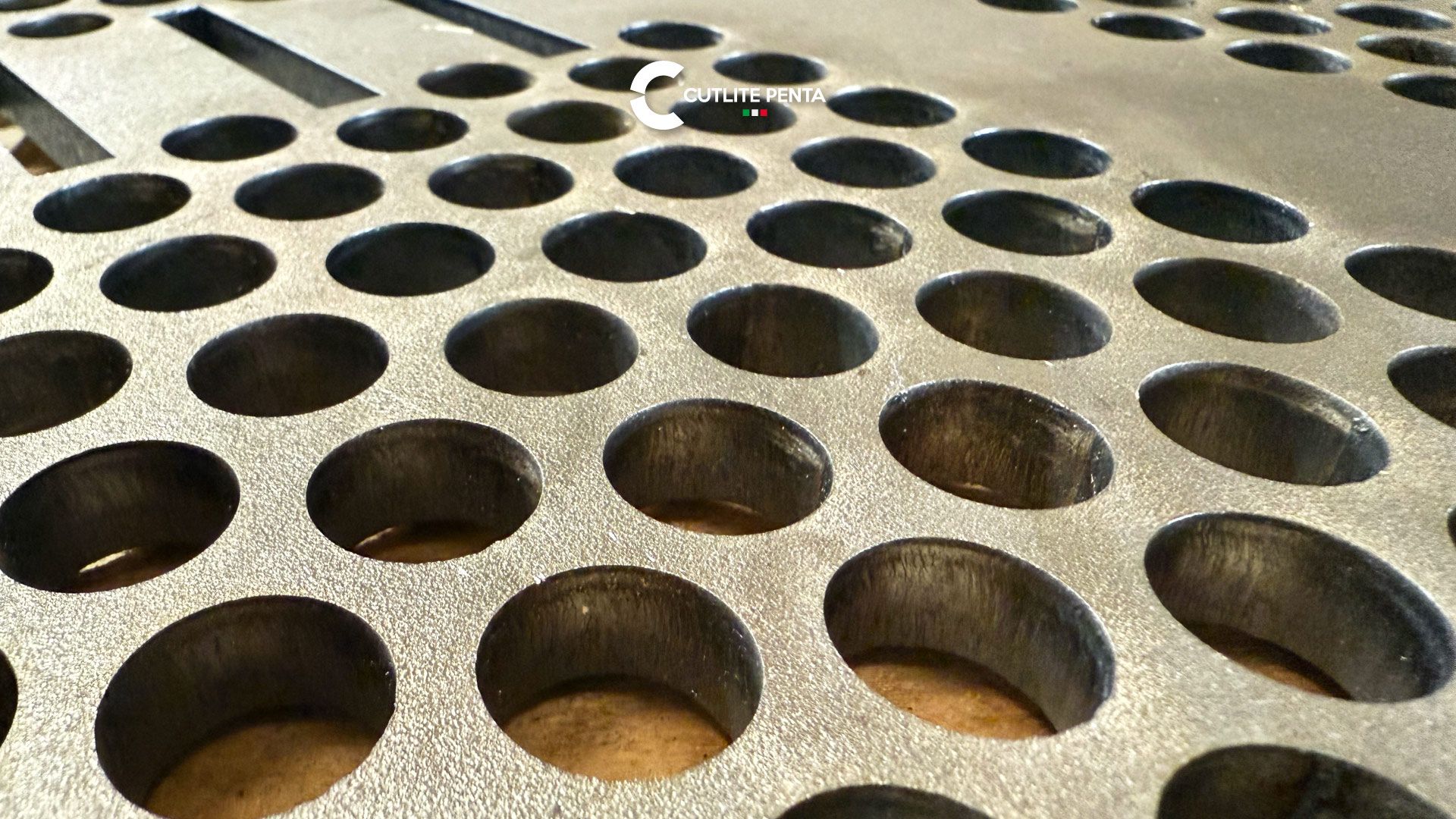
“Before, we had two identical plasma machines. We decided to replace one of them to complete our range of cutting systems”, Claudio explains. “The laser calls for a bigger investment, but in terms of definition, precision and speed there is no comparison.”
“What used to take two days of work with plasma, we now do in half a day with the laser.”
Why the second plasma stayed
Here is the part that usually goes untold. “It is a simpler machine to run than the laser, more basic. For less demanding jobs, where high precision is not required, it is still very useful.” Replacing everything was never the aim: the aim was to complete the range, so that every job ends up on the machine that makes it cheapest.
Why Cutlite Penta
“We came to visit Prato and saw how you work. We found a modern, well-structured company with real potential. The relationship with Alessio Venturini, Area Manager for Lombardy and Emilia Romagna, was decisive: he is not just a salesman, he is a competent technical figure. Together we found the solution to replace the old plasma with a large-format laser machine while keeping our production capacity.”
“And among the quotes we had on the table, the price-quality ratio was decisive: it swept the competition aside.”
The goal: learn first, expand later
“We wanted to offer a better service to our regular customers. We decided to take our time, learning to use the laser properly. Now we are ready to open up to new opportunities.” The sequence is worth noting: first consolidate the work you already have, then go looking for more. The opposite of how machine investments are usually pitched.
Delivery and support: what went wrong and what did not
“Excellent. We also ran a running test at our plant. The relationship with Alessio is excellent, always available, and so are the technicians. The only difficulty was logistical, at delivery: the laser is very large and the entrance clearances had not been assessed carefully enough. But everything was sorted out promptly.”
None of them had ever used a laser
“We had a few small teething problems using the laser, as is normal when you bring in a new technology. None of us had direct laser experience, but we were guided step by step and were able to transfer ten years of plasma experience to the new machine without difficulty. The support was constant and competent, and it got us working on our own quickly.”
How many operators work on the laser
“At the moment four operators alternate between plasma and laser, depending on requirements and workload peaks.” So there is no separate laser department: the same people on two technologies, which is how a new machine really enters production instead of remaining an island.
What changes now
The laser did not replace a way of working: it added a precision band LavMetal could not offer before, leaving plasma and oxyfuel to do what they do best. If you want to see the other possible configurations there is the full range of laser machines, but the useful line of thinking is Claudio's: look at the jobs you cannot take on today, and work out which machine brings them in.
Frequently asked questions
How much faster is a laser than plasma on the same job?
At LavMetal a job that took two days with plasma is done in half a day with the 30 kW laser, so roughly four times faster. The figure applies to their parts and their thicknesses, between 2-3 and 30 mm, and is not a general rule: it depends on material, thickness and the tolerances required.
Is it worth keeping the plasma after buying a laser?
At LavMetal yes, for a practical reason. They replaced one of their two plasma machines and kept the other because it is simpler to run and stays useful for jobs that do not need precision. The laser covers definition, the plasma the rougher work, oxyfuel the thicknesses above 30 mm: every job goes to the machine that makes it cheapest.
What thicknesses do oxyfuel, plasma and laser cover?
At LavMetal oxyfuel works from 30 to 210 mm, while plasma and laser cover 2-3 mm up to 30 mm. It is the classic division of labour for a subcontractor that wants the whole range without pushing a single technology past the point where it pays.
Do you need laser experience to get started?
At LavMetal nobody had any: they came from plasma and oxyfuel. They transferred their plasma experience to the new machine with our technicians alongside them and reached independent operation quickly, with four operators alternating between plasma and laser.
A plasma to replace, or just to work alongside?
Tell us the thicknesses you cut and the tolerances you need: it becomes clear straight away whether a laser pays or the plasma should stay where it is.
