


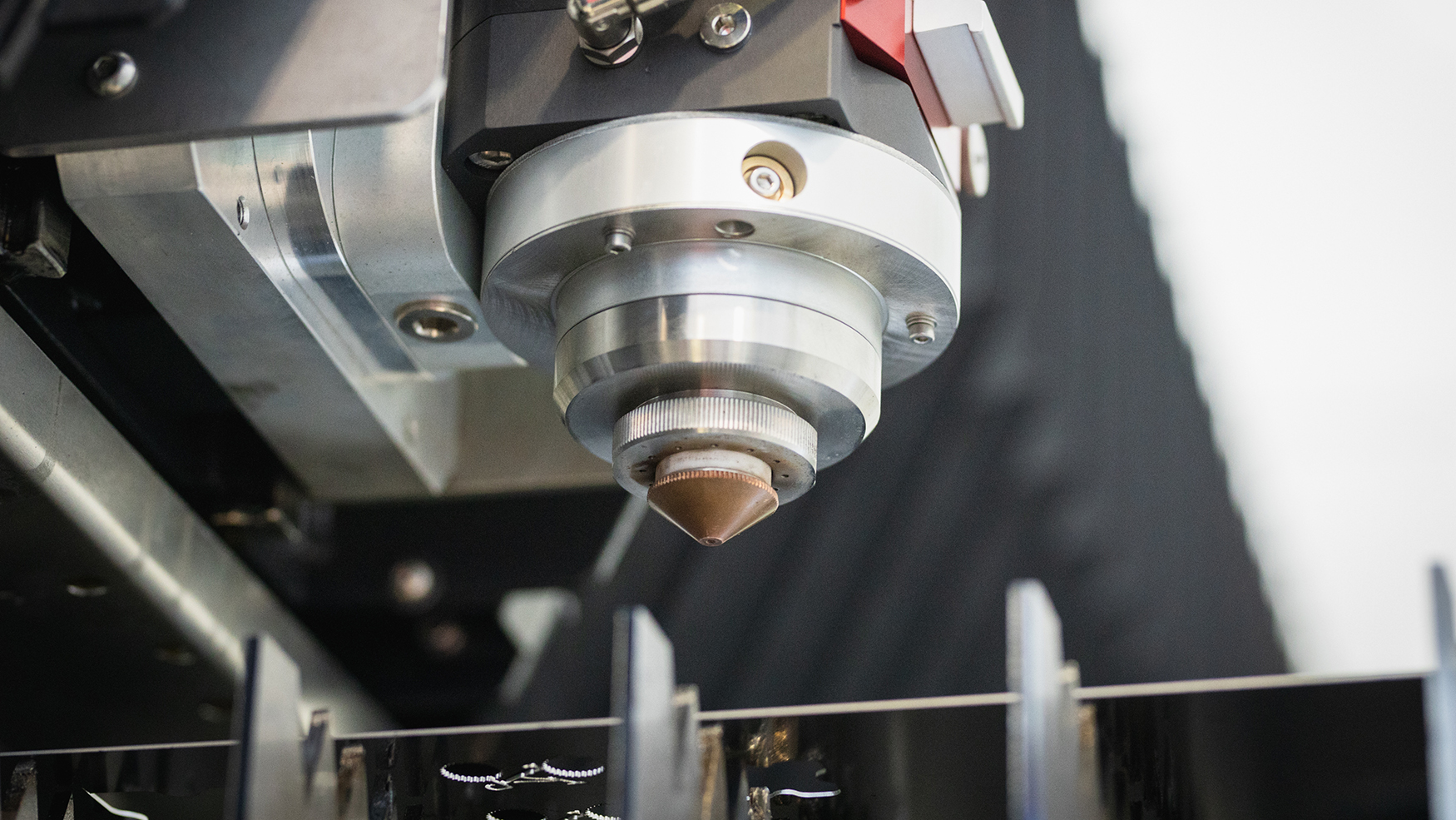
Fiber laser drilling: a 5 mm hole in 40 mm of iron
Maximum power, concentrated in a tiny hole.
Fiber laser drilling of metals has quickly established itself in mechanical production. Faster and more efficient than CO2, it simplifies the workflow with high yields — and it drills highly reflective metals like copper and brass too. With the right fiber laser systems you make precise holes even in thick material.
How does fiber laser drilling work?
The fiber laser is today the most advanced technology for metal cutting, and drilling is a direct consequence of it. The beam from the source is amplified through glass fiber cables and diodes.
The fiber laser beam has a very short wavelength, better absorbed by the metal. That is why it is ideal for copper and brass too — highly reflective metals, hard to work with CO2 — and it allows greater precision even on microscopic holes.
Fiber laser metal drilling is useful in many sectors, from automotive to interior design, up to light and heavy industry: thanks to power and speed, it improves production efficiency even in the finest work.
What are the advantages over mechanical drilling?
Compared with traditional mechanical machining, fiber laser drilling offers several advantages:
- Extremely precise holes that need no finishing
- Reduced processing time, even on large parts
- Low machine maintenance
- Continuity between different operations, with no tool change or repositioning of the part on other machines
Fiber or CO2 laser drilling: what are the differences?
Compared with CO2 laser sources too, the fiber laser brings concrete advantages in metal drilling:
- Higher processing speed
- Ability to work all metal surfaces, including painted ones
- Cutting and drilling on much greater thicknesses
A 5 mm hole in 40 mm of iron: a result hard to achieve with plasma or hot punches.
Cutlite Penta fiber laser machines for metal drilling
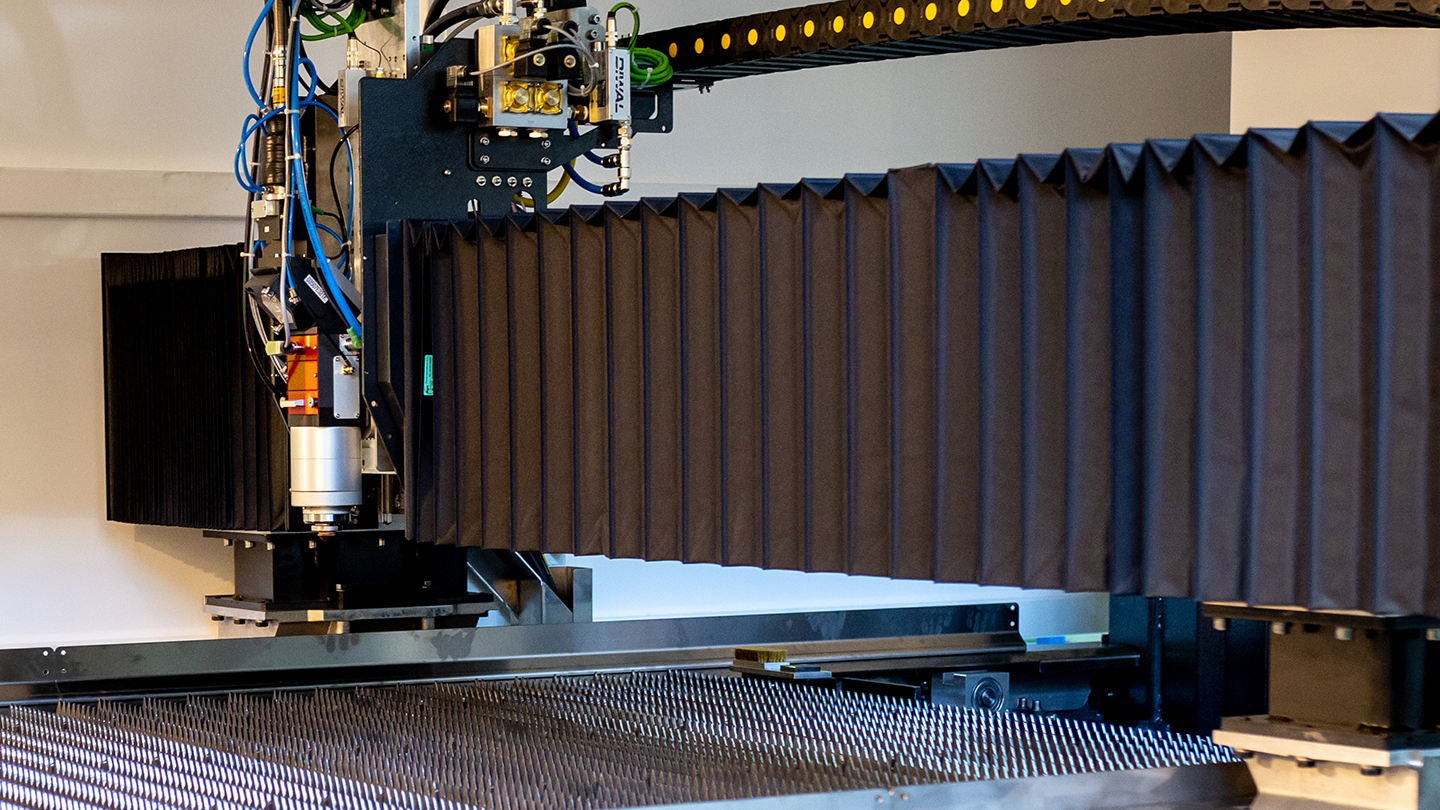
Cutlite Penta systems for metal cutting and drilling are designed in-house. With Evo 4 cutting heads and linear-motor technology, they offer high speed and power with a reduced footprint.
Cutlite Penta technology was the first in Europe to guarantee cutting power up to 30 kW. This makes it possible to make small-circumference holes even in thick material: for example a 5 mm hole in 40 mm of iron.
This is thanks to the fiber laser's wavelength, which heats the material less in the piercing zone: the “scrap” from the cut is much reduced. A result hard to achieve with plasma or hot punches — just think of a cut part that already has the hole in the required position.
The advantages of Cutlite Penta systems for metal drilling:
- Fiber laser sources with power up to 30 kW
- Drilling even on thick material
- In-house designed cutting head
- Compact layout
- Fast pallet change
- Proprietary CNC and software, easy to use
- Linear-motor technology, efficient and compact
- Absolute encoders for axis positioning
- Machine customization options
- Specialized support on all systems
Frequently asked questions about fiber laser drilling
How does fiber laser drilling work?
The beam, amplified in optical fiber, has a short wavelength better absorbed by metals: it allows very precise holes, even microscopic ones, on a wide range of materials.
Does fiber laser drilling work on copper and brass?
Yes: the short wavelength is well absorbed even by highly reflective metals like copper and brass, which are hard to work with CO2.
What are the advantages over mechanical drilling?
Precise holes with no finishing, reduced times, low maintenance and continuity between different operations, with no tool change or repositioning of the part.
What holes can you get on thick material?
With power up to 30 kW you make small-circumference holes even on thick material: for example a 5 mm hole in 40 mm of iron.
Discover the Cutlite Penta machines for laser drilling
Tell us your materials, thicknesses and the holes to make: we will help you find the most suitable fiber laser system.
