


From a 2002 CO₂ to an 8 kW XME: C.M. Gronde no longer turns down 20 mm jobs
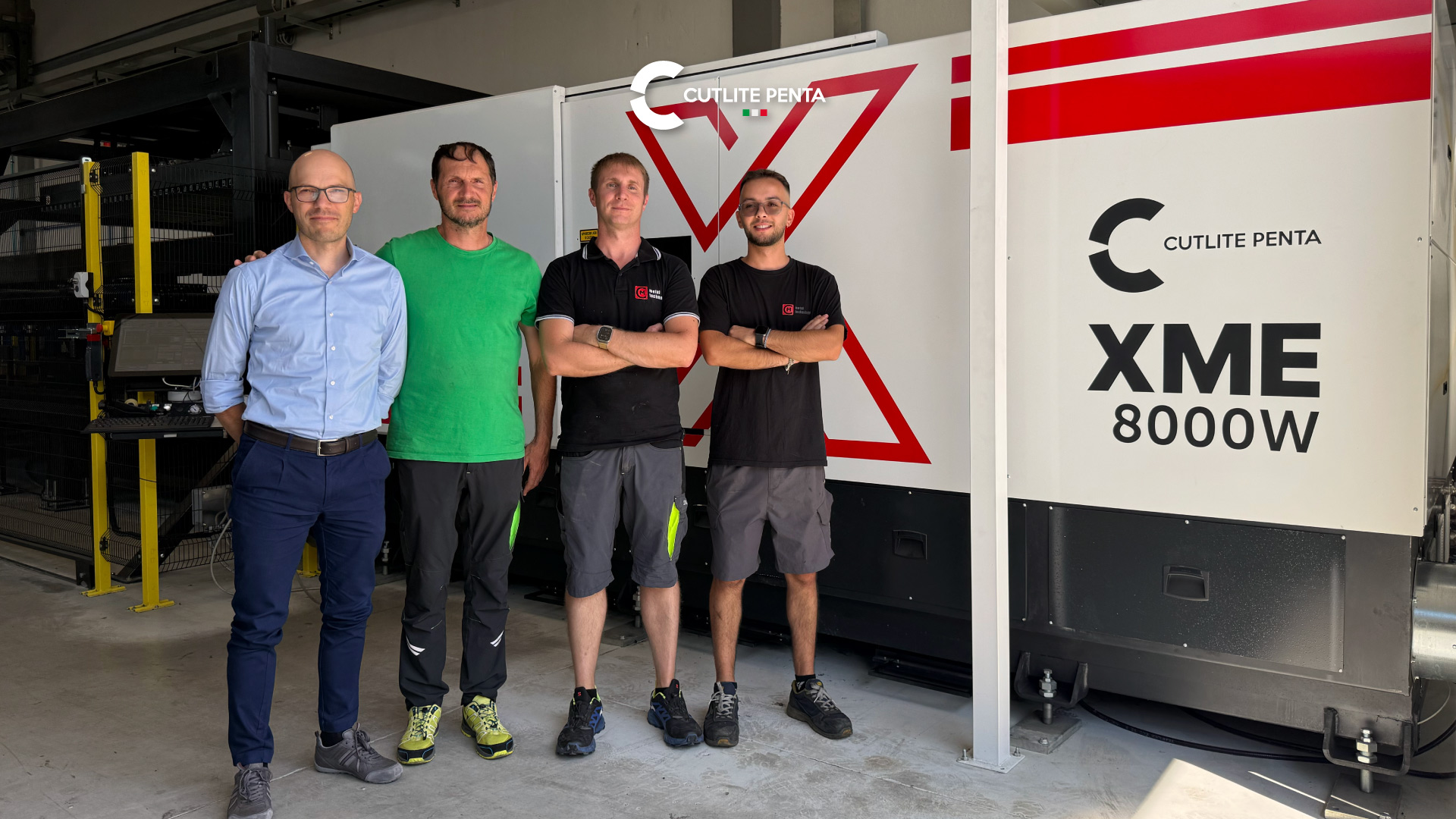
C.M. Gronde has been cutting and bending sheet metal as a job shop since 1981. Until recently it did so with a 2002 CO₂ machine, bought used. Today it does so with an 8 kW XME 4020 with automatic loading and unloading.
We talked it through with Fabrizio Caruso, owner, Kristi Meta, production manager, and Giacomo Bertoni, financial advisor. Moving from CO₂ to fiber laser is not only a change of source: it changes which jobs you can keep in house, how many passes a part needs, and how long an operator has to stand in front of the machine.
Who C.M. Gronde is
From sole proprietorship to Srl: how the company changed
“C.M. Gronde has deep roots. Our father founded it in 1981. We went through several stages: it started as a sole proprietorship, then became a partnership, and today it operates as an Srl. Our core business is cutting and bending sheet metal for third parties, serving both the roofing sheet metal trade and industry. We work only in Italy, mainly in the north of the country.”
What other cutting technologies they have on the floor
“We own a few punching machines, but the Cutlite Penta system is our only laser cutting solution. It completely replaced our previous CO₂ machine.”
Why Cutlite Penta and not a cheaper Asian offer
“The choice came from positive word of mouth among other business owners in our sector. When we visited the plant in Prato, the impression was immediate: professionalism, competence, and a company that feels solid.”
“It is true that we had received cheaper offers from the Asian market, but experience taught us that with technology this critical, after-sales service is what makes the difference. We preferred to invest in an Italian company that could guarantee us support and continuity.”
“With technology this critical, after-sales service is what makes the difference.”
How they ended up at 8 kW after aiming for 4 to 6
This is the most useful passage in the interview for anyone configuring a machine right now, and it is not about power as such. It is about what it costs to leave power behind.
“I have to thank Alessio Venturini, Sales Area Manager for Lombardy and Emilia Romagna, for the advice. At first we were leaning toward a lower power level, 4 to 6 kW, since we mainly work on thin material. Alessio pointed out that the difference in investment against an 8 kW system was minimal, but it would open new market opportunities on thicker material.”
“The difference in investment was minimal, but it would open new market opportunities.”
What changes compared with a 2002 CO₂
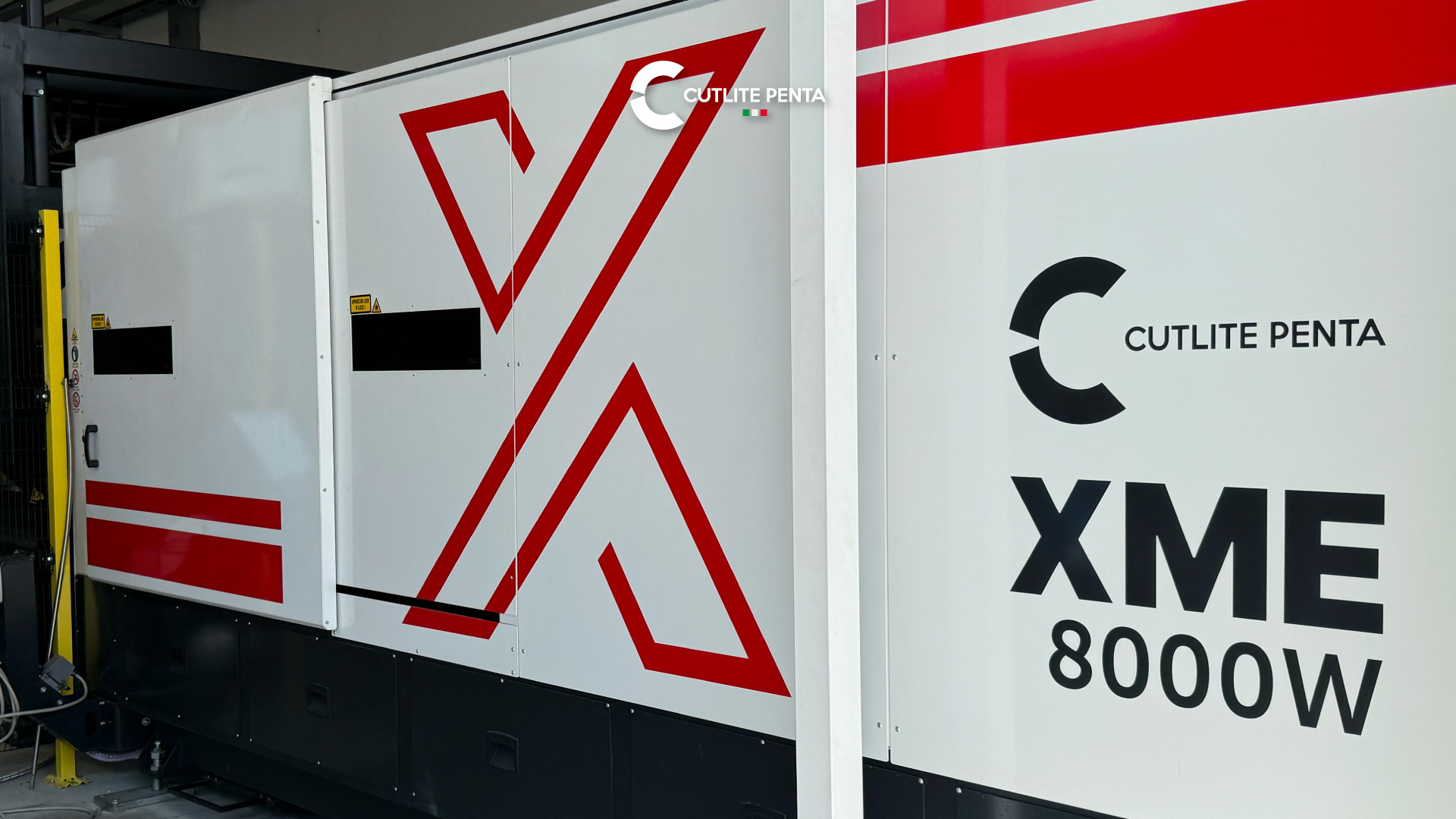
“It is a completely different story. The previous CO₂ system was from 2002, bought used, and it had run its course. Back then we chose it to get closer to laser technology step by step, with a contained investment, having no experience in the field. The new Cutlite Penta machine is completely different: intuitive, accurate and reliable.”
Half the work used to go through the punching machine
“Where 50% of the work used to need the punching machine, today we do most jobs directly on the laser, with a considerable saving in time and better quality.”
Automatic loading and unloading is what changed the pace
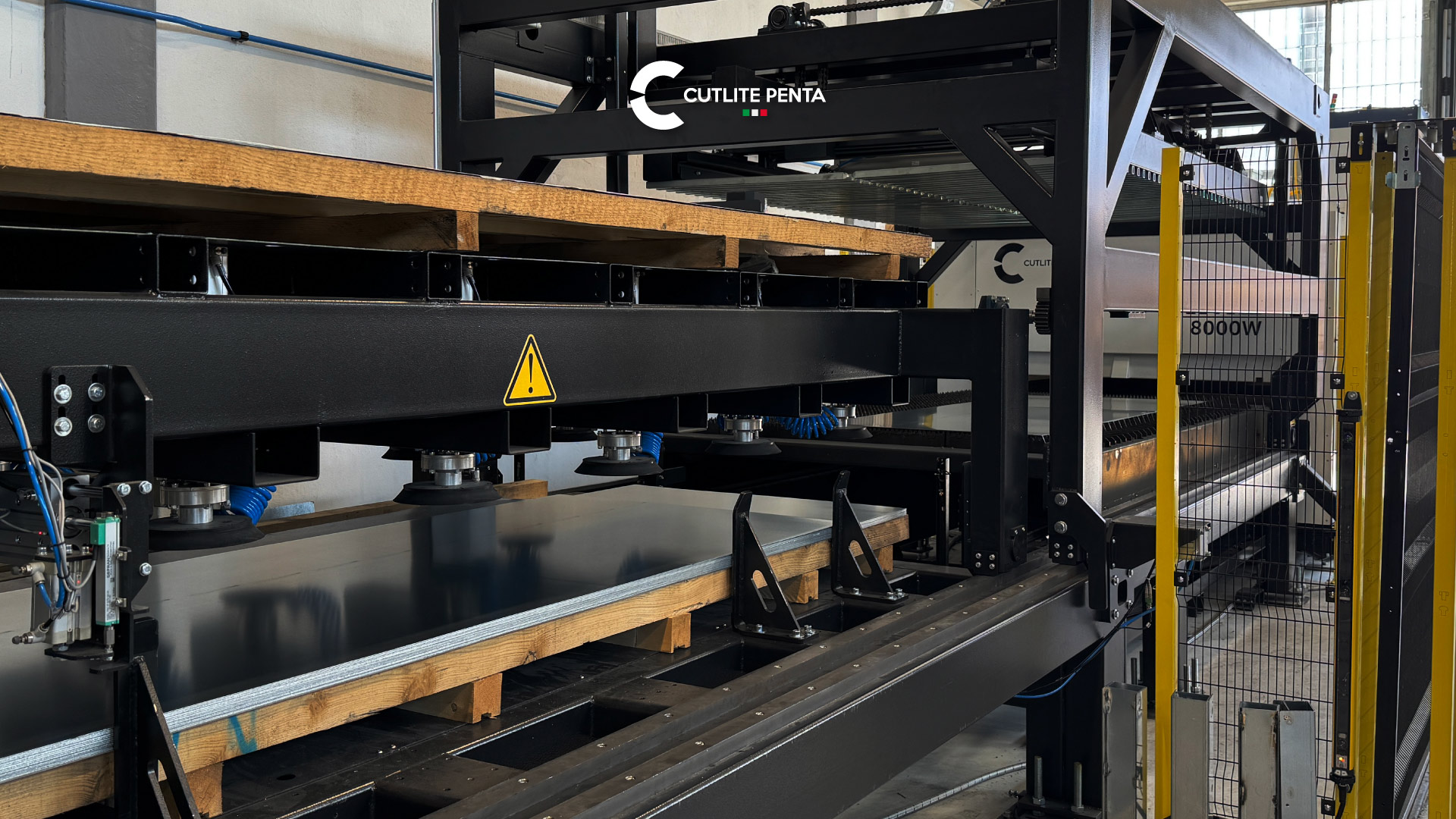
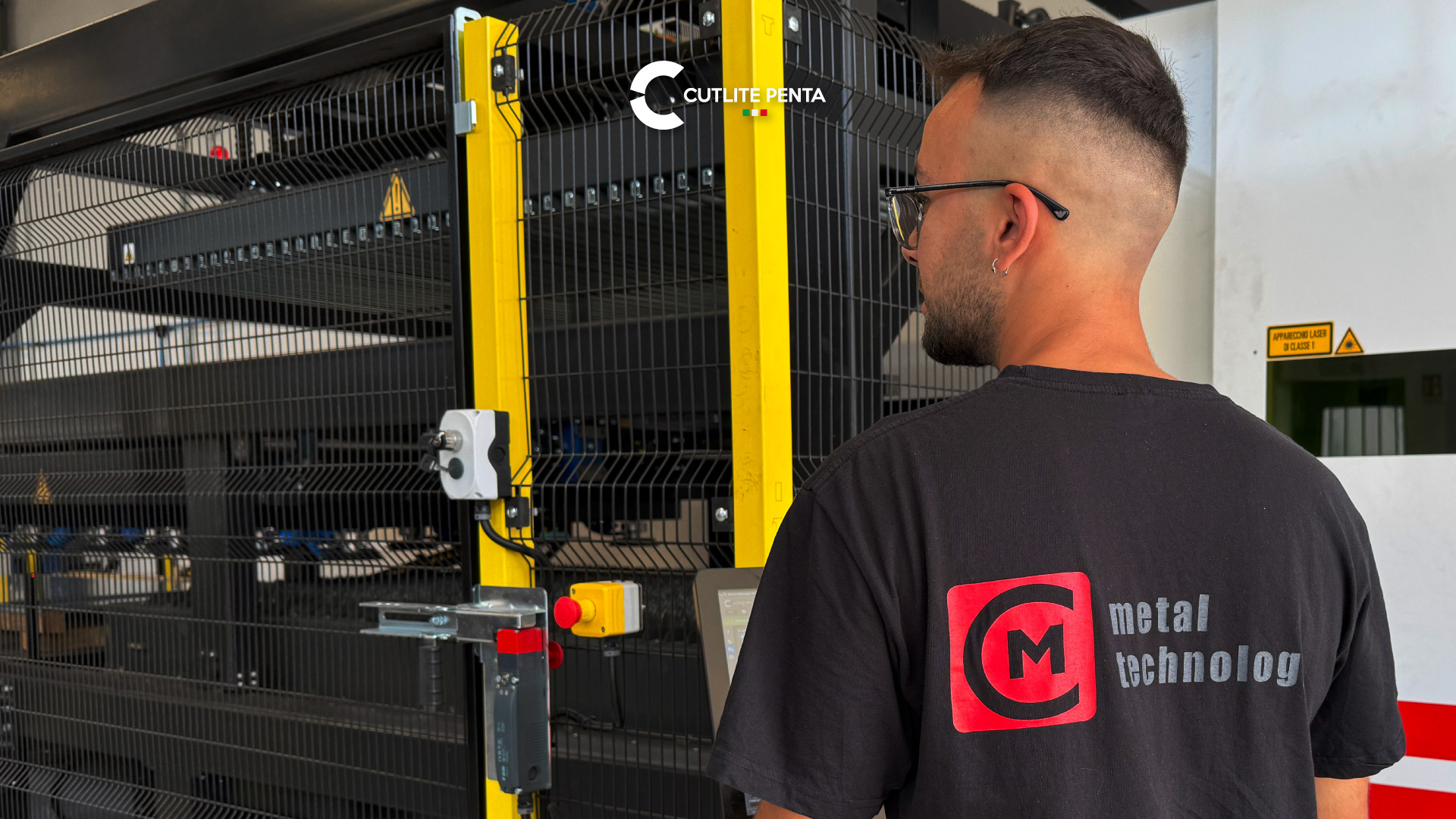
“What really made the difference is the automatic loading and unloading system. You can program a batch of sheets and the machine works on its own while you get on with something else. On a punching machine you have to follow every single part. It was a complete change of production paradigm.”
Unattended operation: where they stand today
“We are gradually building confidence with it. For now we do not leave it running at night, but for simple, well established jobs we are considering it, and it would be a real optimization of production time. During the day we often start it and go do something else. It is a matter of experience: the better you learn to program, the more of the system you can use.”
Training and service
How they learned to run it
“Two of us run the machine. During commissioning, the Cutlite Penta service technician gave us basic training. From there, daily practice was decisive: trying, getting it wrong and learning, we built the skill to get the most out of it.”
How they rate technical service
“Response times are fast, that has to be acknowledged. The one thing that could be improved is scheduling: it would help to have more defined time slots so we can organize production better. We often know the visit will happen, but we cannot find out right away when.”
90% of the work is cut with air
“90% of our work is cut using air, which means a considerable saving on operating costs. Cutting with nitrogen would require dedicated equipment at a much higher cost, so the versatility of the system lets us optimize cost while keeping quality high.”
The verdict: galvanized sheet and 20 mm jobs
“Extremely positive. Today we can do work that was impossible before, we have sped up processes and optimized time. For example, we can now cut galvanized sheet, which the old system could not handle because of parameter issues. On top of that, since we normally work on thin material, we used to turn down jobs on thicker material, like 20 mm mild steel. Today we can serve those requests in house, widening our commercial offer. Choosing Cutlite Penta turned out to be strategic: advanced technology, Italian reliability and support that keeps production going.”
Those are two new capabilities, not two improvements: galvanized sheet and 20 mm mild steel are jobs that used to walk back out the door. The XME is the compact machine in the range, and this is the case where a compact machine changes a shop's commercial perimeter instead of simply replacing an old machine.
Frequently asked questions
Does an 8 kW fiber laser replace a CO2 machine?
At C.M. Gronde it did, completely: the 8 kW XME 4020 took the place of a 2002 CO2 machine bought used. The step up is not only about cutting. The fiber laser also absorbed much of the work that used to go through the punching machine, which was about half the total.
What is automatic loading and unloading for on a laser machine?
It takes the operator out of the cycle. You program a batch of sheets and the machine picks the sheet, cuts, unloads and starts again on its own, while whoever runs it does something else. On a punching machine, every part has to be followed. At C.M. Gronde this is what the owner points to as the real change of pace.
What is the difference between cutting with air and cutting with nitrogen?
Compressed air is produced in the shop with a compressor and proper treatment, so it costs little; nitrogen needs dedicated equipment, tanks or a generator, and its operating cost is much higher. In exchange, nitrogen leaves an oxide-free edge, ready for painting or welding. C.M. Gronde cuts 90% of its work with air.
What thickness can an 8 kW XME 4020 cut?
It depends on the material and the assist gas. What this case study says is that C.M. Gronde normally works on thin material and that with the new machine it also accepts 20 mm mild steel jobs it used to turn down. For rated figures, the XME series page is the reference.
Working out how much power you actually need?
Tell us what you cut and how thick: as C.M. Gronde found out, the right configuration is not always the one you had in mind.
