



Cupples J&J switched off every plasma system: 24 lasers in Tennessee, the last 7 from Cutlite Penta
In Tennessee, Cupples J&J Company Inc. now runs 24 laser machines. The last seven carry our name, and there is no plasma system left on the shop floor.
Jeff Cupples tells Andrea Falaschi, Worldwide Export Sales at Cutlite Penta, how he got here: from 30 kW to 50 kW, which secondary operations disappeared, and why keeping a plasma table running stopped making sense. Moving from plasma to high-power fiber laser does not just change the machine: it changes the part that comes off it.
Why laser instead of plasma?
“The Cutlite Penta high-power laser gives us the precision and accuracy that plasma simply cannot deliver”, Cupples explains.
The reason sits in how the two processes behave: “With plasma, the nozzle wears out, the cut opens up, and you lose quality and part accuracy. With Cutlite Penta you get perfectly straight, precise cuts.”
What you no longer have to do after cutting
The difference does not stay on the test piece. You see it downstream, in every operation that used to exist only to fix the cut.
“Holes we used to machine afterwards, we can now make directly with the laser. Edges that needed rework as the part got smaller do not need it anymore.”
From 30 kW to 50 kW: how much power really matters
The story did not stop at the change of technology. The company raised laser power one step at a time, and every step pushed the thickness where the comparison with plasma closes a little higher.
30 kW against plasma on 30 mm
“The 30 kW laser beats plasma on 30 mm thickness 100% of the time”, Cupples says. “When you get to 32 mm, sometimes plasma can win, but only if you do not need precision.”
What changes at 50 kW
“With the 50 kW we can cut 50 mm, two inches, in Gas Mix, and it beats plasma every time.”
“We eliminated all our plasma systems when we got the 30 kW.”
So why keep a plasma table at all?
Cupples asks that himself, and the answer comes from the comparison he was able to run on his own jobs. What he reports after the switch:
- Better cutting quality, with edges that need no rework.
- Higher speed on the thicknesses he cuts every day.
- Lower production cost per finished part.
- Consistent precision, which is where the whole thing started.
None of this comes from a spec sheet. It comes from a shop with 24 machines that could put both technologies on the same parts.
The value of technicians who can actually cut
The second reason Cupples puts at the top is not about the machine. It is about who services it.
“Italian technicians actually know how to run the machines and cut with them, so they can diagnose what is wrong and fix it faster.”
That is a difference in training before it is a difference in organization: someone who has really cut recognizes a process problem instead of swapping parts. “Cutlite Penta technicians are very competent, and they are training the American technicians on the same technology: how to run the machines, and how to actually understand what is happening when there is a problem.”
Heads and spare parts: the stock in the United States
“In the US, Cutlite Penta America keeps increasing the stock of cutting heads and spare parts”, Cupples adds. For a job shop, having the part already on the right continent weighs as much as the response time: the group locations, Cutlite Penta America included, are on the contacts page.
What kind of return an investment like this brings
In Cupples' account, high power is not a cost line. It is an investment that pays back on several fronts:
- Secondary operations gone: work that used to need an extra pass now closes in a single stage.
- More accurate parts for robotic welding: consistent geometry fits automated processes better.
- Less hand finishing: skilled hands stay free for the work that deserves them.
The last point is the one most often underestimated: on the shop floor, hand finishing is a bottleneck that never shows up in a quotation. High-power laser systems are also judged by how many downstream operations they make disappear.
“If you want to see cutting in the USA, come to Cupples”
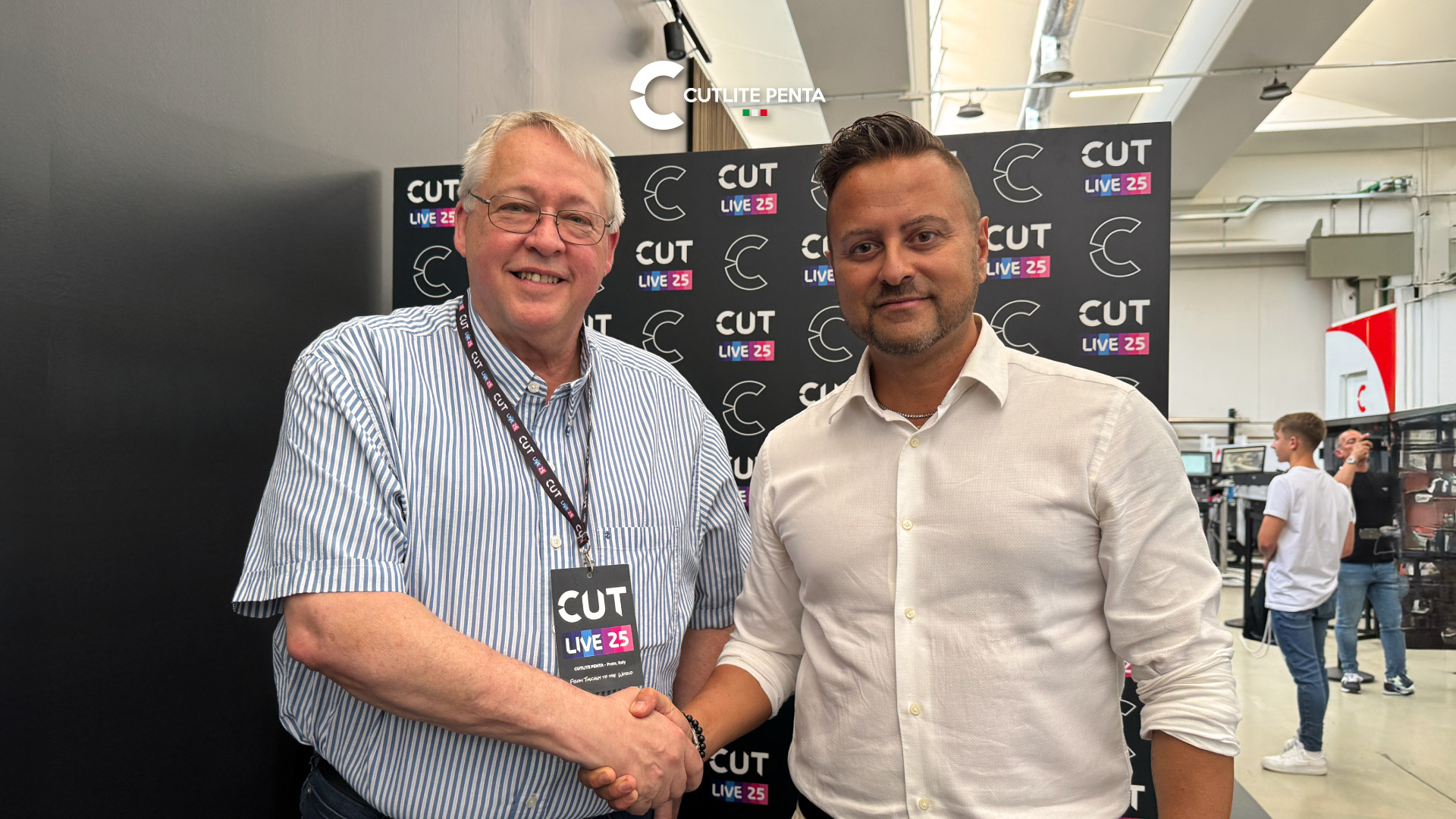
The opening photo was taken at CUTLIVE, in our demo area in Prato: Jeff Cupples and Andrea Falaschi. From plasma to laser, from 30 kW to 50 kW, every step brought an improvement you can measure in quality, speed and cost per part.
The invitation Cupples closes with is the most direct way to put it: “If you want to see cutting in the USA, come to Cupples!”
Frequently asked questions
Does high-power laser really replace plasma cutting?
In the Cupples J&J experience, yes: the company eliminated all its plasma systems when it brought in the 30 kW laser. By his account the 30 kW beats plasma on 30 mm, while above 32 mm plasma can still compete, but only when precision is not required. With 50 kW and Gas Mix it reaches 50 mm, about two inches.
Which secondary operations disappear when you move to laser?
At Cupples J&J, holes that used to be machined in a second pass are now made directly with the laser, and edges no longer need rework. Fewer passes also means more consistent parts, which fit robotic welding better.
Why does the cut open up with plasma?
Because the plasma nozzle wears with use and, as it opens up, the cut opens with it: the part loses geometric accuracy. In fiber laser the cut width depends on the focused beam, not on nozzle wear. There are consumables here too, nozzle and protective window, but they are replaced at known intervals.
How many laser machines does Cupples J&J Company Inc. have?
Twenty-four, in Tennessee. The last seven are Cutlite Penta systems, chosen after the move from plasma cutting to high-power fiber laser.
Want to see what high power does on your thicknesses?
Tell us what you cut and how thick: we will tell you which power level actually makes sense.
