


From the first fiber head to 60 kW: Mirco Grazzini and the cutting head department
August 2000, first job, CO2 sources. Today Mirco Grazzini runs the department that builds the cutting heads we cut with at 60 kW, and it builds every one of them in house.
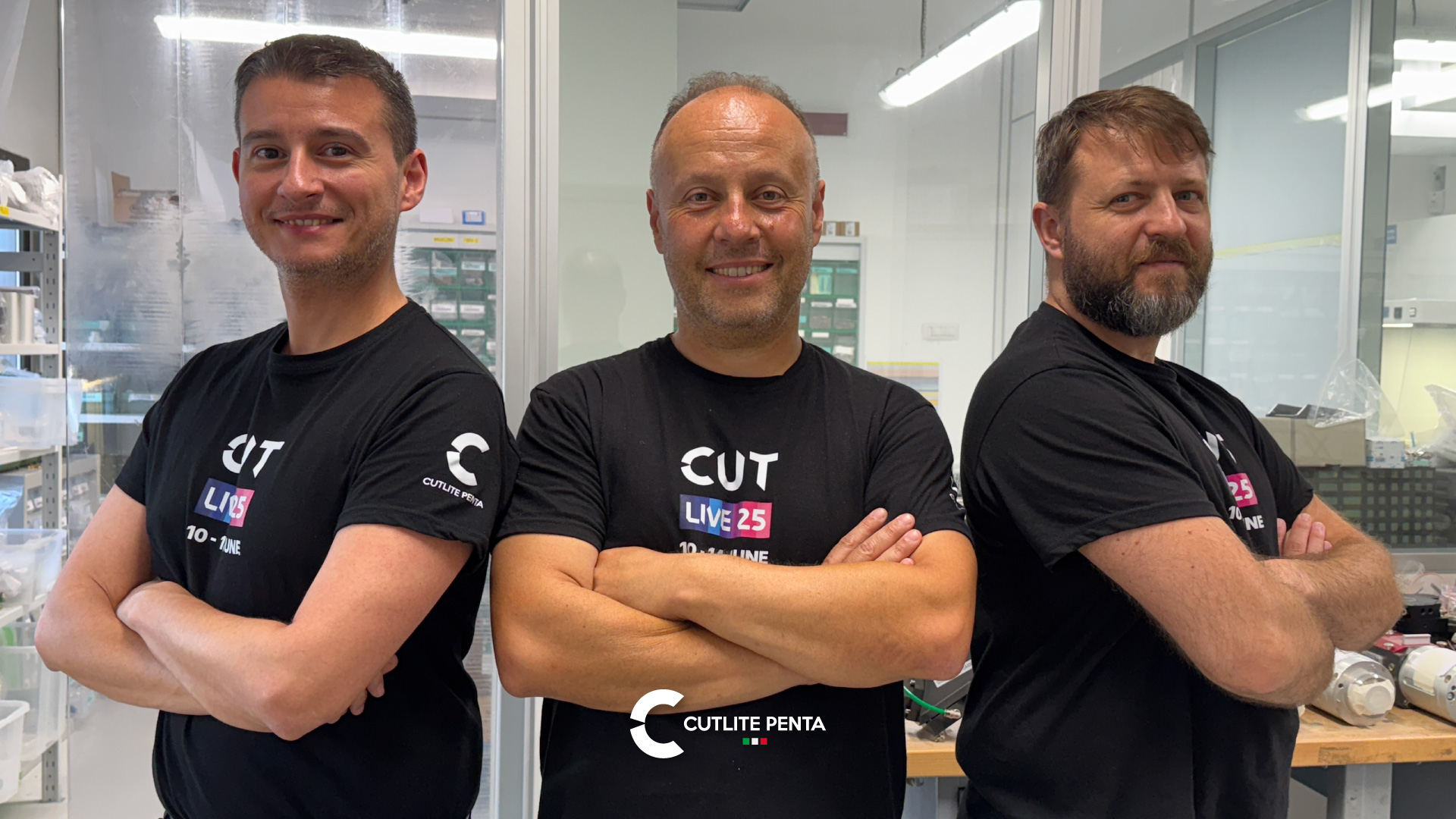
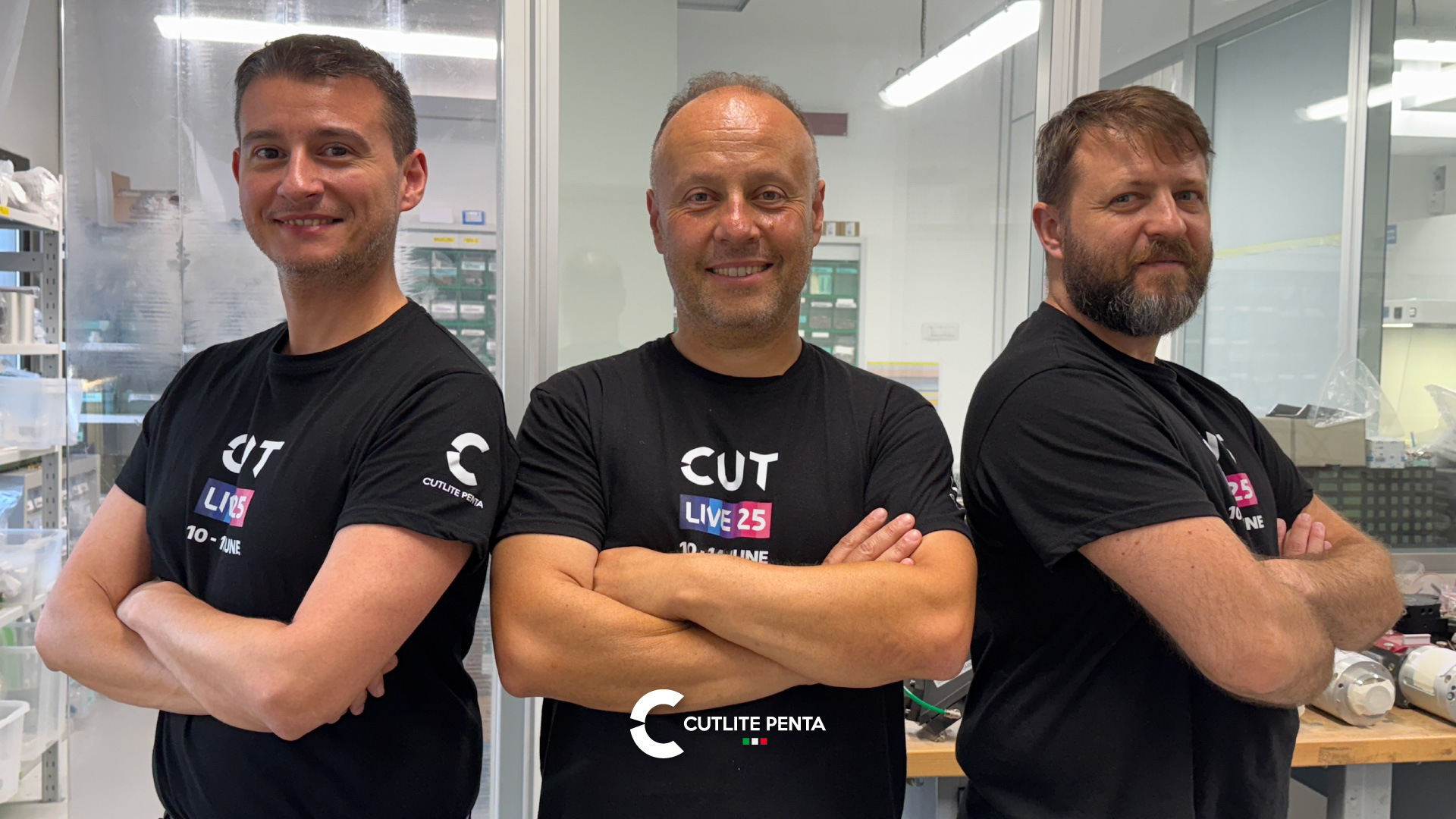
Mirco Grazzini joined El.En. in August 2000. Today he is head of the cutting head department at Cutlite Penta and, together with Ivan Casini and Daniel Cirri, he takes care of building the cutting head: the component closest to the cut, and the one that decides the quality of everything else.
August 2000: it started with CO2
Where did you start?
“I arrived at El.En. in August 2000 and it was my first job. Every day I feel stimulated and fascinated by this technology, and there is no way to get bored.”
“When I started, the laser sources were CO2, at power levels that today would count as very low but that back then were already something new. From there we grew steadily, developing laser sources with El.En. for both industry and medical. I specialised on the industrial side, and later, with Cutlite Penta, on sheet metal cutting.”
The first fiber head, built from scratch
How did you handle the move to fiber laser?
“When we built the first fiber laser head we used all the experience we had built up on CO2, and we managed to work with a technology that was unknown to us and get good results right away.”
“We decided that we alone would build every fiber head, from A to Z.”
“It was a long job, quite an obstacle course, built on working with our in-house research and development department, with the technical department and with our suppliers, to improve optics, mechanics, sensors and electronics.”
From 2 kW to 60 kW: how did you get there?
“The first head worked at power levels that were very high for us at the time, 2 or 3 kW. Then it kept growing, up to cutting at 30-40 kW. With today's power levels we introduced the new Evo 4 version of the cutting head, which let us be at LAMIERA 2025 in Milan with the 60 kW.”
Where we stand on power
“Worldwide, I think 50-60 kW are certainly among the highest power levels available on the market.” It is a scale that in 2000, when Mirco joined, was not even up for discussion.
Why we build every head in house
What difference does producing everything internally make?
“All our heads have always been produced at our own site, and we answer for every component. If something goes wrong, or a customer needs a modification, we can act immediately.”
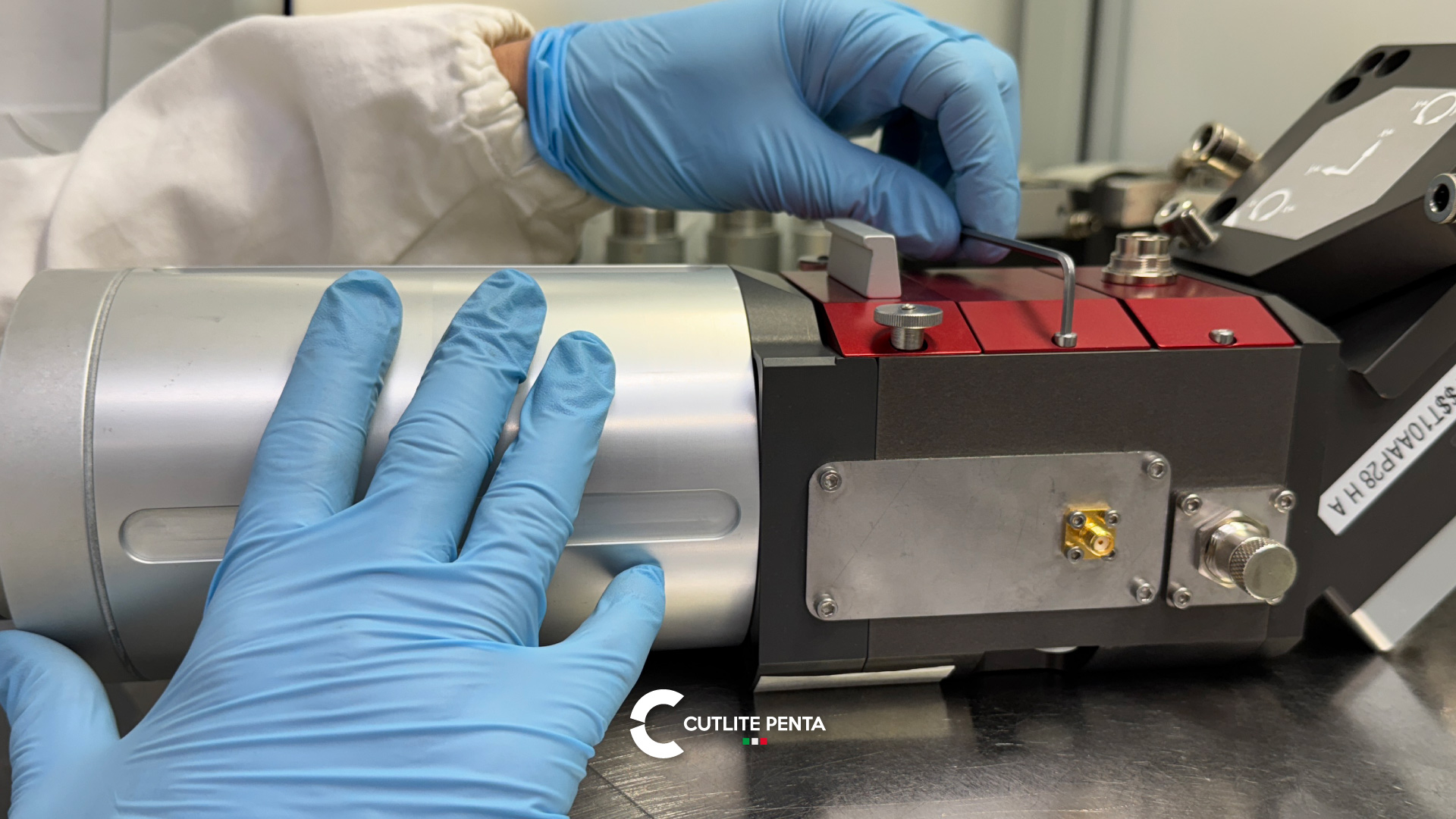
“Our strength, beyond the product, is being able to customise it: different optics and focal lengths that suit the customer's requirements better.” The heads go onto our machines, but they are also sold as spare parts and as an upgrade to a head a customer already has. “Every associated company fitting our heads comes to my department for anything at all.”
Where does a new head project start?
“Every new project is first developed by the research and development department and by the technical department. After the first prototypes, all the departments work together to find the best philosophy and the best route to the best result. It is a necessary synergy.” The loop also takes in final testing, the last check before a head leaves.
The protective window, and why training matters
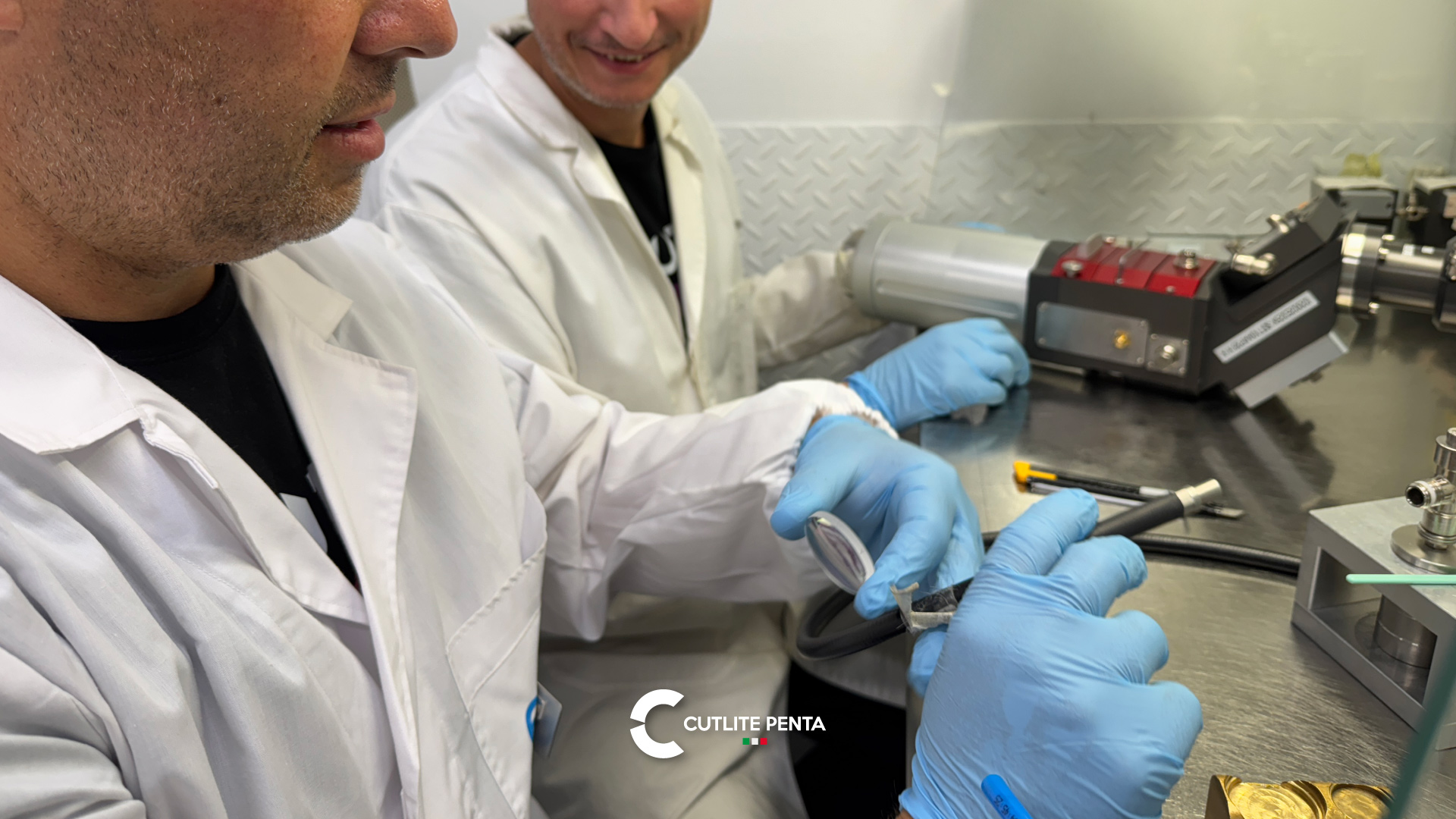
“A fiber cutting head is a technologically advanced object, and it has to be used properly. The main point is having a beam path free of any impurity.” Which is where the simplest and most decisive component of all comes in:
- The protective window cartridge shields the whole head from the impurities of cutting.
- It is a wear part: it gets dirty instead of the optics, and it has to be replaced.
- At final testing we hand over two windows: one fitted in the head and one spare, so it can be swapped straight away.
Training at installation
“Our technicians, while installing the machines, also run training on how the head should be treated: changing the window cartridge, the nozzles and all the details.” It is the part that looks least important at the time and then decides how often you will call service.
Clean rooms in America and Brazil
The department grew along with the power levels, and that growth forced a choice. “We got ourselves ready by training technicians in America and Brazil: a one-month course for each technician, and we supervised the setup of clean rooms identical to ours at those two sites.”
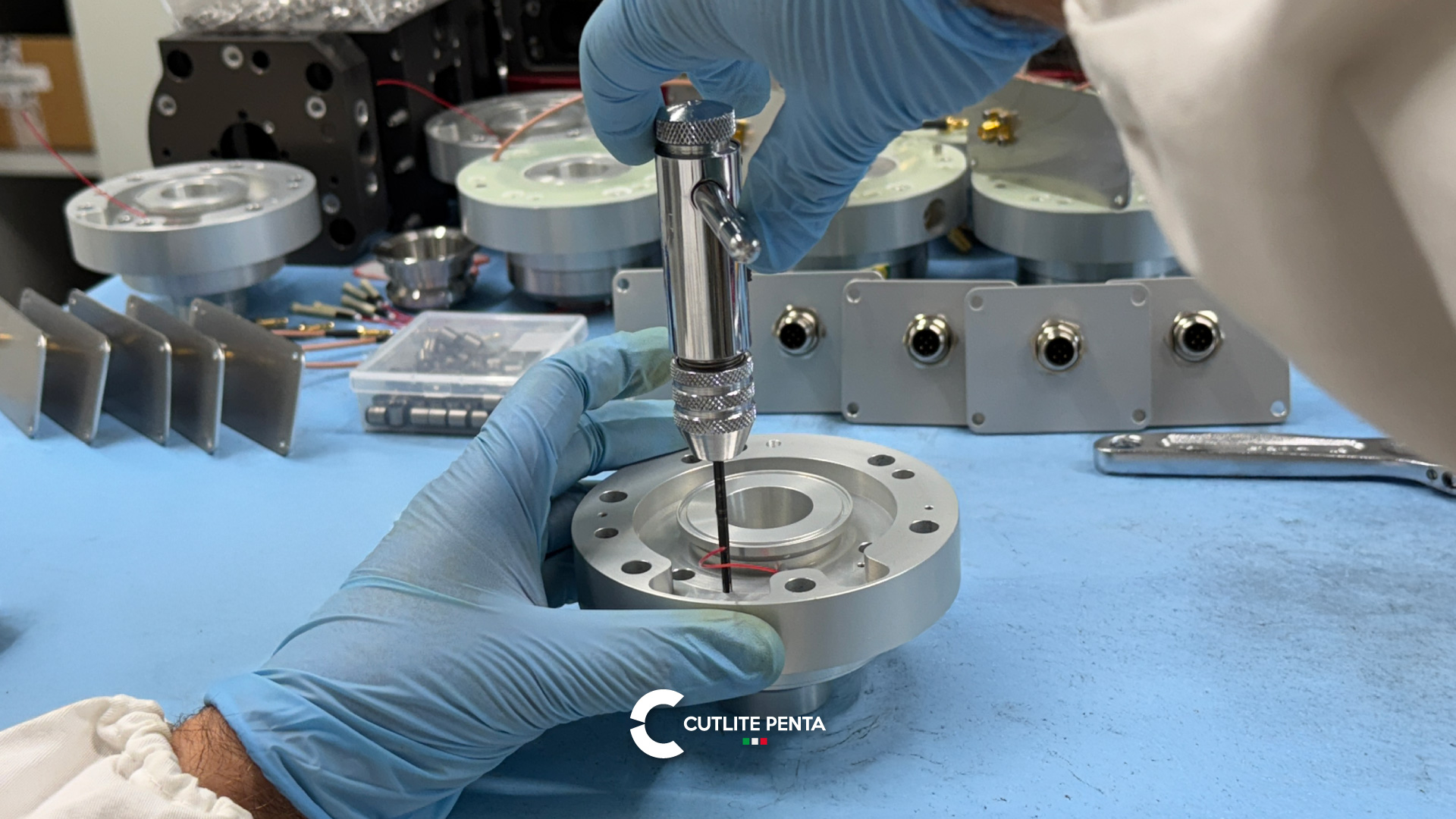
“They are up and running now and handle local repairs on their own, because the numbers had got so large that running everything from Italy was no longer thinkable”, where the whole initial production chain still sits. The other group sites refer to the Prato department. “Production is set to increase over the next few years, so the department will have to grow, in tools and in people.”
“We got to 60 kW not by luck, but through constant attention, experience and the pursuit of better performance.”
Frequently asked questions
Who makes the cutting heads of Cutlite Penta machines?
We do, entirely at the Prato site, in the cutting head department. The fiber heads are built in house from A to Z: mechanics, optics, sensors and electronics. Assembly takes place in a clean room, because the beam path has to be free of impurities.
What is the Evo 4 cutting head?
It is the current version of our autofocus cutting head, introduced to handle very high power levels. It is the head we used at LAMIERA 2025 to cut with a 60 kW source.
How often does the head's protective window need replacing?
The protective window is a wear part: it gets dirty instead of the optics and has to be replaced periodically, at intervals that depend on the material, the thickness and the operating hours. At final testing we supply two windows, one fitted and one spare, and our technicians explain how to change the cartridge during installation.
Can a Cutlite Penta head be fitted to a machine already installed?
Yes. The heads are also sold as spare parts and as an upgrade to a head the customer already owns, in Italy and abroad. Local repairs are also handled by the clean rooms in America and Brazil, set up like the one in Prato.
Want to know which head your machine carries?
Tell us what you need to cut: we'll tell you which system and which power level make sense for your work.
