


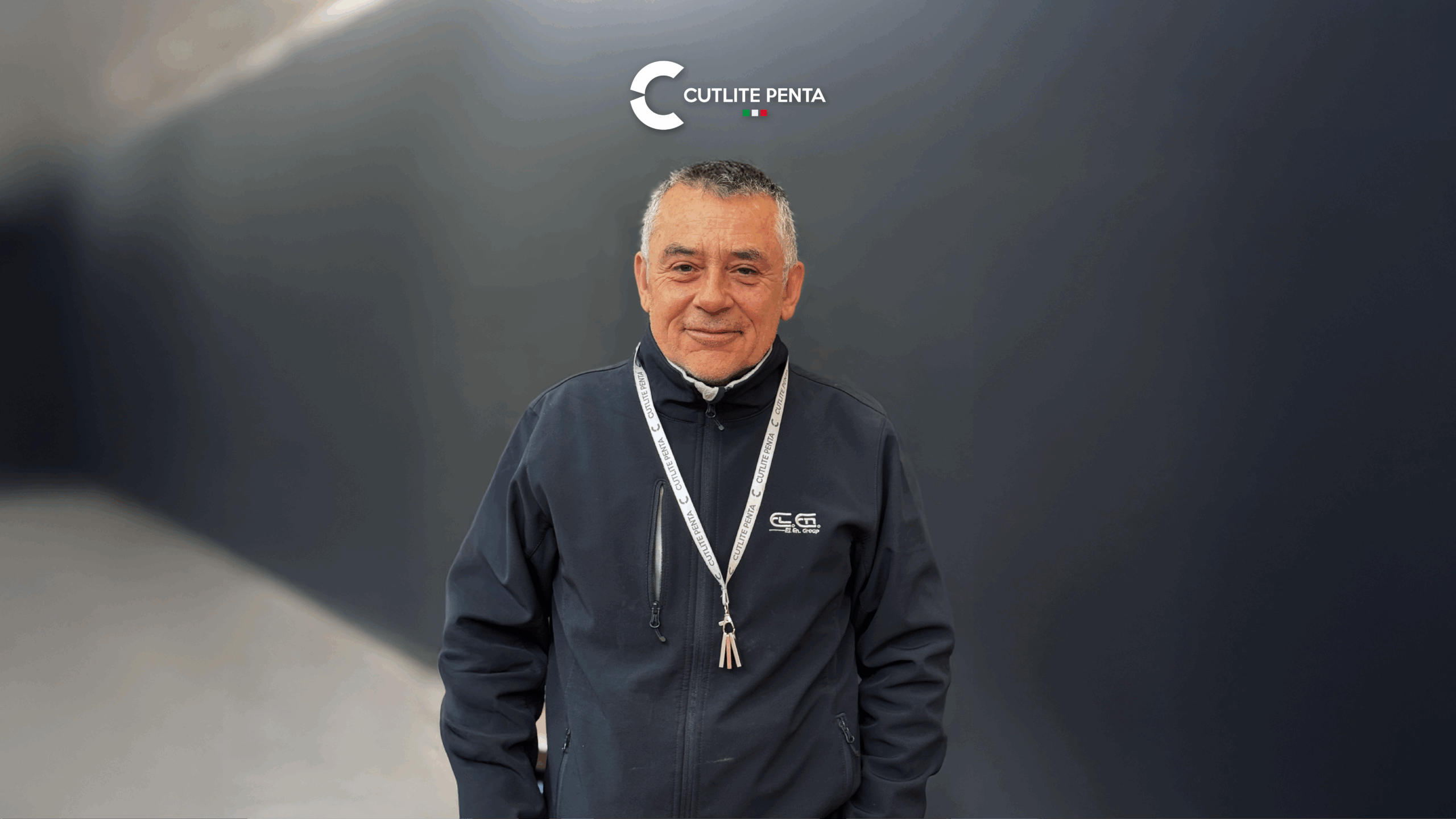
From CO2 to 60 kW: Fabio Mazzoni on how our fiber laser was built
In May 1988 Fabio Mazzoni joined the El.En. group as employee number ten. Today he heads research and development at Cutlite Penta, and in between there are the power supplies of the first CO2 lasers, ten years in China and 60 kW.
His story is also the technical story of the company: from the DC power supplies that excited the cavities of the first CO2 lasers to today's high-power fiber laser. It is a shift he went through from end to end at Cutlite Penta, from soldering a power supply to designing a 60 kW machine.
The beginning: May 1988, employee number ten
May 1988. Fabio Mazzoni, fresh out of technical school in industrial electronics, joined the El.En. group as employee number ten of what was then, in his words, a small craft workshop.
What were your first tasks?
“I started by assembling switching power supplies at El.En., meant to be integrated inside laser cavities.” Today Fabio heads research and development at Cutlite Penta together with Marco Mugnaioni and Francesco Van Den Heuvel. “Back then El.En.'s core business was current-controlled DC switching power supplies for special applications: from vacuum environments for companies like Galileo up to 100 kV for the electron accelerators at the ENEA research center in Rome.”
It is no coincidence that a laser builder grew out of a power supply company. “The current-controlled DC power supply was the heart of a 1980s CO2 laser. In technical terms, lasers back then used carbon dioxide, and one of the ways to excite the laser cavity was exactly a DC high voltage supplied by a DC power supply.”
“After a few years on power supplies I was moved to the laser department, where I learned to build laser cavities. From building we moved on to testing and fine-tuning. Power levels kept going up, and new cavities and new power supplies were needed.”
How did your relationship with Cutlite Penta start?
“Once I had experience with power supplies and had learned to build laser cavities, it was time for installation. A natural customer was Cutlite Penta, an affiliate of ours. But we also worked with other companies, and that gave me a great deal of experience outside El.En.”
From 2012 to 2021 in China: where high-power cutting was born
The turning point came when, in metal cutting, the fiber laser took the place of CO2. “It almost coincided with my Chinese adventure. In the meantime the company had grown and was moving into international markets, China among them, where we opened a facility with a local partner to develop fiber laser cutting technology together.”
From 2012 to 2021 Fabio moved there to develop that technology. “China was a springboard. The more machines we built and distributed, the more we could develop them, improve them and grow our experience. In a short time we reached incredible power levels, and every year we designed a new machine, a new cutting process.”
“We were the first to develop high-power cutting. A domino effect set off by our timing.”
What did moving to China mean for you?
“The experience in China was extremely formative, both professionally and personally. I met a great many people there and made good friends.”
The biggest hurdle was the language. “I tried, but I never managed to learn it. I was lucky enough to work with colleagues who spoke excellent English.”
“We were three Italians permanently there, plus other colleagues who stepped in as needed: software, mechanics and above all our physics PhDs, who gave us essential support on optics and fluid dynamics.”
What made you come back, and what changed when you did?
Covid. “That is what brought me back. China went through a real lockdown. And when it was all over, Chinese competitors cut their margins to the bone, effectively pushing out all the westerners. So I had to come back.”
Returning to Italy meant moving from El.En. to Cutlite Penta. “There was no point staying at El.En. Moving here was the natural thing: they needed it and, in the end, this had become my job.”
Where we stand today on high power
“In the western world, we at Cutlite Penta are the ones handling the highest power levels right now. We benefit from the experience built up over the years.”
“I don't like calling ourselves the best on the market. I prefer to stay humble and keep to the ranks, so we can surprise people.”
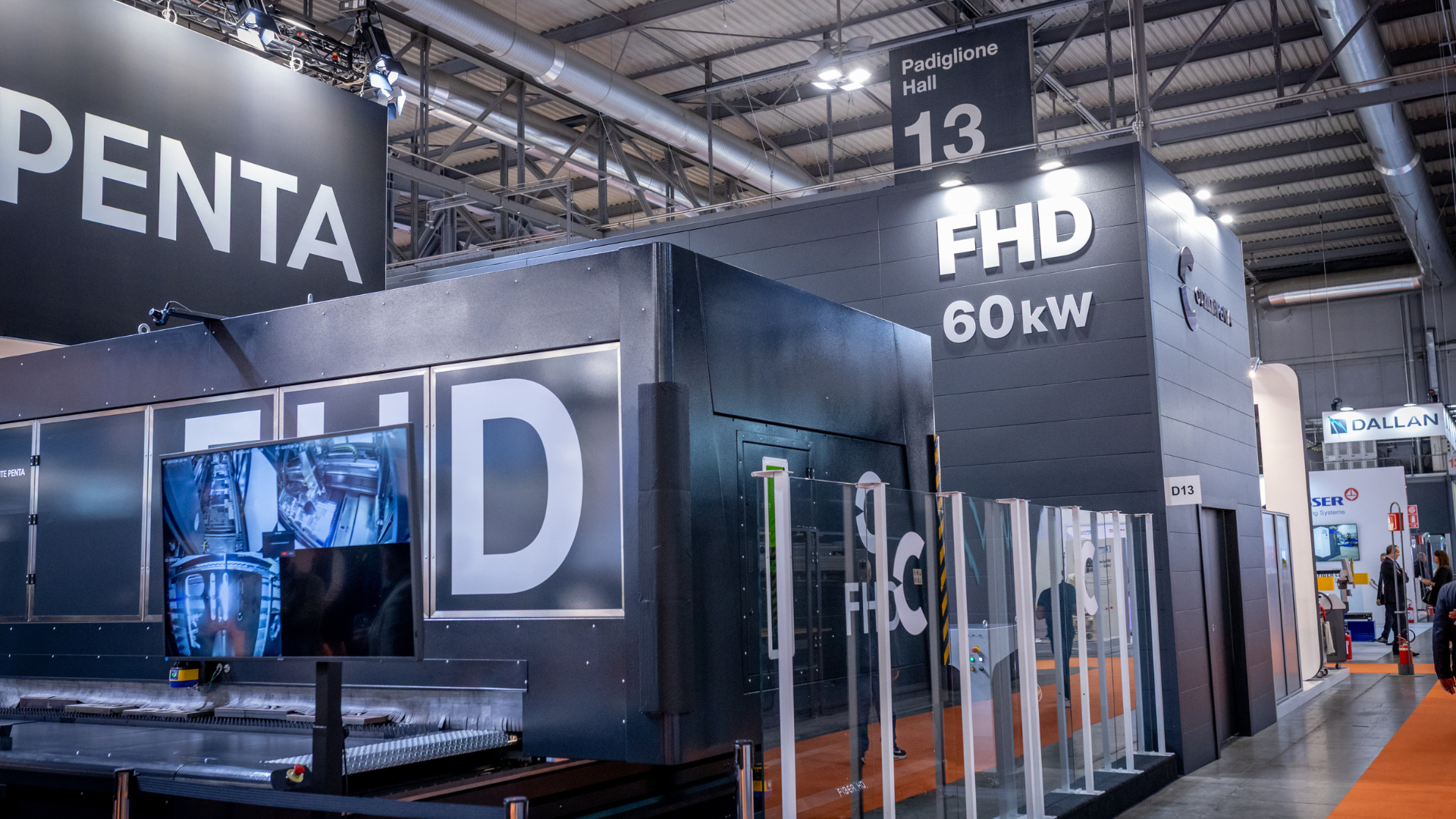
At LAMIERA 2025 we premiered the 60 kW IPG Photonics source on an FHD. CO2, meanwhile, has not disappeared: it keeps working where fiber cannot reach, on plastic, wood and cardboard.
What do you see ahead?
“What I fear is that Chinese competitors will push forward more and more. They improve daily. This is a country that today builds aircraft, ships and trains: it has become completely self-sufficient.”
“In the end geopolitics counts too, not only technology. Market balances keep shifting.”
And after all these years? “I would do it all again. I do the same job today that I did at the start, and I like it as much as on the first day.”
Frequently asked questions
Who heads research and development at Cutlite Penta?
Fabio Mazzoni, together with Marco Mugnaioni and Francesco Van Den Heuvel. Mazzoni joined the El.En. group in May 1988 as employee number ten, starting from the power supplies of CO2 lasers.
What is the relationship between Cutlite Penta and El.En.?
Cutlite Penta is part of the El.En. group, and represents its industrial laser cutting side. In the early years Cutlite Penta was a customer of El.En. for power supplies and laser cavities.
Why did the fiber laser replace CO2 in metal cutting?
Because on metal the fiber laser reaches power levels and speeds CO2 cannot deliver. CO2 is not obsolete though: it remains the right technology for wood, plastic and cardboard, materials the fiber wavelength does not cut.
How long has Cutlite Penta been working on high power?
Development started between 2012 and 2021, when the group opened a facility in China with a local partner and Fabio Mazzoni moved there to work on it. Today the maximum power is 60 kW.
Want to see where that technology has got to?
Tell us what you need to cut: we'll tell you which system and which power level make sense for your work.
