


Fratelli Martinelli: with a 6 kW FAST, the blanking die is no longer needed
Before, making a new part meant building the blanking die first. Today the part is laser cut and goes straight to bending. That is the main reason a 6 kW FAST arrived at Fratelli Martinelli.
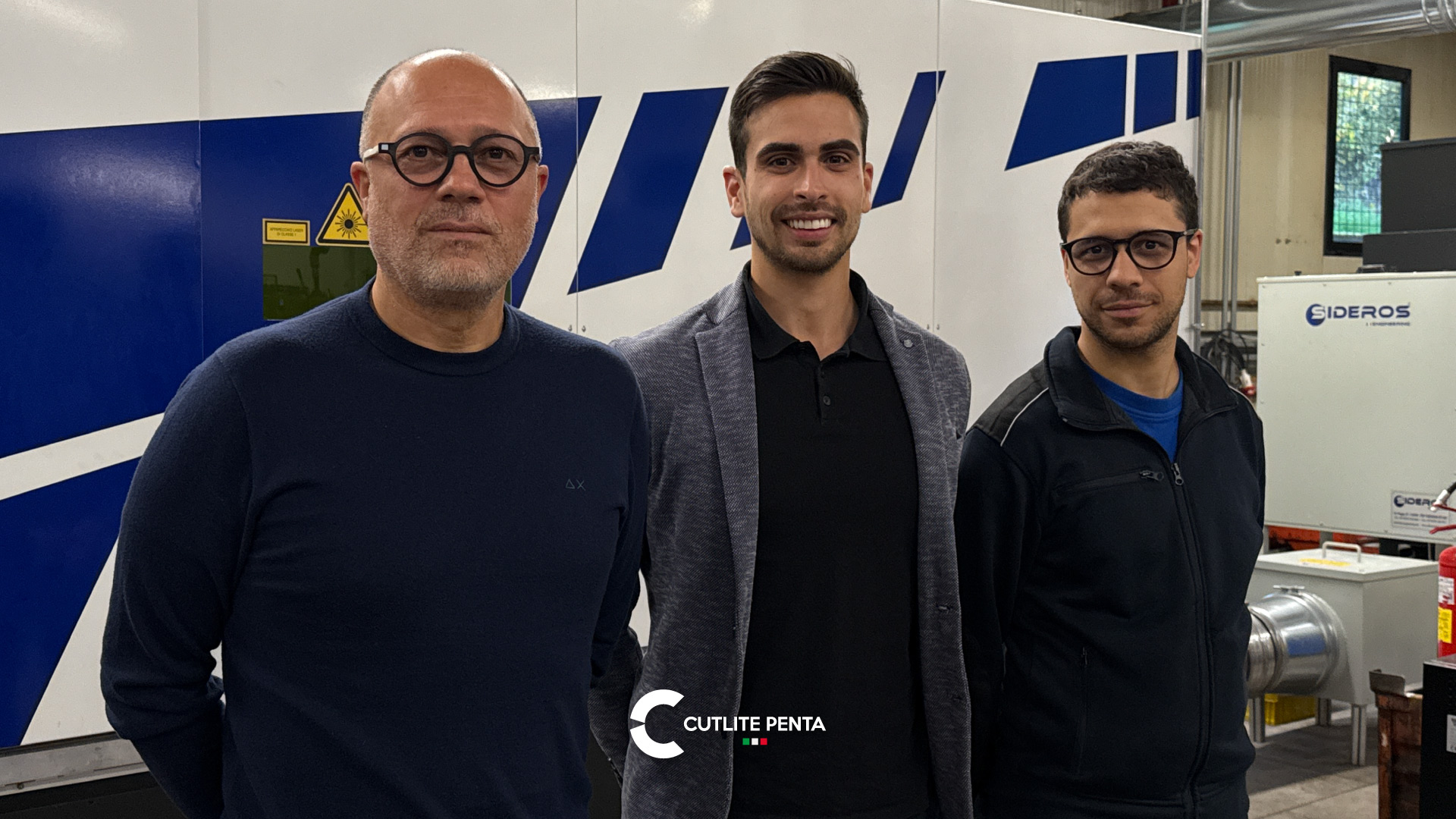
We went to San Marcello Piteglio, in the province of Pistoia, to visit a company founded in 1952 by eight brothers and today a tier 2 supplier to the automotive industry. Gian Piero Bruschi told us the story: he is a partner in the business together with his wife Silvana Martinelli and Sandro Butelli.
Who Fratelli Martinelli are
Fratelli Martinelli S.p.A. is a sheet metal stamping company based in San Marcello Piteglio, in the province of Pistoia, Italy, and has been in business for more than seventy years. It started in 1952, when eight brothers set up a small workshop from which, over time, several companies still active in the Pistoia area were born.
From shutter brackets to car components
At the beginning they made and sold furniture fittings: hinges, shutter brackets, shutter stays. Then the company specialized in sheet metal stamping, working for names such as Piaggio, Fiat Motofides of Livorno and Zanussi of Florence. Management passed from Silvano Martinelli to Delfo Martinelli, Silvana's father, and between 1975 and 1993 the company consolidated.
The turn came in the eighties and nineties: from supplying motorcycles and scooters to components for cars, a sector the company has worked in for more than twenty-five years. «We moved the company onto more international ground, to make it attractive to a wider set of customers», Bruschi says.
A tier 2 supplier in a globalized market
Today Fratelli Martinelli works mostly with foreign customers. Parts ship to central and northern Italy, across Europe and to North Africa, where many automotive companies have moved production.
«Ours is a globalized market», Bruschi explains. «We operate as a tier 2 supplier, and keeping roots in the local area while serving the big international groups is a constant challenge.» That sentence explains better than any other why a company in the mountains above Pistoia buys a machine that lets it answer in days instead of weeks.
The laser was not in the plan
At first buying a laser was not on the agenda. What changed was the demand: more and more forming dies and prototypes, on lead times that outside suppliers could not meet.
«At that point we decided to buy a laser system and bring all the work inside the company», Gian Piero recalls. Not to run volumes, but to stop depending on anyone for the parts that are needed straight away.
The choice: from Euroblech to the plant in Prato
The first assessment looked at imported machines. The turn came at Euroblech, in Hannover, where Bruschi met Cutlite Penta for the first time. «After visiting the plant in Prato and testing the machine together with our sales contact, Alessio Marrucci, the choice made itself.»
The configuration chosen is a 6 kW FAST, available for immediate delivery, with national capital-goods incentives completing the picture. «Even though we knew we could not use the machine's full potential straight away, we decided to invest in the future.»
Geography counted too: there are less than forty kilometers between Pistoia and Prato. On a machine that has to stay in production, the distance to the supplier is a technical figure, not a detail: it means short response times and a direct relationship with people.
The 6 kW FAST: what it cuts
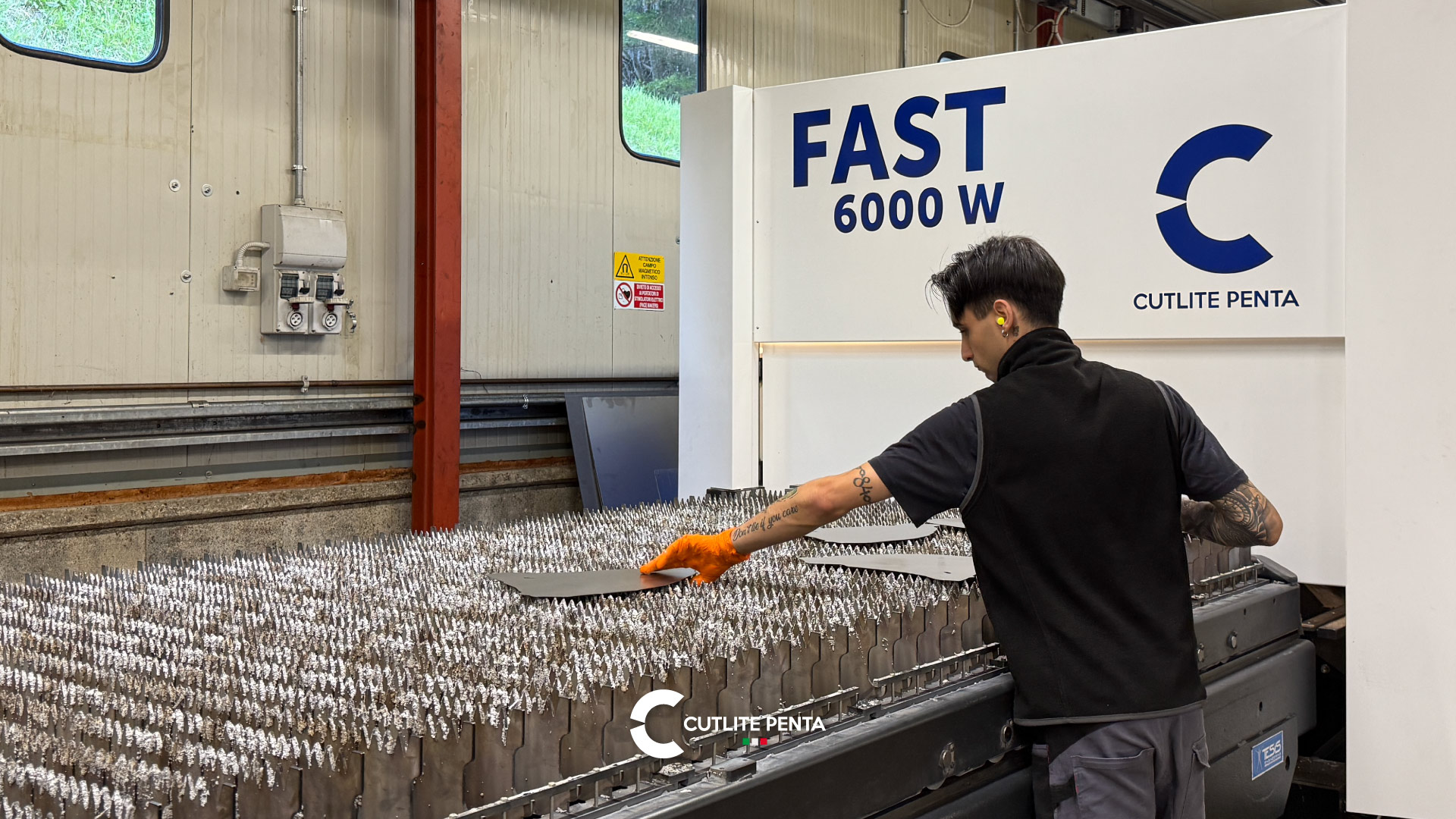
The FAST is the linear motor system built for speed on low and medium thicknesses, which is exactly the working range of a stamping company. At Fratelli Martinelli it runs:
- carbon steel
- sheet intended for stamping
- aluminum
The three things they use it for
This is the most interesting part of the visit, because it is not the use you would expect. The laser here is not there to produce parts in series: it is there so that tooling does not have to be built.
- Instead of the blanking die. «With the laser we can cut the material directly and pass it to bending, removing the need to build a dedicated blanking die.» On small batches that is a cost and a lead time that simply no longer stack up.
- Rapid prototyping. «The laser machine is extremely flexible and cuts development times drastically.»
- Resharpening and die shims. «With the laser we can cut profiles and compensation shims, keeping precision high.»
The first point is worth pausing on, because few people talk about it: when a part is cut and bent, the blanking die does not have to be designed, built, stored or maintained. On an order of a few hundred pieces, that is most of the cost.
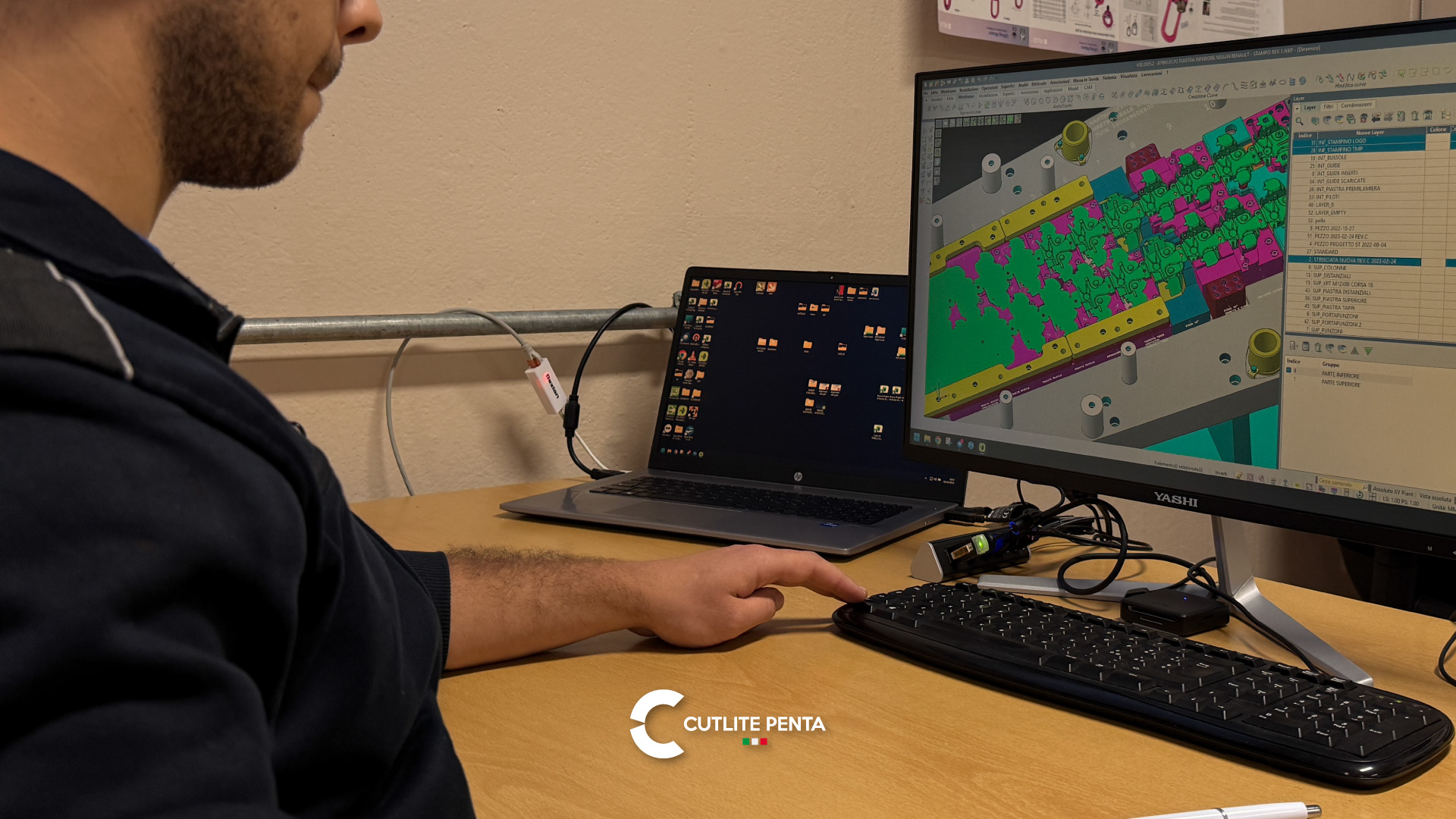
Training and software: what went well and what is still open
Installation and training went smoothly: the operators got comfortable quickly, with software Bruschi describes as intuitive. «Hands-on experience made the difference», he explains, «even if in future we will look at possibly higher-performing software solutions.»
We left that second half of the sentence exactly as he said it, because it is useful information: anyone working on dies and prototypes has different programming needs from someone running repetitive production, and choosing the software does not end when the machine is installed.
The result, some time on
Operationally, bringing in the FAST cut processing times and raised the precision of the finished part. But the sentence that struck us most is about people, not the machine.
Our operators are more aware, more attentive to the quality of the final result. Today we are faster, more self-sufficient and more competitive.
Frequently asked questions
Which Cutlite Penta machine does Fratelli Martinelli use?
A 6 kW FAST, the linear motor system built for speed on low and medium thicknesses. It was bought for immediate delivery and runs carbon steel, sheet intended for stamping, and aluminum.
Can a laser replace a blanking die?
On small batches and prototypes yes, and that is the main use Fratelli Martinelli makes of it: the part is laser cut and goes straight to bending, with no dedicated die to design, build, store and maintain. On large series the die remains cheaper, because its cost spreads over many more parts.
What is a laser for in a stamping company?
Three things, based on Fratelli Martinelli's experience: replacing the blanking die on small batches, rapid prototyping that cuts development times, and cutting profiles and compensation shims for die resharpening. It is not there to run volumes: it is there so that nobody waits for tooling.
Why choose the FAST rather than another machine?
Because it is built for speed on low and medium thicknesses, with linear motors and an autofocus cutting head. On sheet up to medium thickness the dynamics matter more than peak power, and in work made of different parts every day positioning time weighs as much as cutting time.
How many dies could you avoid building?
Bring us the drawings of the parts that today cost you dedicated tooling: we cut them in our DEMO area in Prato and you do the maths on your own numbers.
