


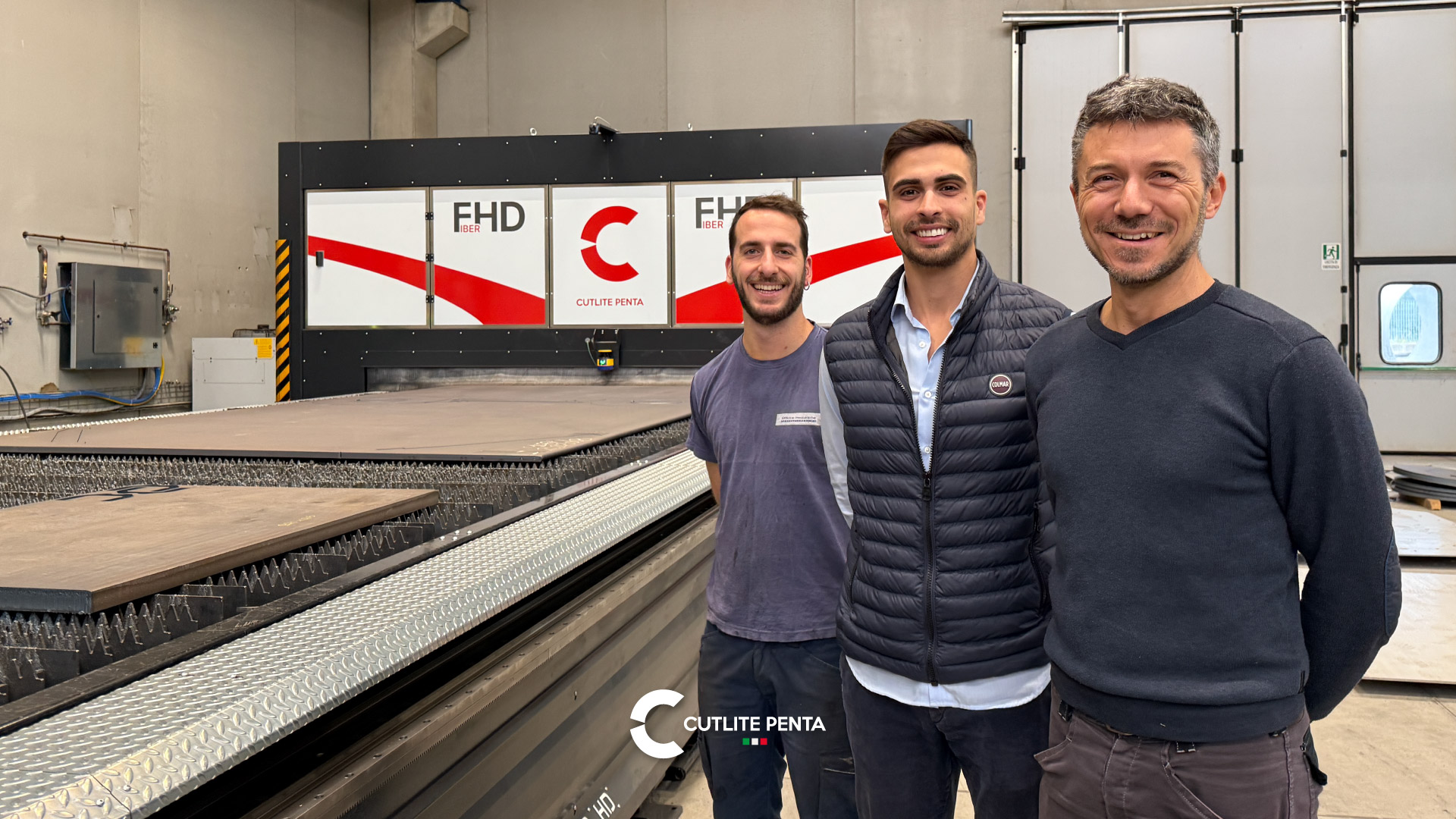
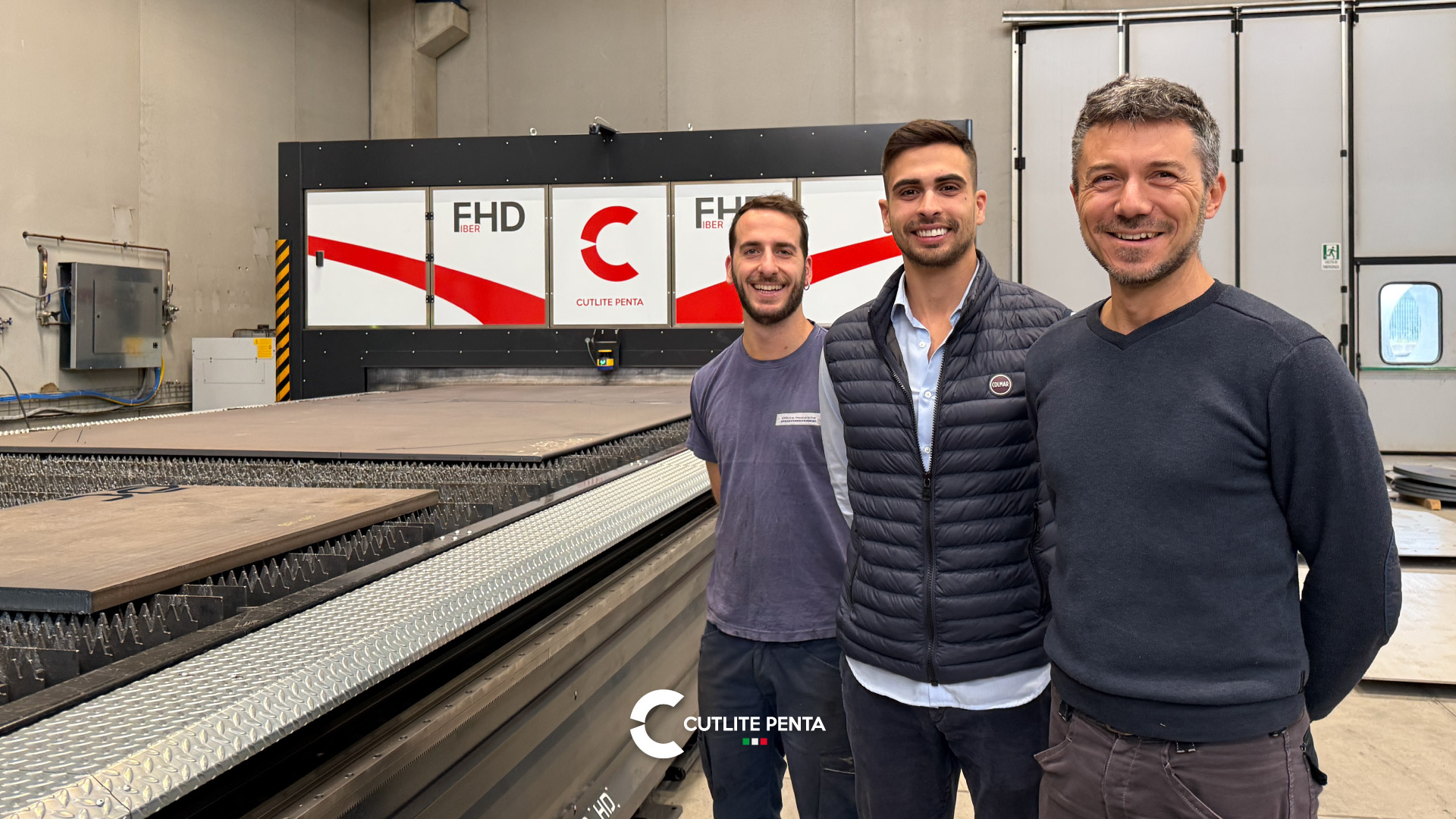
In 2018 the laser did not pay off on 40 mm. In 2024 Officine Meccaniche Castelfiorentino bought a 20 kW FHD
In 2018 Marco Manetti had already assessed fiber laser and said no: on his thicknesses, between 10 and 40 mm, it was not competitive. In 2024 he did the maths again and bought a 20 kW FHD 12030. In between, the company did not change. The technology did.
Officine Meccaniche Castelfiorentino has been cutting since the post-war years: first oxyfuel, then plasma, then a combined machine. Marco Manetti, third generation, told us why he changed his mind, what went wrong in the first months, and what saved him an entire production step.
Who Officine Meccaniche Castelfiorentino are
Officine Meccaniche Castelfiorentino is a medium-to-heavy mechanical fabrication shop in Castelfiorentino, in the province of Florence, Italy. It was founded in 1956 by the grandfather of the current owner, Marco Manetti: three generations in the same business.
In 1971 the company moved to its current site. Over the last fifteen years growth has called for two new buildings: the latest one now houses the laser system and a welding robot.
Oxyfuel, plasma, combined: forty years of thermal cutting
The cutting story starts in the eighties with oxyfuel cutting, continues with plasma and in the nineties arrives at a combined machine. That investment held for decades, and not out of inertia: on OMC's work it did the job.
Which is why this case study starts with a no. In 2018 Manetti assessed fiber laser and decided to stay with the combined machine, because on his thicknesses, which run between 10 and 40 mm, the laser of the day was not competitive. It was a correct assessment, with the numbers available then.
What changed between 2018 and 2024
In 2024 a meeting with Alessio Marrucci, Cutlite Penta Area Manager, reopened the question. In the meantime the available powers had grown, and with them the thickness range where the laser stands comparison with thermal cutting: it is the same thing we describe on our page about plasma and laser, seen from the buyer's side.
Six years between a no and a yes is a useful figure for anyone assessing this now: if you said no to the laser on your thicknesses before 2020, that no is out of date. Not because you were wrong then, but because the line has moved.
Testing it on your own material
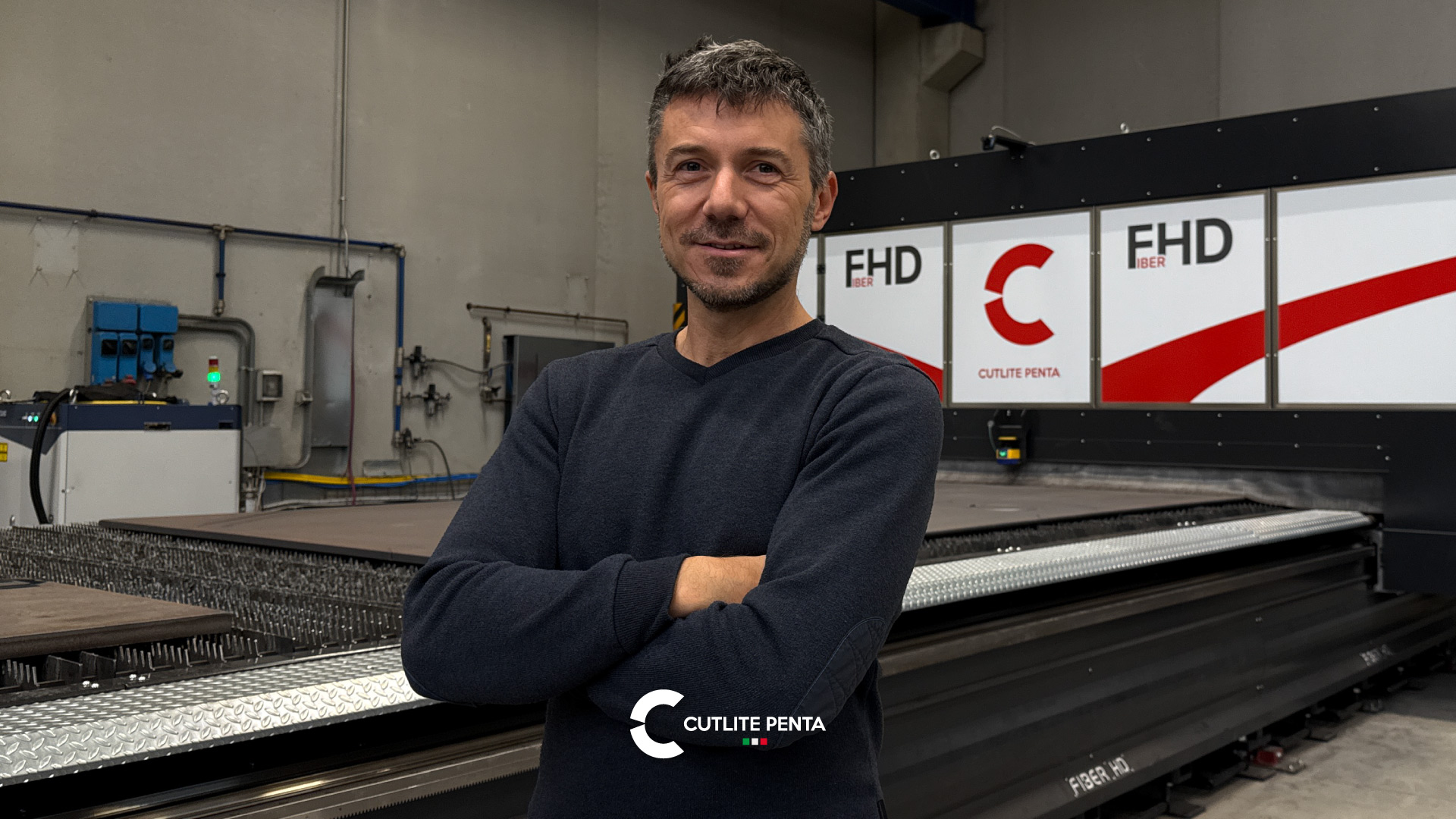
The decisive step was the invitation to Prato, and not for the reason you would expect: «Not only could we see the machine running, we brought our own material and tested it on our real requirements.» According to Manetti that was the main advantage over the other builders assessed. In practice, the difference is this:
- seeing the machine cut, not a video and not a table
- bringing your own material, with your thicknesses and your sheet quality
- testing your own parts, not a sample prepared for the demo
- leaving with a result in your hand to show back at the company
Why a 20 kW FHD 12030
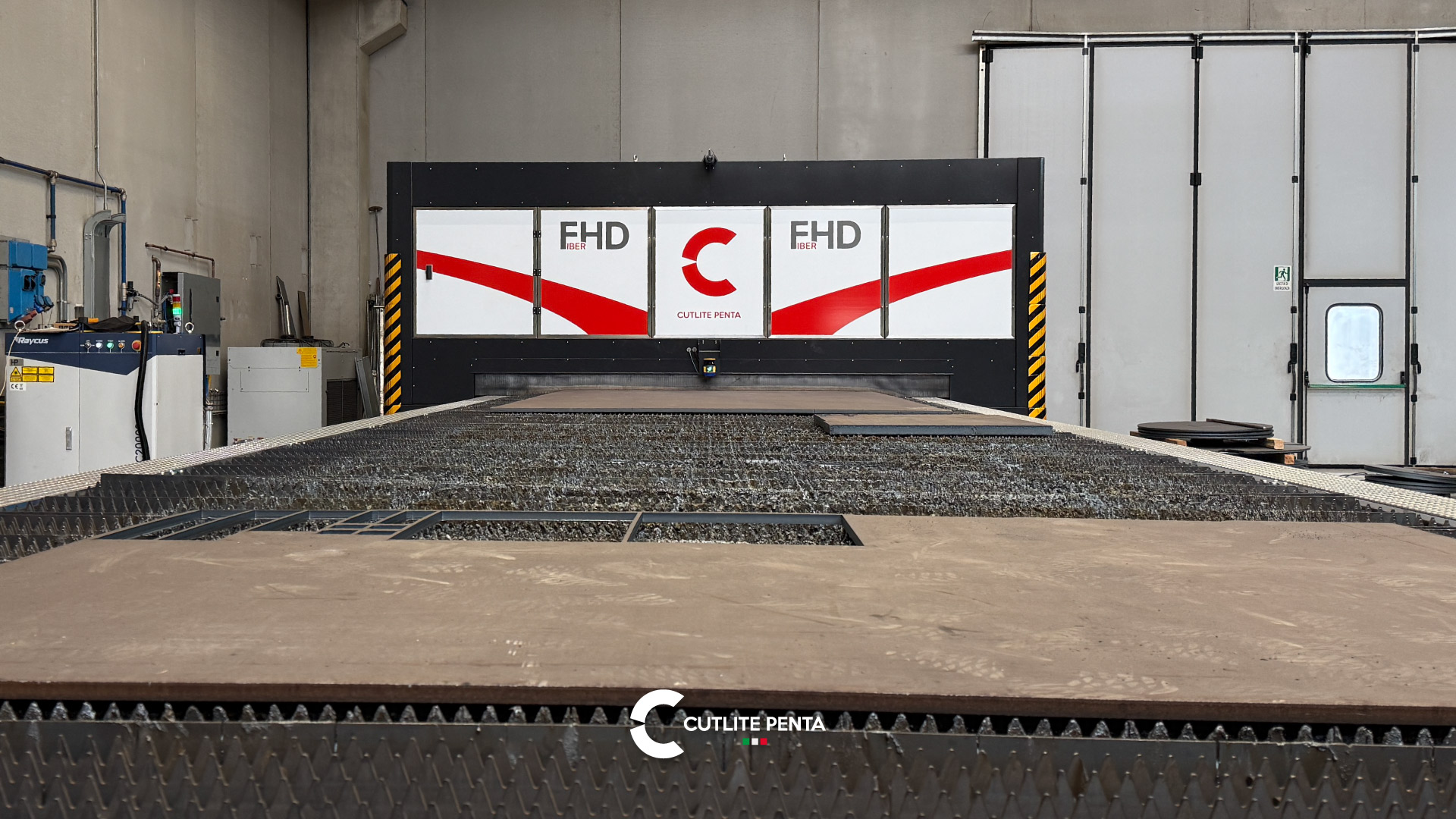
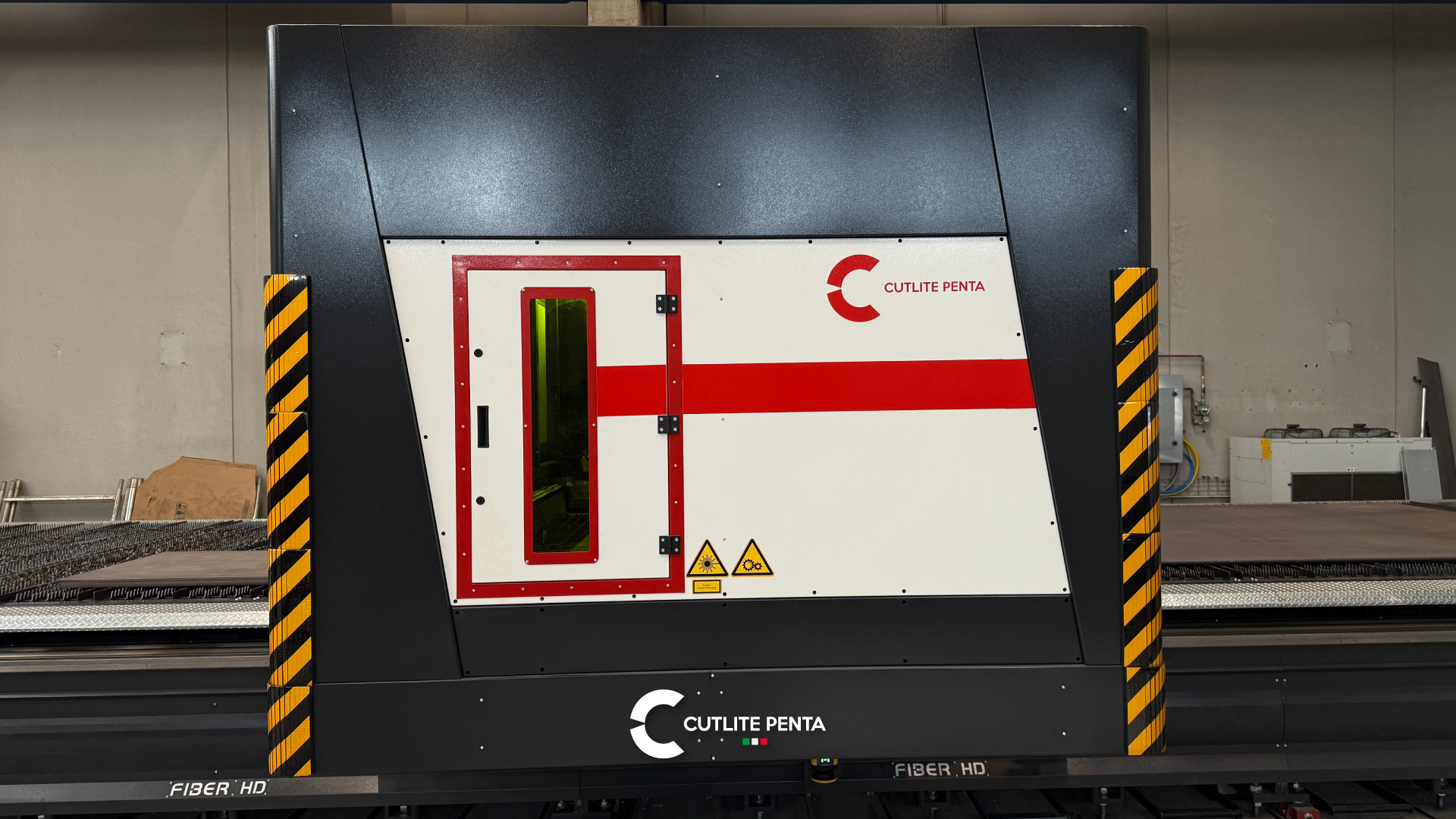
The choice is an FHD 12030 rated 20 kW: working area 12 × 3 meters, sized to replace the previous system entirely.
The format is not a power decision, it is a material logistics decision. OMC works mill plate, that is plate rolled on a plate mill and sold in the commercial 6 meter formats and their multiples. A 12 meter table takes two 6 meter plates side by side, or one full plate: the material goes in exactly as it arrives from the supplier, with no preparation cuts and no scrap from resizing. That is the kind of reasoning that comes before looking at kilowatts.
The bevel head: one production step fewer
This is the part that is worth the price of admission. With the bevel head, available on the FHD up to ±50°, OMC has eliminated chamfering as a separate operation. That chamfer used to be made after cutting, on another machine. The three benefits Manetti listed are these:
- speed and quality: part cleanliness and precision are at another level compared with thermal cutting
- one step fewer: chamfers no longer go through a lathe, a grinder or a milling machine
- less sheet consumed, in quantity and in cost: a reduction he calls «significant and far from trivial»
On that last point Manetti was honest in a way worth reporting: he has not yet measured the energy saving, so he does not claim it. The material saving, on the other hand, he can see, and you do not need an instrument to see it.
The first months: what went wrong
Installation was well coordinated, but the first months were not without difficulty, and it is right to write that down. Part of it was inevitable: moving from a combined machine to a fiber laser means learning another machine. Part of it, though, was our fault: the cutting tables supplied at the start were not the right ones, because they referred to a 30 kW and not to the 20 kW purchased. Across the variety of materials OMC handles, that made the initial parameter work longer than it needed to be.
What held that phase together was Dalibor Ametovic, service engineer: «He was always available to solve any problem in an extremely professional way.» And in-house training went fast: Daniele, the operator dedicated to the machine, learned to run it quickly.
We are genuinely satisfied with the result. We have an efficient, high-performing machine, which we have also recommended to one of our own suppliers. I am happy and I would make the same choice again.
Frequently asked questions
Which Cutlite Penta machine does Officine Meccaniche Castelfiorentino use?
A 20 kW FHD 12030, with a 12 × 3 meter working area and a bevel head. It was installed in 2024 and completely replaced the combined oxyfuel and plasma system used before.
Does fiber laser pay off on thicknesses between 10 and 40 mm?
In 2018 Officine Meccaniche Castelfiorentino assessed the laser on that range and chose to stay with thermal cutting, because at the time it was not competitive. In 2024, with powers reaching 20 kW and beyond, the same company made the opposite choice. If your assessment dates from before 2020, it needs redoing.
What is a bevel head on a laser for?
For bevel cutting, up to ±50° on the FHD, directly on the machine. For anyone who used to produce chamfers on a lathe, a grinder or a milling machine, it removes a production step: the part comes off the laser ready for the next stage.
Why choose a 12 meter table?
Because the format has to follow the material you buy. Anyone working mill plate receives it in the commercial 6 meter formats and their multiples: a 12 meter table accepts it as it arrives, with no preparation cuts and no scrap from resizing.
Did you say no to the laser before 2020?
Let's redo the maths with today's numbers: bring your drawings and your material to our DEMO area in Prato and test the cut on your own parts.
