


Laser cutting of a die: how it works
Laser cutting is at the heart of making a die.
After looking at how a die is made, we take a closer look at laser cutting.
Laser cutting of a die falls into two main families:
- Flatbed die cutting
- Rotary die cutting
Laser cutting of a flatbed die
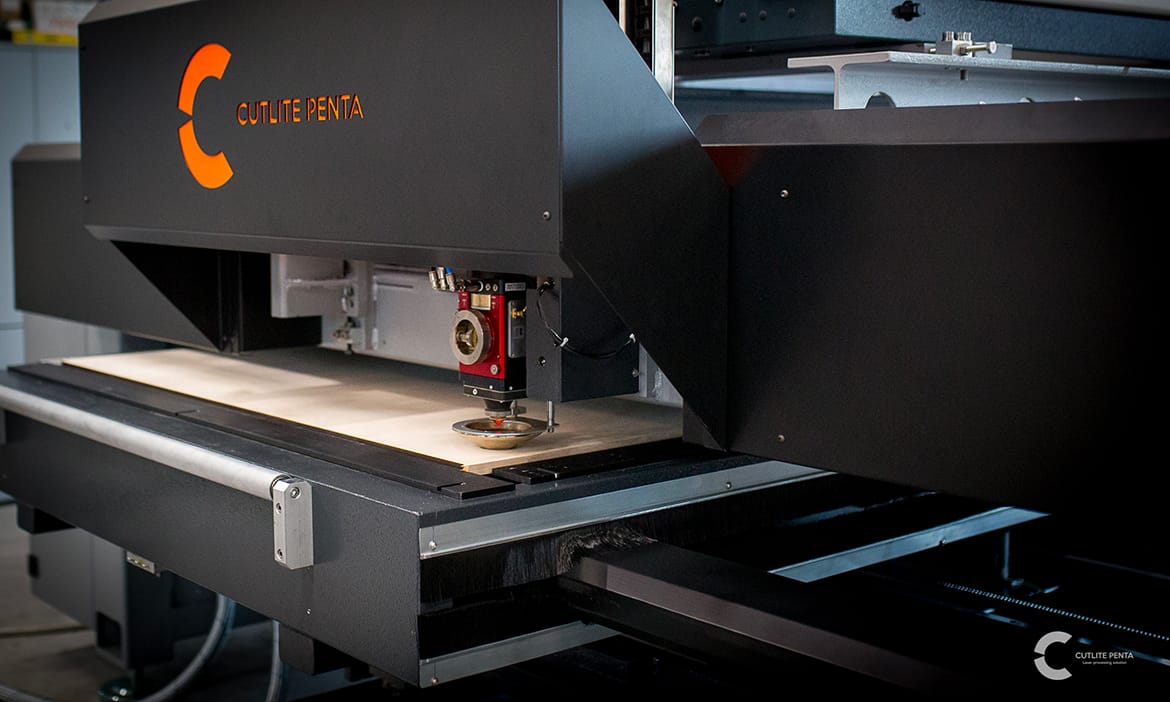
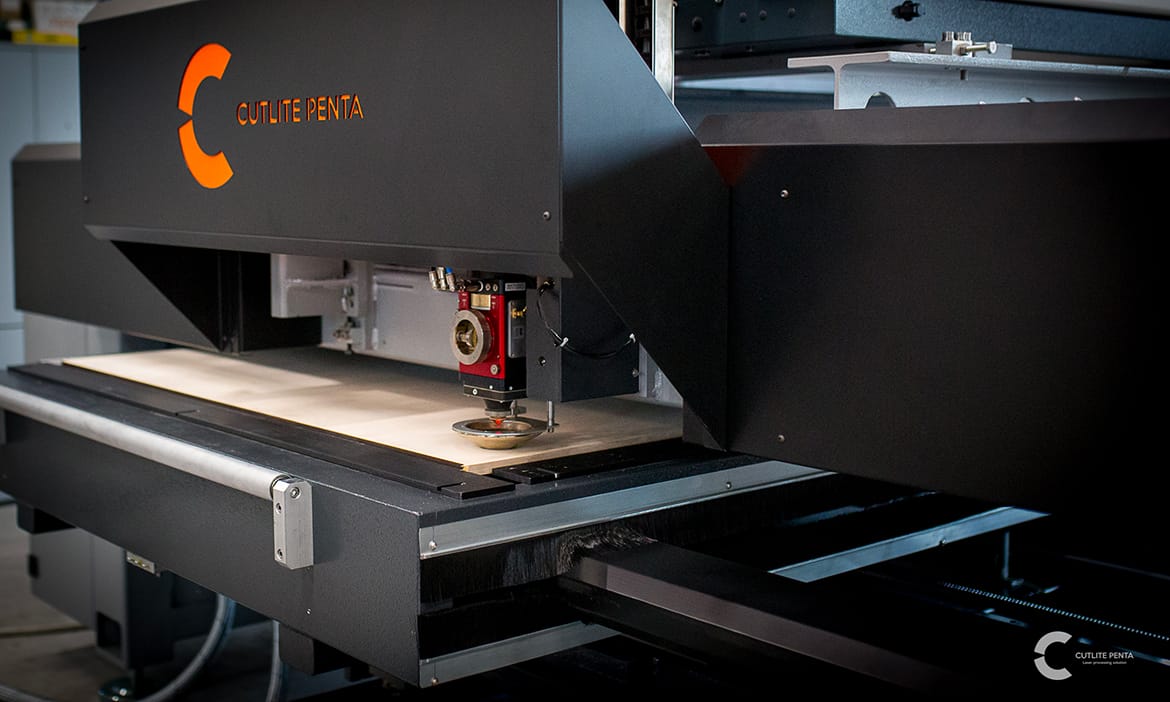
A flatbed die is made from a birch panel, usually 18 mm thick. The panel must meet precise tolerances in both thickness and flatness: otherwise, major die-cutting problems would arise.
Laser cutting follows very strict precision rules, tied to the width of the cut channels: precisely 0.71 mm (2 points) or 1.05 mm (3 points).
Latest-generation lasers such as those from Cutlite Penta, thanks to dedicated software, modulate the cuts in 8 directions with precise off-sets. A well-cut die must have the same precise width on both the top and the bottom, so as to ensure the cutting rules hold firmly.
Many factors affect the precision of the laser cut: the machine features (high-precision ball screws or linear motors), the focus accuracy and the stability of the laser beam.
In addition to cutting, a galvo marking head is often used, able to write plenty of information on the die in a few seconds, saving both time and gas.
Laser cutting of a rotary die
A rotary die is usually made from a 13 mm poplar panel, with diameters ranging from 176 to 800 mm.
As with flatbed dies, rotary dies also require strict flatness and thickness standards. The cut is usually made with a width of 1.42 mm (4 points).
Laser cutting of a rotary die starts with an off-line setup, outside the machine: wooden supports are screwed inside the lower cavity of the rotary shell, which will then be housed in the rotary shell.
A milling head with tool change is then mounted, to mill dedicated pockets that are essential for fitting further supports for the die-cutting of the rotary die.
Cutlite Penta produces stand-alone lasers for both flatbed and rotary dies, as well as combined flatbed and rotary systems that use a single laser source for two cutting systems, with power from 750 watts up to 3000 watts.
Frequently asked questions
How does laser cutting of a die work?
The beam cuts the channels in the wooden panel where the rules will be inserted, following the CAD drawing within hundredths of a millimeter.
How wide are the channels of a cutting die?
0.71 mm (2 points) or 1.05 mm (3 points), depending on the thickness of the rule to be fitted.
What is the difference between flat and rotary dies in laser cutting?
A flat die comes from an 18 mm birch panel; a rotary die from a curved panel, where the cut must follow the cylinder radius.
Why is a dedicated laser needed for dies?
Because the cut must be modulated in several directions with precise offsets: without dedicated software the channels miss the tolerance and the die does not close properly.
Discover what a Cutlite Penta fiber laser can do for your production
Tell us about your work: we'll help you find the laser system best suited to your thicknesses, volumes and goals.
