


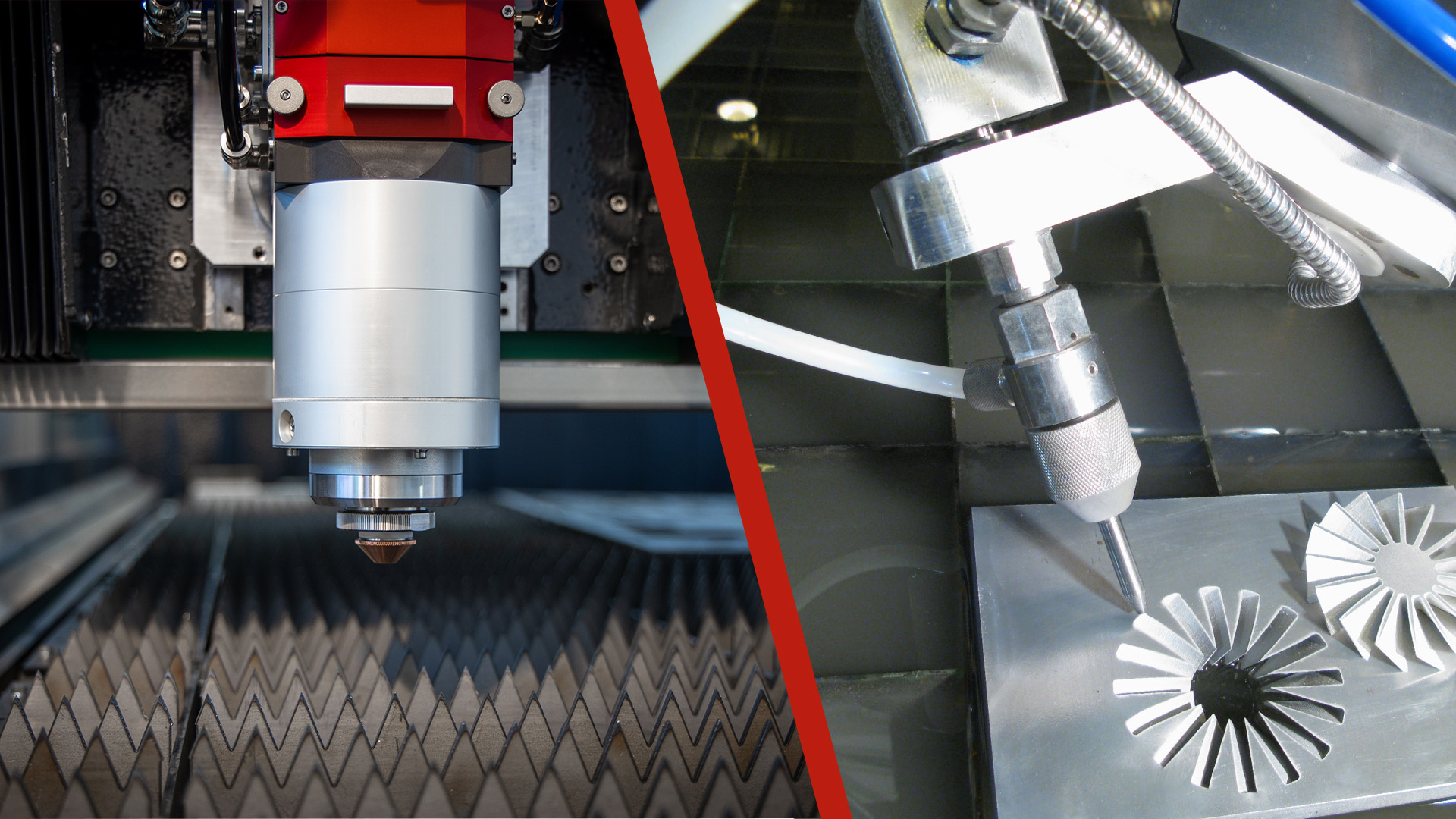
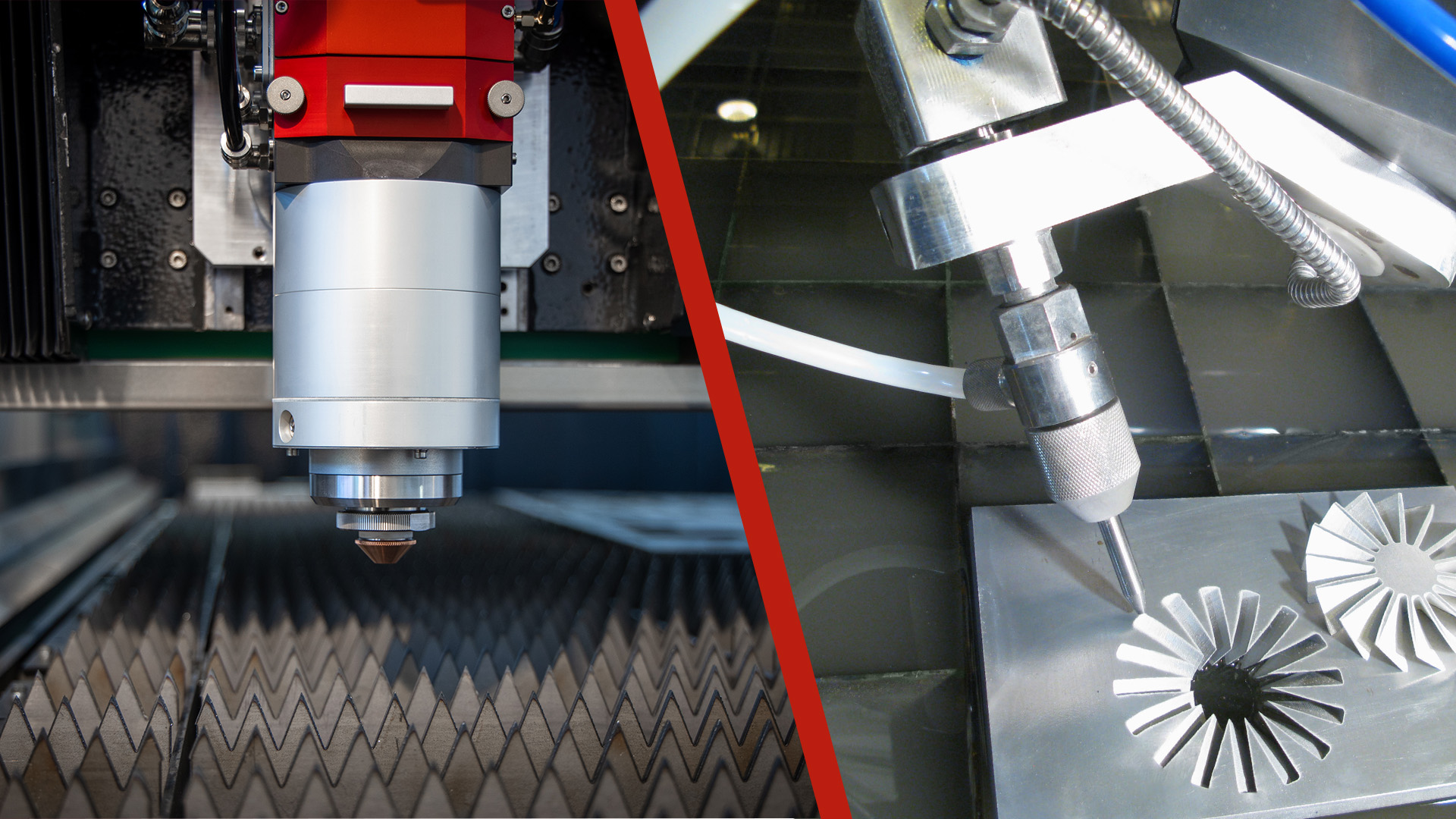
Waterjet or fiber laser cutting? Here are the differences
Waterjet and fiber laser are two very different metal cutting systems: speed, materials, thicknesses and machining costs all change.
Do you want to buy a metal cutting system but can't choose between waterjet and fiber laser cutting? Both have evolved over the years to meet industry needs. Compared with traditional techniques, the advantages of fiber laser and waterjet machines are now many. But which of the two is better suited to your production? Let's look at the differences.
How waterjet and fiber laser cutting work
To understand which metal cutting machine suits your company best, it's worth starting from how the two systems work. Let's look at them in detail.
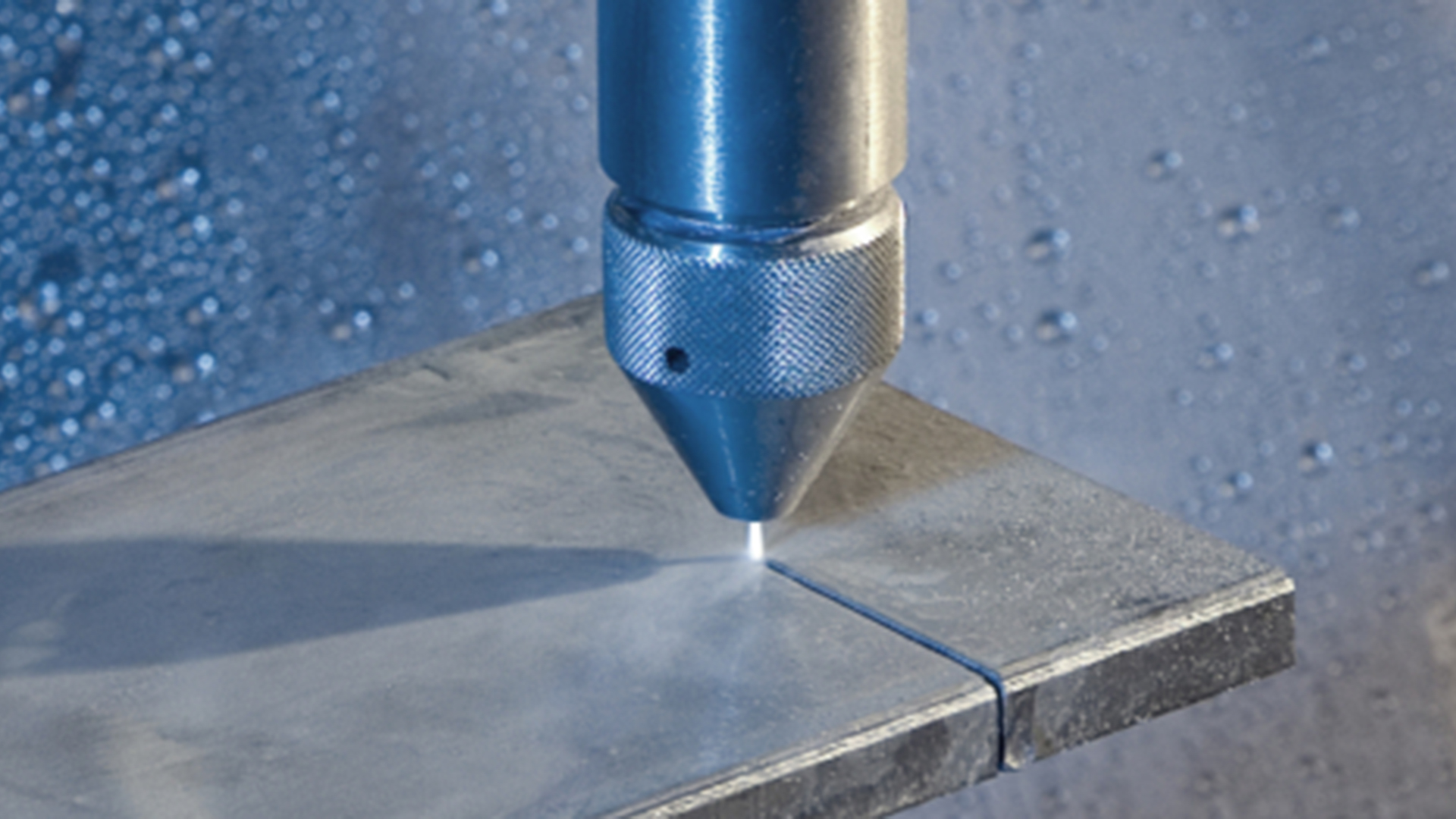
Waterjet metal cutting: how it works
Waterjet cutting is a cold-cutting system based on a very high-pressure water flow. The jet coming out of a small hole erodes the material it meets, producing the desired cut. An abrasive material, such as aluminum oxide or garnet, is often added to the water to improve cut quality.
Advantages and disadvantages of waterjet cutting
Waterjet cutting can work a wide range of materials and is therefore useful for composite materials too. As a cold cut, it produces no unwanted deformation and, with abrasive added, it offers good cut quality. It is also effective on very high thicknesses. Among the advantages:
- Works a wide range of materials, including composites
- Cold cutting, with no unwanted deformation
- Good cut quality with abrasive
- Effective on very high thicknesses too
The disadvantages start with machining efficiency. Because of the low cutting speed, production times are longer than with laser. On very thick parts the cut takes on a slightly conical shape from top to bottom, due to the loss of water power, and the jet pressure is not suited to very small metal parts. Among the disadvantages:
- Low cutting speed and longer production times
- Slightly conical shape on high thicknesses
- Not suited to very small metal parts
- Very noisy: it requires ear protection and, with abrasive, safety glasses
- High water and abrasive consumption, to be disposed of, with higher machining costs
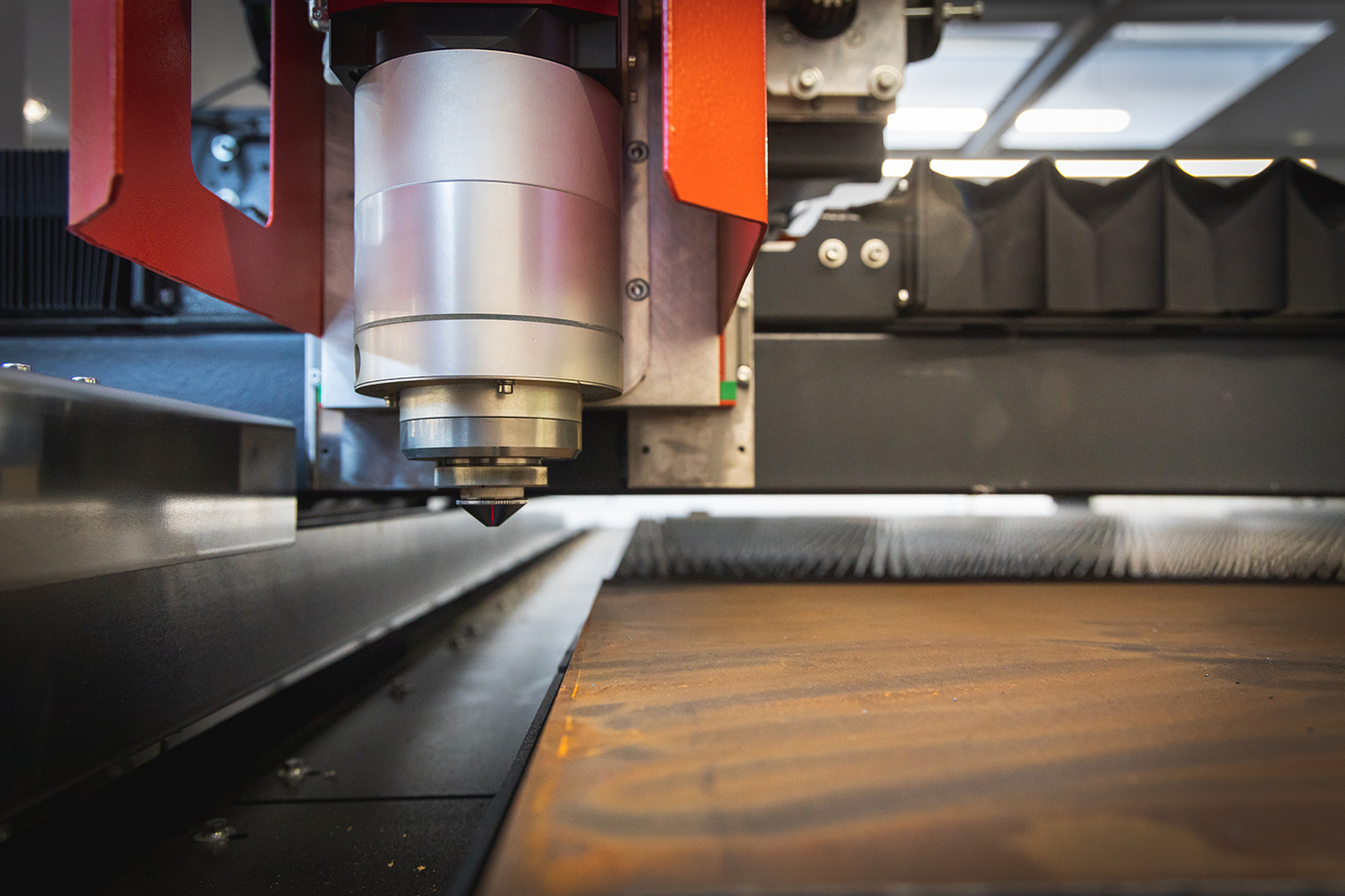
Fiber laser metal cutting: how it works
Fiber-optic laser cutting uses a high-intensity laser beam, emitted by a source (laser seed) and amplified through an optical fiber “pumped” by diodes. The beam has a very small focal diameter and a much higher intensity than CO2 laser. Hitting the material, it produces a precise cut, keeping high quality even on large production runs.
Advantages and disadvantages of fiber laser cutting
Fiber laser cutting is among the most efficient systems for cutting metals. High precision goes with high machining speed, with a yield higher than other techniques. Its shorter wavelength makes it possible to work, with high quality, reflective metals too, such as brass and copper. The beam diameter, comparable to a hair, ensures high precision on very small parts too. Consumption is contained, scrap is reduced and the machining fumes can be extracted by a ventilation device. Among the advantages:
- Among the most efficient systems for cutting metals
- High precision and high machining speed
- Works reflective metals too, such as brass and copper
- High precision on very small parts too
- Contained consumption and reduced scrap
Among the disadvantages is the cost of the machines, generally higher, largely offset in the medium and long term by lower machining costs.
Which to choose between waterjet and fiber laser?
Based on the pros and cons of the two systems, you can choose the one that best fits your company:
- Choose waterjet if you need to cut thicknesses over 50 mm and a wide range of non-metal materials, such as stone, ceramic or plastic
- Choose fiber laser if you need to cut metals and sheets, small parts too, with thicknesses up to 50 mm: it is by far more efficient and ensures a clean, quiet workplace, with lower production costs and times
Cutlite Penta fiber laser systems: more power and versatility
Cutlite Penta designs and builds high-power, high-quality fiber-optic laser cutting systems. Entirely Made in Italy, Cutlite Penta laser machines were among the first in Italy and Europe to reach a cutting power of 30 kW. The Evo 4 cutting head also ensures great flexibility for cutting tubes and sheets. Among the advantages of choosing Cutlite Penta:
- High power and speed performance
- High cut quality
- Linear motors on every system
- Automatic loading and unloading system
- Custom configurations
- Ability to work large formats too
- Personalized support
- Technology developed in-house and Made in Italy quality
Frequently asked questions
Waterjet or fiber laser cutting: which is better?
It depends on materials and thicknesses: waterjet is worth it above 50 mm and on non-metal materials such as stone or ceramic; fiber laser is more efficient on metals and sheets up to 50 mm, with lower times and costs.
Is fiber laser cutting faster than waterjet?
Yes. Waterjet has a lower cutting speed and longer production times; fiber laser works at higher speed with greater efficiency.
Does fiber laser cut copper and brass?
Yes. Thanks to its shorter wavelength, fiber laser works reflective metals too, such as copper and brass.
What thicknesses does fiber laser cut?
Up to 50 mm. Above these thicknesses, and on non-metal materials, waterjet may be more suitable.
Discover Cutlite Penta fiber laser systems
High-power fiber laser systems for metal cutting. Tell us what you need to cut and we'll find the right solution for you.
