


Two hours of work in twenty minutes: Giancarlo Terreni Srl and its 6 kW XME
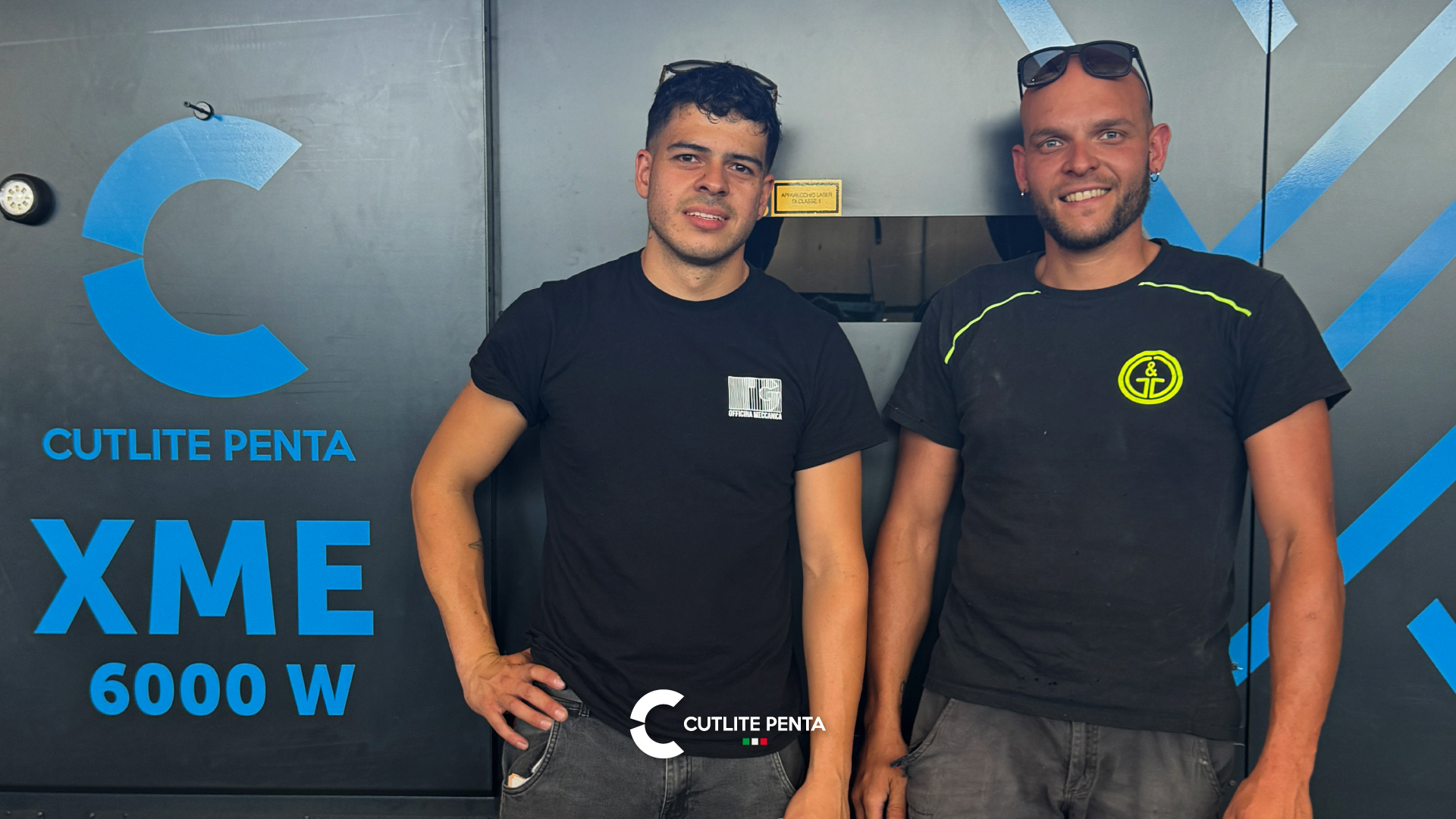
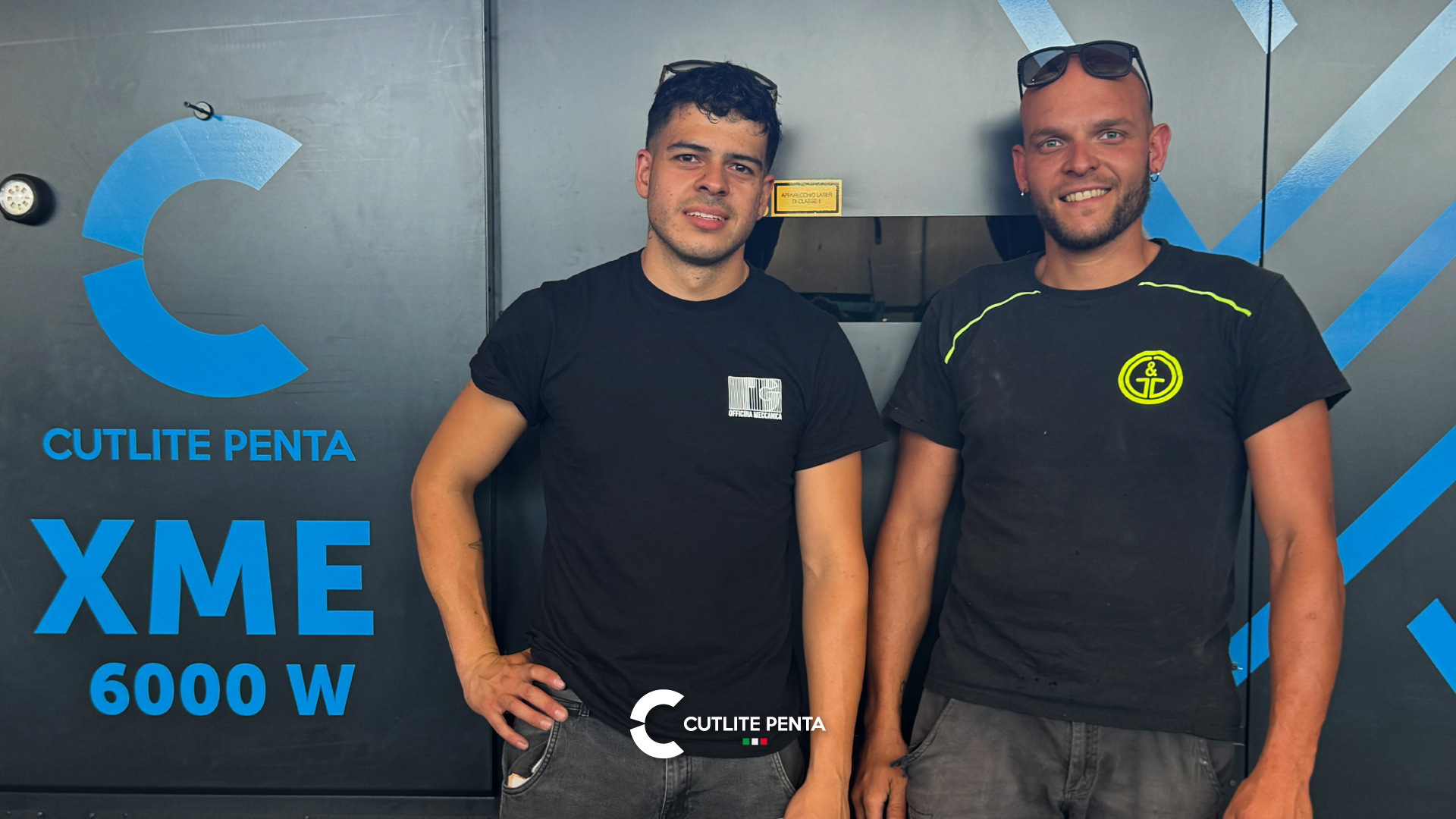
Giancarlo Terreni Srl is a Tuscan company founded in 1986 that makes machine guarding for industrial equipment: the sheet metal panels that form the outer casing of a machine. In September 2024 it was taken over by two young partners, Gianni Rubino and Gaspare Errante. Today they are fourteen people.
They replaced a CO₂ laser from 2000 and a plasma system with a single machine, a 6 kW XME. The number that best describes the change is Gianni's: a job that used to take two hours is now finished in twenty minutes. But the most interesting part is not the speed: it is that they stopped batching jobs by thickness.
Who Giancarlo Terreni Srl are
A bet placed in September 2024
“Giancarlo Terreni Srl is a company with solid roots, founded in Tuscany in 1986. In September 2024 my partner and I decided to take the business over”, says Gianni Rubino. “We are young, with plenty of entrepreneurial spirit and a real wish to build our own future. It was quite a bet, but we believed in it from the first moment.”
What they make
“Our core business is machine guarding for industrial equipment: we make all the sheet metal panels that form the outer casing of a machine. We work in several sectors, tanneries, joineries, marine, rail, in practically every field that involves industrial machinery. The process starts from a technical drawing in PDF or DWG that we turn into a finished product: laser cutting, bending and final assembly.”
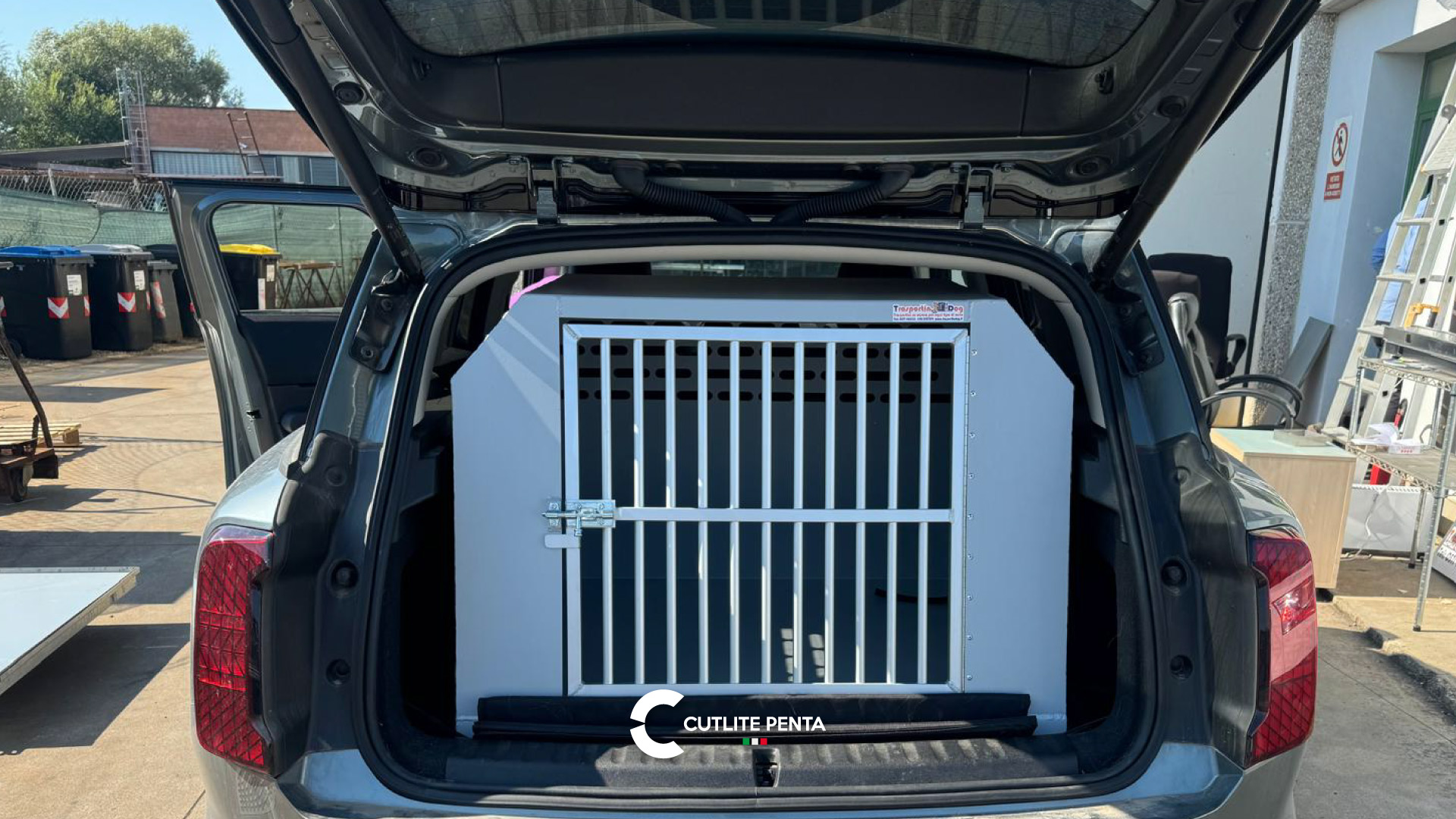
“Then there is a second line we carry on with real enthusiasm: Trasportini Dog, pet crates made entirely of aluminium, built to measure to fit a car boot. It is a project born from the previous owner's love of dogs, which we wanted to keep and develop.”
Where they work
“Our home ground is Tuscany, but we work with companies that operate globally. The Trasportini Dog line, on the other hand, we distribute across Italy, islands included.” There are fourteen of them in the company: two partners and twelve employees.
Why the CO₂ laser from 2000 was no longer enough
“We were using a CO₂ laser from 2000 that had become a critical limit on production. Maintenance was constant, downtime frequent, and for us that meant not being able to guarantee delivery dates.”
The point: they work on urgent jobs
“The cutting system is the beating heart of our company and we work precisely on urgent jobs: when a customer needs a part, they have to be able to count on us.” That is why, in a shop like theirs, downtime does not cost the time lost: it costs the order.
How they came to Cutlite Penta
“We had already looked at two other companies, without finding the right solution. Meeting Alessio Marrucci made the difference. It was the first and only company to offer us a visit to the Prato site. Seeing how they work, talking to the people, getting a feel for the quality of the organisation: by the time we left, the decision was already made.”
“Not the classic hard sell, but genuinely listening to what we needed and advising us on what the machine could do.”
“Alessio managed to build a relationship that was professional and human at the same time, which for me, at my age, really made the difference. And then, once you have seen the laser working and compared it with what you had before, you understand that cutting speed and lead times are on another level.”
Two machines replaced by one
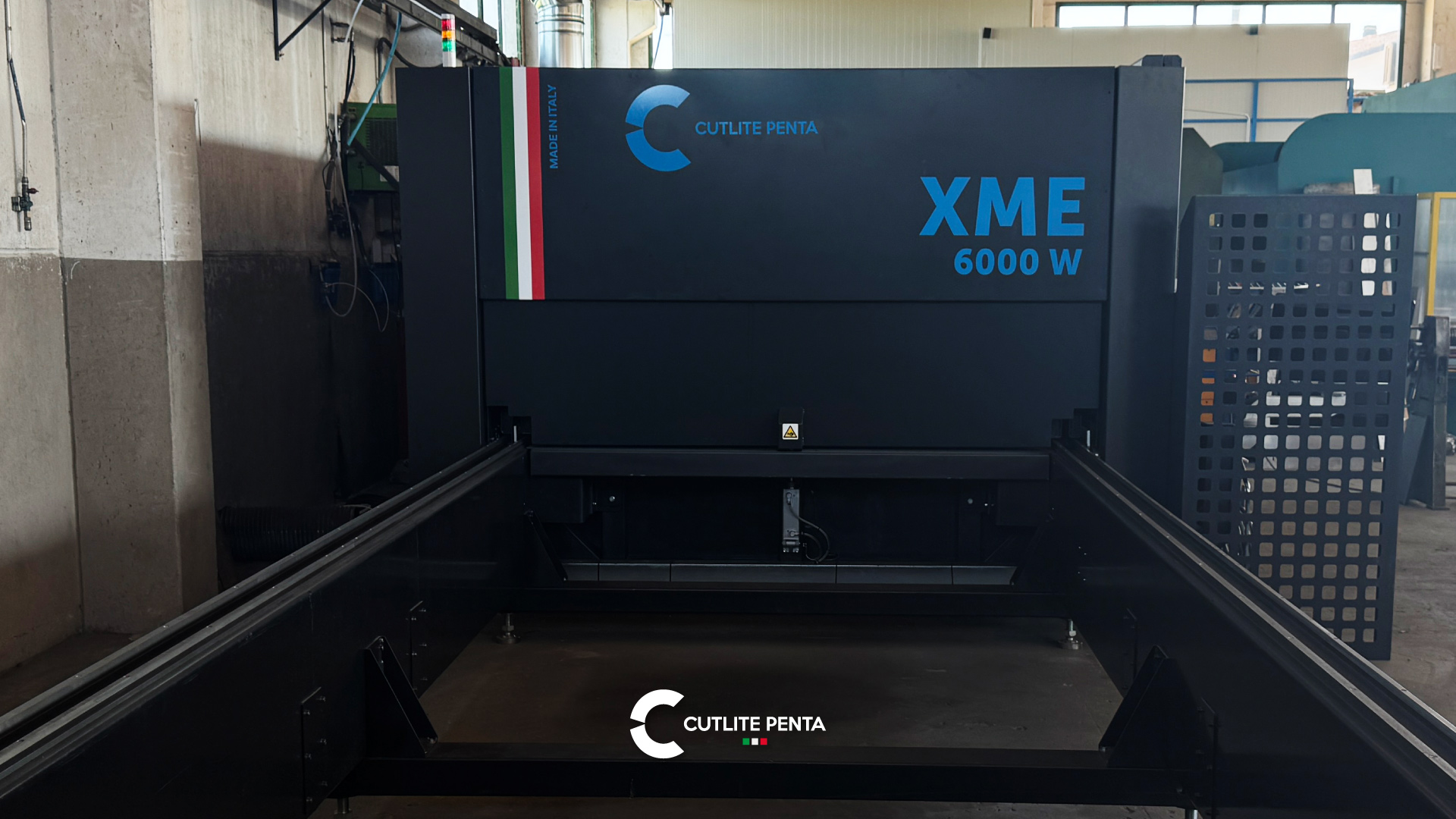
“The choice was driven by the need to consolidate our production capacity. We had two machines, a CO₂ laser of 1500 × 3000 mm and a plasma system of 4000 × 1500 mm, covering different working areas and thicknesses. The XME let us replace both with a single solution: a bigger table and cutting capacity up to 25 mm.” On the shop floor the sum shows up in three places:
- One machine to maintain instead of two
- A bigger table, so fewer constraints on format
- No bottleneck between the two old machines
The XME series is built for exactly this kind of replacement: power up to 20 kW, working areas from 3000 × 1500 to 6000 × 2500 mm, a compact footprint. In a fourteen-person shop, the space a machine takes up is as much a selection criterion as its power.
The real change: no more batching jobs by thickness
“We work on thicknesses from 1 mm up to 30 mm, with very different materials. With the old CO₂ laser, every change of material meant changing the focal lens, losing 15 to 20 minutes each time. With the XME you just change the parameters in the software and the system adapts straight away.”
From scheduled production to on-demand production
“Before, we had to schedule production by grouping jobs by thickness, to save time. Today we can work on demand: whatever comes into the shop is processed immediately, with a completely different level of service.” This matters more than any speed figure: a company that lives on urgent work cannot let a part wait because it is the only one of its thickness.
Two hours in twenty minutes
“As soon as it was installed I ran comparison tests”, Gianni says. “That let us be far more competitive: we can offer a price reduction which, on batch work, is a genuinely important margin.”
“A job that used to take two hours of machining, we now finish in twenty minutes.”
Consumption, with the caution it deserves
On this point we let him speak alone, because the figures are his and concern his own installation: “Monitoring our electricity use we found that the XME while cutting draws as much as the old CO₂ laser did on standby, and when the laser is on but not cutting the draw is very low. The old machine was twenty years old, true, but the effect on the bill was significant all the same.” The comparison is between a machine from 2000 and one built today: it is his measurement on his shop floor, not a rating plate figure, and it holds for his case.
Installation and training
“The installation technicians were extremely well prepared and available, answering every question clearly. I want to mention Massimo Testi, Commissioning Manager, who impressed me with his competence and his problem-solving approach. In just three days they trained us fully on the machine: the system is intuitive, and that sped up the learning curve a great deal.” And the verdict: “A year ago an investment of this size was unthinkable for us. When you find someone who believes in your project and helps you find the right solution, not the most expensive one but the one that fits what you can do, that makes the difference.”
Frequently asked questions
Can a 6 kW fiber laser replace a CO₂ laser and a plasma system together?
At Giancarlo Terreni Srl it did: a 6 kW XME took the place of a 1500 × 3000 mm CO₂ laser and a 4000 × 1500 mm plasma system, with a table bigger than both and cutting capacity up to 25 mm. It depends on the thicknesses and formats involved: here the work sits between 1 and 30 mm.
Why does a fiber laser no longer need a lens change when the material changes?
On a CO₂ laser, changing material or thickness often means swapping the focal lens, an operation that cost Giancarlo Terreni 15 to 20 minutes every time. On an XME the parameters are changed in the software and the machine adapts with no mechanical intervention.
In practice, what is the benefit of not having to batch jobs by thickness?
It allows a move from scheduled production to on-demand production. Giancarlo Terreni used to group orders by thickness to avoid losing time on lens changes: now whatever comes into the shop is cut straight away. For a company that lives on urgent work, that matters more than cutting speed.
How long does training on a new laser machine take?
At Giancarlo Terreni it was three days, after which the team was working on its own. Training is given by our technicians during installation: how long it takes depends on how many people attend and what cutting experience they already have.
Got two machines that could become one?
Tell us the formats and thicknesses you run on both today: the sum is done on your parts, not on our samples.
