


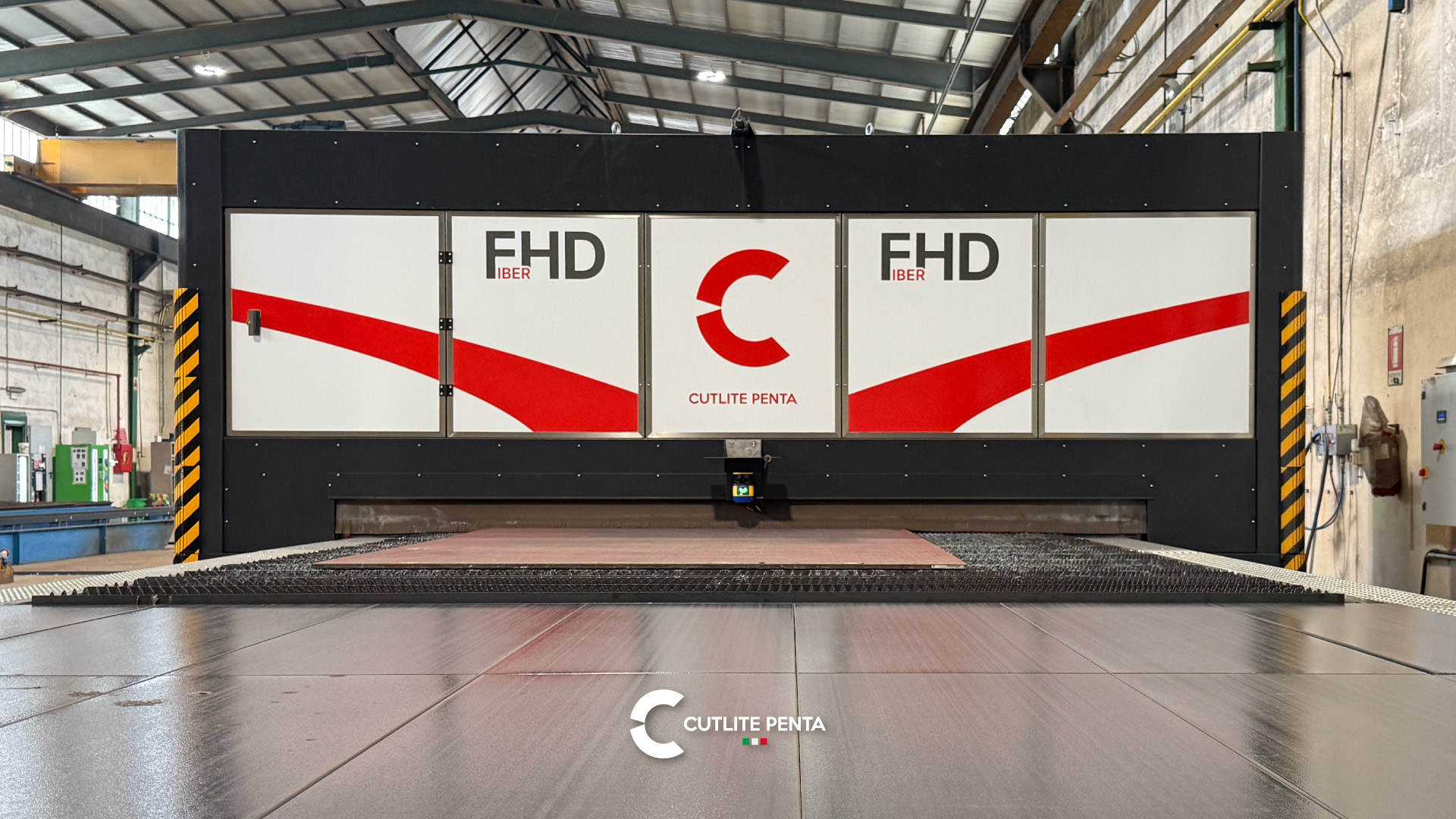
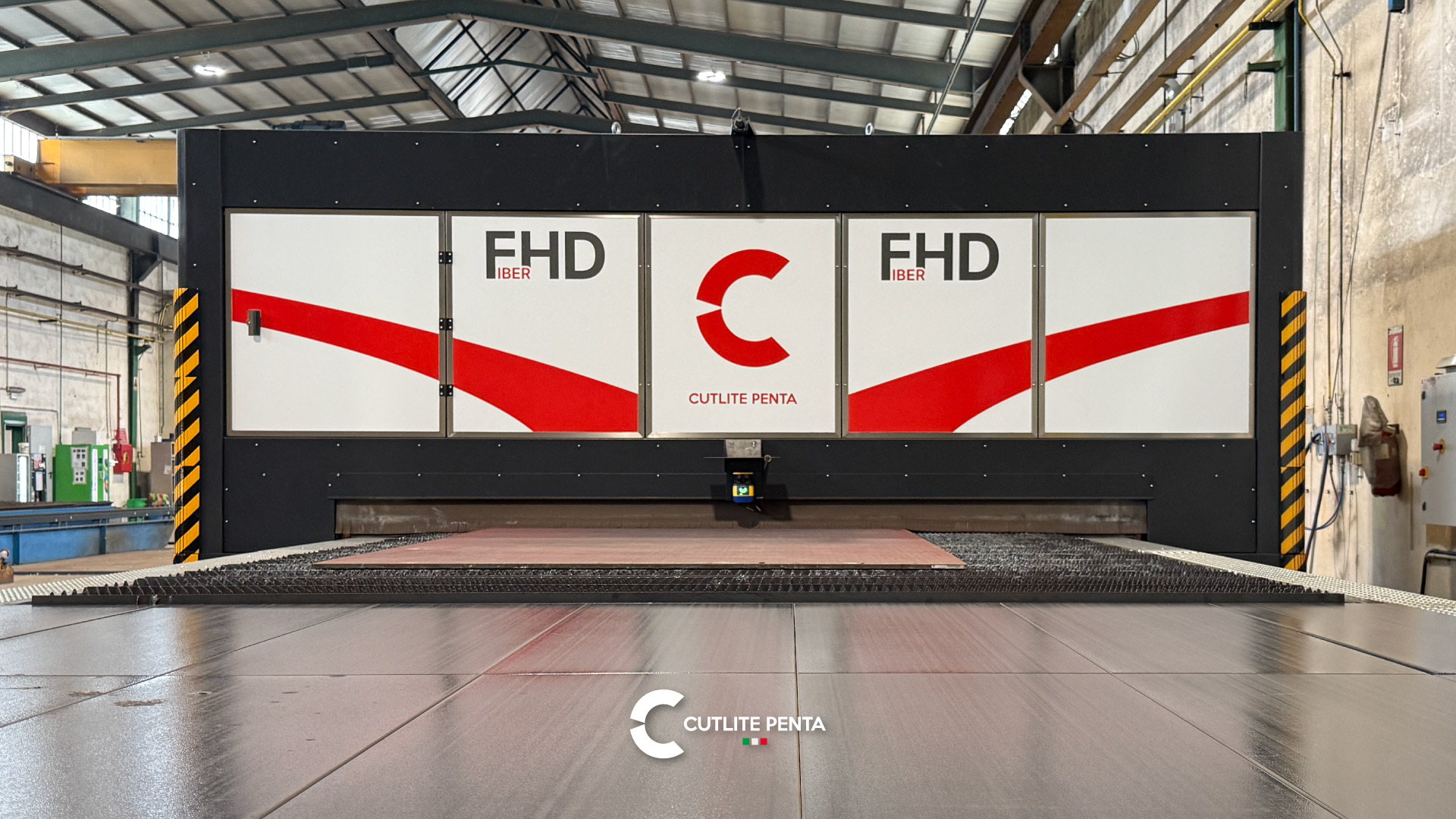
They could have taken 30 kW and chose 20: the Nuova Lamierprofil decision
The powers on offer ran from 12 to 30 kW. Nuova Lamierprofil took 20, and not because it cost less: above 20 kW speed climbs a lot, thickness does not.
Nuova Lamierprofil has been cutting as a subcontractor since 1977 and works from one millimeter up to 300 mm with oxyfuel cutting, plasma, waterjet and bending. Laser had never entered the shop. Roberto Zurlini tells us why plasma stopped being enough, how you choose kilowatts when speed is not the goal, and what changed for operators who came from years of plasma.
Who Nuova Lamierprofil is
The company started in 1977 with Roberto Zurlini's father. At the beginning it was fabrication work; in the early 1980s the first manual oxyfuel cutting machines arrived.
Then the direction changed, and changed sharply: at a certain point fabrication was dropped entirely and the company devoted itself exclusively to cutting. That is worth noticing, because it is the opposite of what most shops do: instead of adding operations, this one removed one to specialize in the other.
Today the business is cutting as a subcontractor, with five technologies in house: oxyfuel cutting, plasma, laser, waterjet and bending. One detail to keep in mind for the rest of this article: the thickness range the company covers runs from one millimeter to 300 mm, and no single machine covers all of it. The laser works one part of that range, not the whole of it.
Why plasma stopped being enough
The initial push was to replace a plasma system with a few years on it. But the real reason sat upstream, and it had to do with the thicknesses the company works: “for the thicknesses we cut, plasma did not deliver the cutting quality being asked for, which keeps rising, and with very tight tolerances.”
The consequences were three, all concrete. Jobs got more complicated. In some cases the part was not even feasible with plasma and had to be moved onto the waterjet, with everything that means for lead times and scheduling. And keeping plasma at an acceptable quality level cost money: consumables and tooling, in quantity.
This is the point where the comparison between the two technologies stops being theoretical. We lined up the conditions for when each one makes sense on the plasma or laser page, and the difference between waterjet and fiber laser is on this one. Here the answer had already come from the parts.
The five things the machine had to do
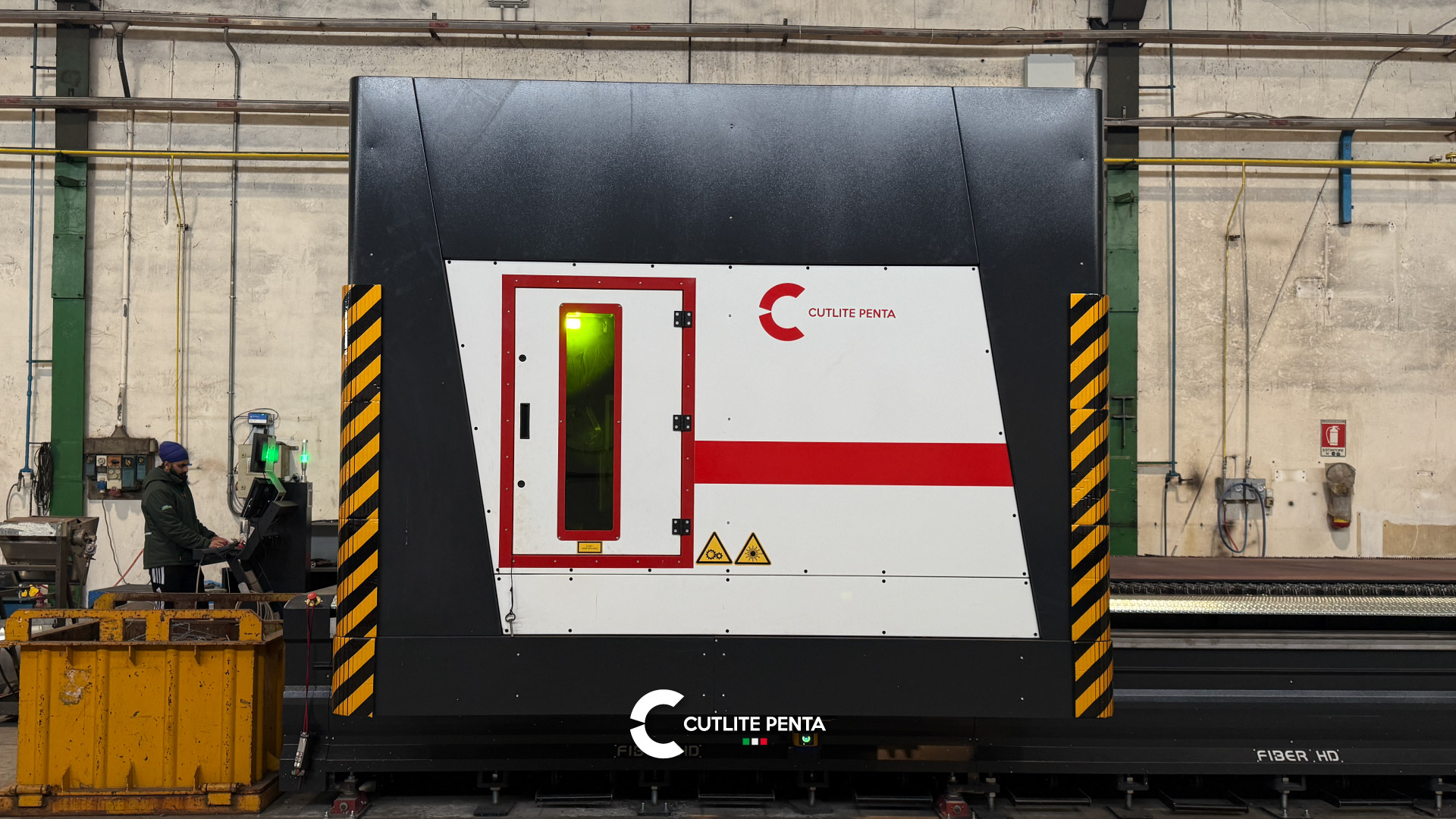
The choice was anything but obvious: there were proposals from several European builders on the table. Nuova Lamierprofil was looking for a machine that could do five things:
- handle mill plate, that is plate from the rolling mill rather than from coil
- reach 35 to 40 mm
- produce bevel cuts, what the shop floor calls chamfers
- integrate with SigmaNEST, their nesting software
- manage safety interlocks without shutting down whole departments
The features of the FHD were presented by Alessio Marrucci, Area Manager for Tuscany and Marche. According to Zurlini there were two points where our proposal came out more concrete: bevel cut management and the handling of safety areas. The second one deserves a pause, because it almost never appears in a specification: a machine that has to stop half a department in order to stop safely costs money every day, and that cost shows up in no quotation.
Why 20 kW and not 30
This is the most interesting part of the interview, and it runs against what most readers would expect. The powers offered ran from 12 to 30 kW. Twelve was too little for the company's thicknesses. But going up was a decision too, not an automatic step: “above 20 kW speeds increase a lot, but thicknesses do not increase proportionally.”
Our goal is not speed but quality and reliability.
In practice: extra power is always paid for, but it only pays back if you have the work to keep it busy. A shop cutting tight-tolerance jobs on medium to heavy thickness gains more from a stable process than from a shorter cycle time. We have written separately about how powers have grown, but the criterion stays the same: the right power is the one your mix needs, not the highest one available.
Twelve-meter plates, and the floor space that was not there
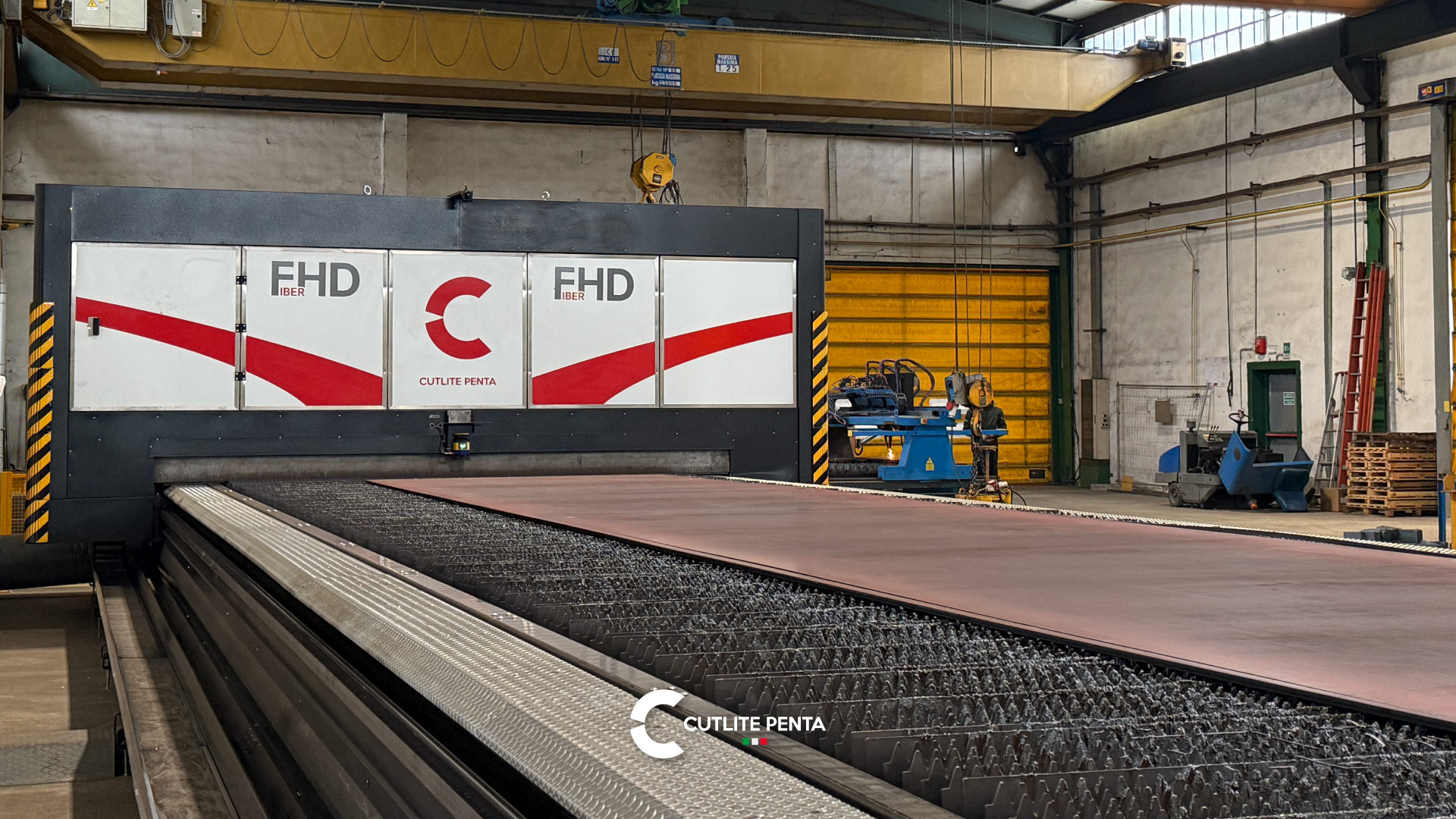
There is a second reason behind the choice, and it has to do with the shop floor itself. Nuova Lamierprofil works a lot of 12-meter plates. With a table that long, the FHD made it possible to save space, avoiding the double-table machines that become very bulky at these formats.
And there is a side effect worth more than it sounds: by keeping one long single table, the way of working stays conceptually close to plasma. For a shop where every operator comes from plasma, that is not a layout detail: it is half the training saved.
Operators who came from plasma: how it went
Asked how the approach to a technology they had never used went, the answer is the calmest part of the interview: “it was less disruptive than expected.” The operators all come from years on plasma. The machine is different, and in some respects more complex, especially in the software, but the basic concept was not that far away.
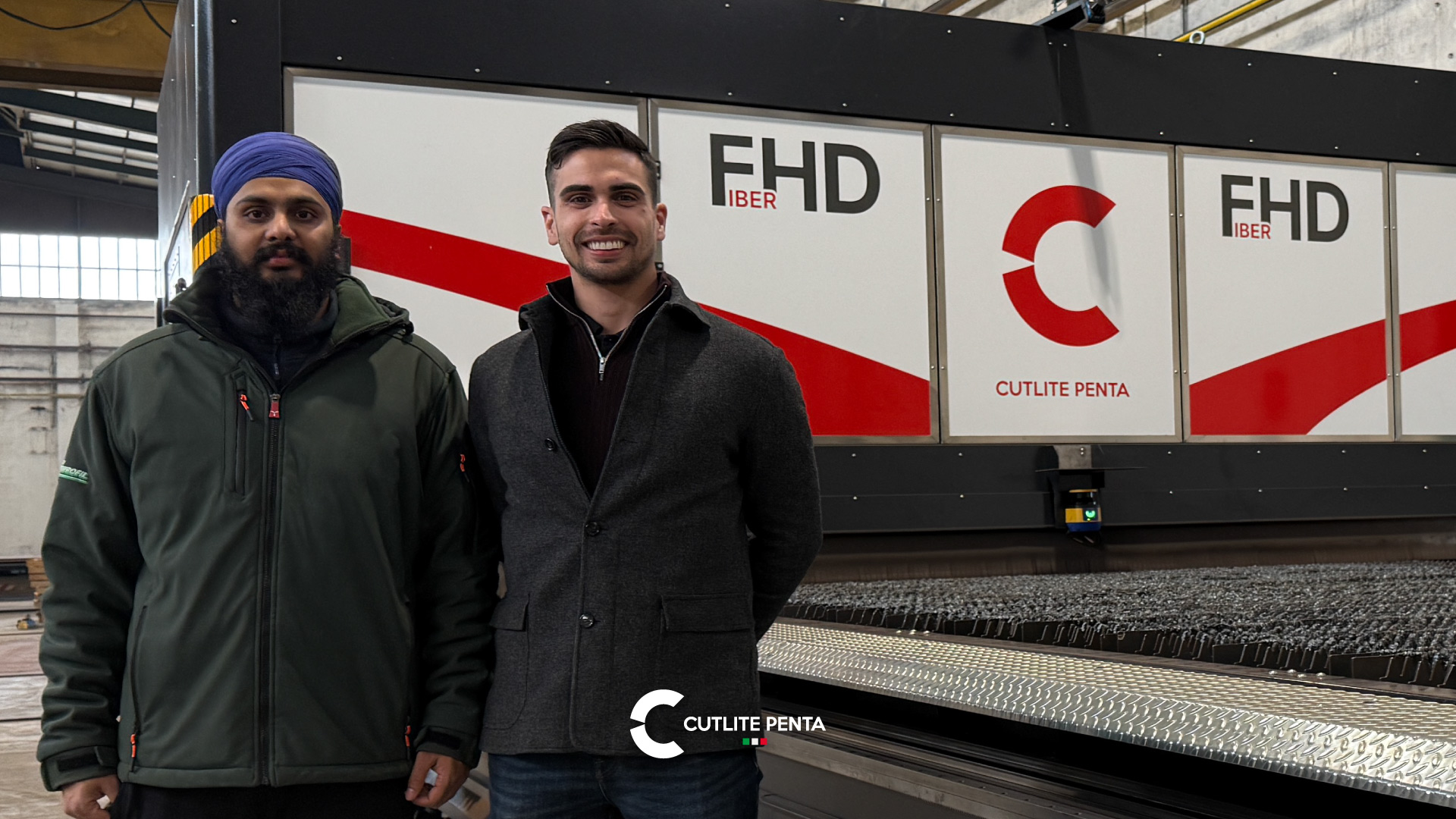
The new procedures were learned and today they are followed properly. Said without rhetoric, this is usually what worries an owner most before signing: not the machine, but the people who will stand in front of it. It is worth comparing with an almost identical path a few kilometers away, that of Officine Meccaniche Castelfiorentino, which replaced plasma and oxyfuel cutting with an FHD 20 kW.
How many times they called service
“Only on a few occasions.” In some cases the fix came remotely. In one case there was a machine stop caused by the chiller, resolved directly with the manufacturer of that component.
We are reporting the stop too, because nobody believes a case study in which nothing ever stopped. Zurlini's summary is “overall, no major problems”, and on a machine that has been in production for a few months in a shop that had never owned a laser, that is the sentence that counts.
How the machine works today
The machine has been running since the end of May and works mainly on the day shift. Some night trials were run, without much benefit.
If there is nobody watching it, it becomes a pointless risk.
That is a position worth keeping in mind whenever machine hours come up: a night shift is not free, and neither is the risk. The stated short-term goal is not to add shifts but to increase cutting hours within the ones already there, which is the cheapest way to make an investment pay.
What happens next, and would he do it again
If cutting hours go up, the option on the table is a second laser, possibly a bigger one. Zurlini's read of the market is precise and worth reporting: oxyfuel cutting looks fairly stable to him, while fiber laser is clearly heading toward real evolution. Said by someone who has both technologies in house, and therefore no reason to root for either.
Asked whether he would make the same choice again: “yes, without a doubt.” The reason is not enthusiasm, it is verifiable: “we knew who we were dealing with, and the machine is doing what it was bought for.”
And the closing line is the driest definition of what subcontract cutting means: “we work difficult plate, often rusty, with very demanding requests. What I expected was for the machine to cut everything we had described to it. And on that, it is working the way it should.” No promise exceeded, no record: what was said at quotation stage, the machine does.
Frequently asked questions
Who is Nuova Lamierprofil?
A family company founded in 1977 that cuts as a subcontractor and specializes in thickness. It has five technologies in house: oxyfuel cutting, plasma, fiber laser, waterjet and bending, covering a thickness range from one millimeter to 300 mm. The owner is Roberto Zurlini.
Why did they choose 20 kW and not 30?
Because above 20 kW cutting speed climbs a lot but workable thickness does not climb proportionally, and the company's goal was not speed but quality and reliability. Twelve kilowatts, on the other hand, was too little for the thicknesses they cut. The right power is the one your own work mix needs.
Does a 20 kW fiber laser reach 300 mm?
No, and the distinction matters. The 300 mm figure is the maximum range Nuova Lamierprofil covers overall, with oxyfuel cutting. What they asked of the 20 kW laser was 35 to 40 mm, the band where plasma no longer held the required quality. Above that threshold the work stays with oxyfuel.
How hard is it for an operator to move from plasma to laser?
In Nuova Lamierprofil's experience, less hard than expected: the operators all came from years of plasma and the basic concept is not that far away. The real difference is the software, which is more complex. Layout helps too: one long single table keeps a way of working close to plasma.
How much power does your mix actually need?
Bring us the material, thicknesses and tolerances of your parts: cutting gets tested in our DEMO area in Prato. And as Zurlini says, the answer is not always the highest power.
